The Bath Trick
A warm bath an hour or two before bed is one of the oldest sleep aids we have — and unlike most of the old ones, it has pooled modern evidence behind it. The reason it works is the opposite of how it feels: the bath is not making you sleepy while you sit in it. It works because of what happens afterward, when your body sheds the heat and your core temperature drops — the same cooling event the previous page said gates sleep onset. This page walks the timing, the water temperature, and the honest boundaries of the effect.
What the evidence supports
- Passive body heating — a warm bath or shower — before bed is associated with falling asleep a few minutes sooner, on pooled trial data.
- The benefit tracks a post-heating core-temperature drop, matching the physiology of sleep onset.
- Bathing roughly 1–2 hours before bed shows the strongest effect; water near body temperature delivered the largest benefit in the pooled analysis.
What remains uncertain
- Most trials are small and short; the pooled effect is real but modest — minutes faster to sleep, not a cure for insomnia.
- The "1–2 hour" window is where the combined data peak, but individual physiology varies; some people respond well outside it.
- Whether regular bathing changes total sleep time or deep-sleep shares is less clear than the effect on falling asleep faster.
Evidence last reviewed: August 15, 2026. Conclusions may change as new research is published.
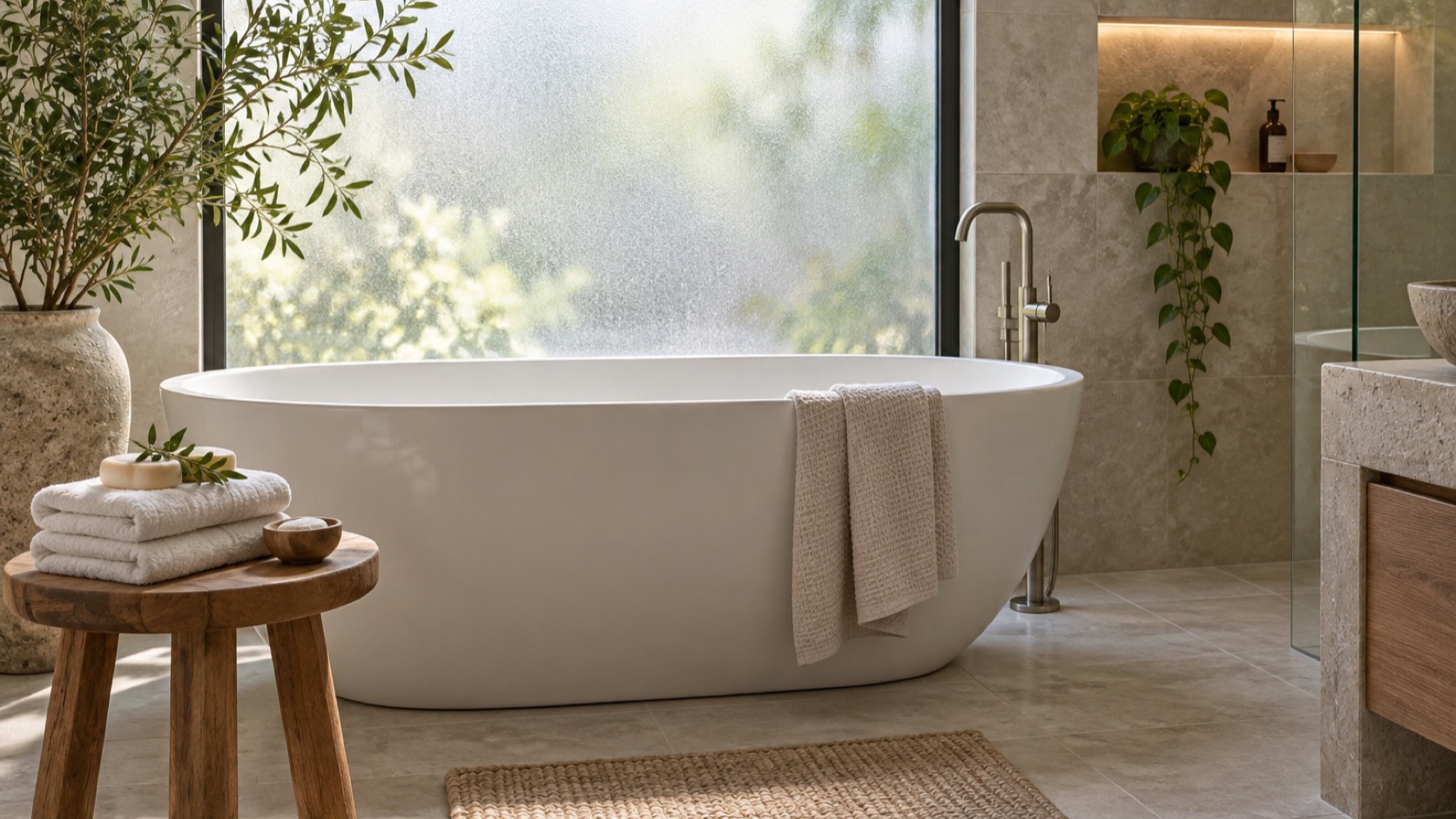
The Trick, Stated Honestly
The bath works on a delay, and that delay is the whole point. Sit in warm water and your body has a problem: the surface is hot, so the move to protect the core is to push blood out to the skin and open the radiators — the same vasodilation that happens on its own before sleep. When you step out, that dilated surface still holds the heat, and it sheds it fast into the cooler room. The core, meanwhile, drops sharply — a steeper, faster version of the natural pre-sleep cooling curve. That post-bath drop is the sleep signal. Warm now, cool later: the soak is a head start on the one physiological event bedtime actually requires.
- 🛁 The bath is a battery, not a switch — it stores heat in your surface, then releases it fast when you lie down in a cool room.
- 🌡️ The drop does the work — the faster the core falls, the earlier the onset signal fires; the temperature-evidence page owns why the drop matters.
- 🎯 Timing is everything — too late, and the residual heat is still flooding off you while you are trying to sleep; too early, and the curve has flattened back.
Product picks are generic categories, not brands. We may earn a commission on Amazon or iHerb purchases at no cost to you — this never changes our evidence conclusions. Full disclosure
Layered, breathable bedding
Can make it easier to adjust bedding during overnight warmth or temperature swings.
⚠️ Comfort response varies; it does not evaluate or treat persistent sleep disruption, hot flashes, or sleep apnea.
Check price on Amazon →What the Pooled Analysis Found
The strongest single document on this question is a systematic review and meta-analysis of the before-bedtime-bathing literature (Haghayegh et al., Sleep Medicine Reviews, 2019). Pooling the available trials, the authors found that an evening warm bath or shower was associated with falling asleep about ten minutes sooner on average — a modest effect, but one assembled from actual studies rather than folklore. Two details from that analysis are worth keeping. First, the temperature matters: water around 40–42°C consistently outperformed hotter or barely-warm water. Second, the timing matters: the group that benefited most bathed one to two hours before bed, while baths taken too close to bedtime — when the body is still shedding the borrowed heat — eroded the benefit.
Timing, by the Numbers
If the pooled analysis has one practical output, it is the timing curve. The benefit is not constant across the evening — it builds as you approach the 1–2 hour window, then fades as the bath gets too close to lights-out, when your surface is still hot and your core hasn't finished dropping. The bars below are approximate, drawn from the pooled association; the shape — a peak in the 1–2 hour window, not a flat benefit — is the honest takeaway.
⚠️ Hotter is not better — and not for everyone
Pushing the water hotter than ~42°C does not add benefit and adds risk: it over-strains circulation, and for anyone with heart conditions, uncontrolled blood pressure, or a history of fainting, a long very-hot soak is genuinely a discussion for a healthcare professional, not a nightly ritual. The same goes for anyone who is pregnant. Hot enough to feel the warmth, not hot enough to feel boiled: the evidence peak sits at 40–42°C, and so does common sense.
Warm, dimmable bedside light
Makes a lower-light evening routine easier to follow.
⚠️ None expected; avoid treating a bulb choice as a cure for insomnia.
Check price on Amazon →Shower or Bath: Does the Mode Matter?
The pooled literature includes both baths and showers, and it does not draw a hard line between them — the shared ingredient is passive body heating plus the timing of the heat release. In practice the two differ in one useful direction: a bath holds the heat against more skin for longer, delivering a bigger store to shed; a hot shower is the faster, lower-effort version of the same idea. If the ten-minute pool is the target, the practical question is which one you will actually run on a Tuesday.
- 🛁 Bath — bigger heat store, stronger drop afterward, slower ritual; the classic version.
- 🚿 Shower — same direction, less soak time, far less setup; the realistic everyday option.
- 🧦 The footbath middle ground — a hot footbath warms the feet and boosts the vasodilation the temperature page describes, with almost no risk and no full-body heat soak.
- ❄️ Cold showers flip the script — cold water constricts vessels and raises arousal, the opposite of this mechanism; keep it for mornings, not wind-down.
Do / Avoid the Bath
| Move | Do | Avoid | Why |
|---|---|---|---|
| 🌡️ Water temperature | Warm, ~40–42°C — visibly warm, comfortable for 10–20 minutes | Near-scalding soaks above ~42°C | The pooled effect peaks at this band; hotter adds risk, not benefit |
| ⏲️ Timing | 1–2 hours before the planned lights-out | Jumping straight into bed steaming wet | The post-bath core drop is the signal; it needs time to complete |
| ⏳ Duration | 10–20 minutes in the water | Hour-long marathon soaks | Enough to load the surface heat store; longer adds little |
| 🧊 Afterward | Cool room plus breathable bedding to shed the heat | Wrapping up in a heavy warm layer that traps it | The thermostat page owns the cool-room half of the system |
The 90-Minute Routine
The bath is best understood as the centerpiece of a short wind-down sequence, not a standalone trick. A repeatable version that fits most evenings:
- Set the room early — thermostat to 18–19°C and curtains closed while the water runs; the Evening Cascade slots this into the same window.
- Soak 10–20 minutes at 40–42°C — water warm but tolerable; this is wind-down time, not a second shower chore.
- Get out and cool — light breathable layers, no heavy robe, let the surface shed into the cool room.
- Dim everything for the hour after — the bath works with dim light, not against a bright bathroom; the darkness page follows.
- Lights out at the planned time — the onset signal should be firing right about when your head hits the pillow.
When It Fails or Backfires
- 🥵 Toasty and wired after a hot bath? You likely bathed too close to bed, too hot, or too long — back off duration and push the window earlier before abandoning the idea.
- ♨️ Drying into a warm room — a 26°C bedroom traps the borrowed heat and cancels the drop; read the temperature numbers together with this routine.
- 😌 The effect is modest — if sleep stays bad despite a clean routine, the bath is not the missing piece; the insomnia and apnea paths are the honest next step.
- 🫁 Post-bath lightheadedness, palpitations, or chest discomfort — stop the practice and have that checked; this is a clinician conversation, not a tuning variable.
Questions, Answered Briefly
- ❓ Does a cool shower or plunge do the same thing? No — cold constricts vessels and raises arousal. The mechanism needs warmth-then-drop; a cool rinse is a morning tool.
- ❓ Is ten minutes' benefit worth it? For the cost of one warm soak, yes — most sleep interventions in the literature are smaller, fussier, and more expensive.
- ❓ Should I bathe every night? The trials tested repeated bathing, and nightly is fine for healthy adults. Skin dryness is the main complaint; a regular moisturizer handles it.
- ❓ What if I need the shower in the morning to function? Then keep the morning shower and add a short evening footbath — partial heat loading still moves the curve.
- ❓ Do sleep-tracking apps confirm the bath's effect? Only weakly — consumer trackers measure movement and timing, not core temperature. Trust the pooled trials and how you feel, not the ring.
The Bottom Line
- The bath works after, not during — the post-bath core-temperature drop is the sleep signal, which is why timing beats heat.
- One to two hours before bed, 10–20 minutes, 40–42°C — the pooled analysis supports this combination and not hotter-or-later guesses.
- The effect is real but modest — about ten minutes faster to sleep on average, which makes it a great lever and a poor magic spell.
- Pair it with the cool room and dim light — the bath is one half of a thermal system the parent protocol builds in full.
Related Topics
- Haghayegh S, Khoshnevis S, Smolensky MH, Diller KR, Castriotta RJ, "Before-bedtime passive body heating by warm shower or bath to improve sleep: a systematic review and meta-analysis," Sleep Medicine Reviews (2019)
- Raymann RJEM, Swaab DF, Van Someren EJW, "Cutaneous warming promotes sleep onset," American Journal of Physiology — Regulatory, Integrative, and Comparative Physiology (2005)
- Horne JA, Reid AJ, "Night-time sleep EEG changes following body heating in a warm bath," Electroencephalography and Clinical Neurophysiology (1985)
- Kräuchi K, et al., "Warm feet promote the rapid onset of sleep," Nature (1999)