The Long-Term Bone Plan
Bone is built on a decade clock, so the plan for it has to be one you can actually keep for a decade. This page assembles the full picture: a sustainable loading pattern, the nutrition that supports it, falls prevention as fracture insurance, and the clinical screening that tells you whether the plan is working.
What the evidence supports
- Regular loading maintains or modestly improves bone density at the spine and hip over years (Howe 2011; Watson 2018).
- Adequate protein, calcium, and vitamin D support the skeleton, with the strongest benefit when paired with loading (Weaver 2016).
- Balance-challenging exercise and falls-prevention measures reduce fracture risk by preventing the fall itself (Sherrington 2017).
What remains uncertain
- How the pillars interact over decades is untested as a whole; each is supported individually.
- Optimal screening intervals and the exact contribution of each nutrient continue to be debated.
Evidence last reviewed: August 20, 2026. Conclusions may change as new research is published.
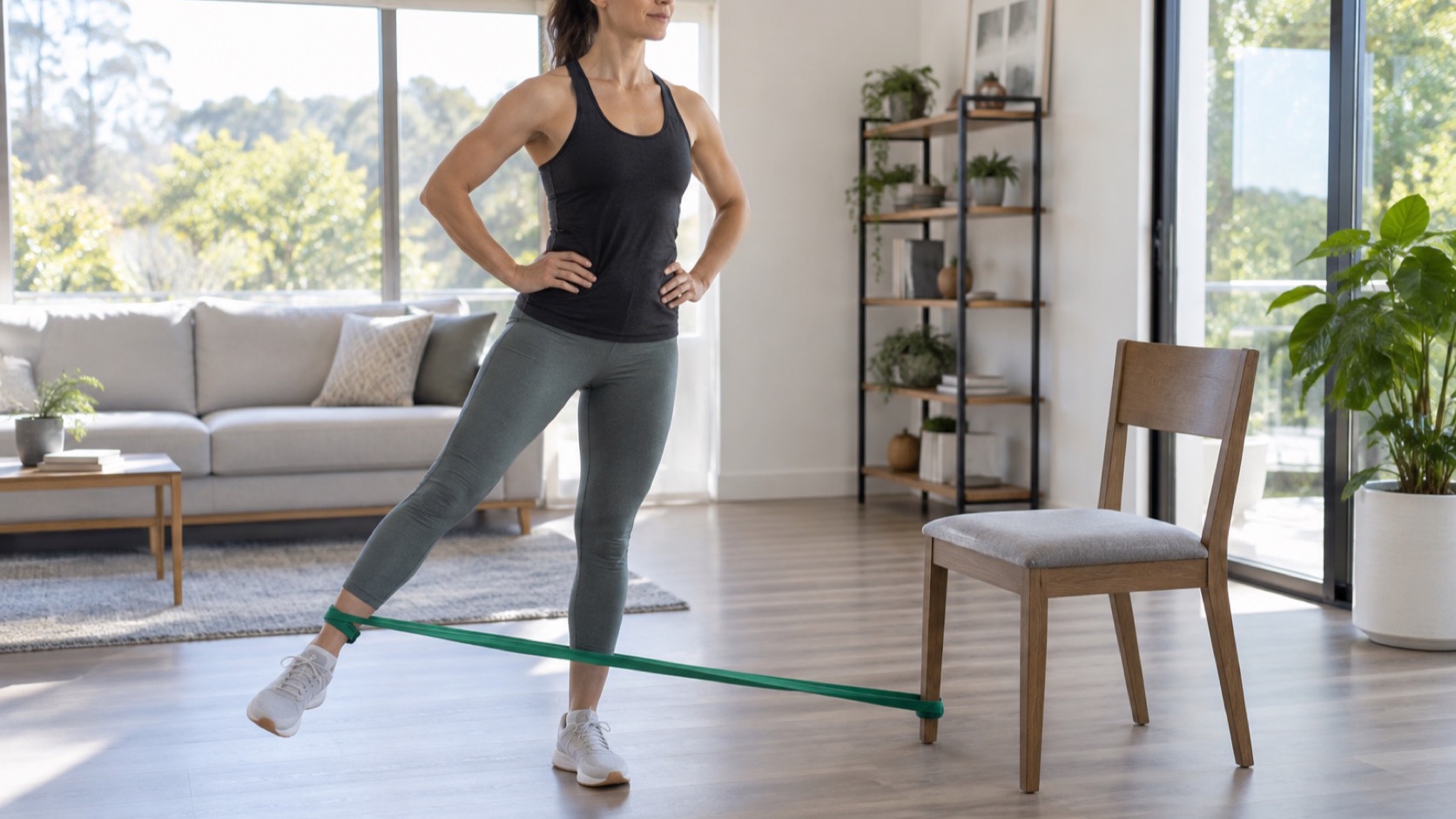
Why the Plan Runs on a Decade Clock
Every previous page in this series ends at the same place: bone changes are slow, and the meaningful effects of training show up in years, not weeks. That single fact dictates the design of the long-term plan. It must be sustainable enough to survive vacations, injuries, busy seasons, and motivation dips — because the skeleton does not care about your best month; it cares about your average decade.
- 📅 The compounding view — a 1–2% annual difference in density trajectory, held for a decade, is the difference between a stable skeleton and a fragile one; small annual choices compound exactly like money.
- 🎯 The two jobs of the plan — build what can still be built and, after midlife, slow the loss; both are wins, and the plan does not need to distinguish them to be worth keeping.
- 🔄 The plan is a system, not a sprint — the bone health topic frames it as a pattern to hold, not a program to finish.
Product picks are generic categories, not brands. We may earn a commission on Amazon or iHerb purchases at no cost to you — this never changes our evidence conclusions. Full disclosure
Vitamin D3
May help correct low vitamin D intake or deficiency when clinically appropriate; broad benefits for people who are already replete are uncertain.
⚠️ Excess intake can cause high calcium levels and harm; review dose, testing, kidney conditions, and relevant medications with a clinician or pharmacist.
Check price on Amazon →The Loading Column: Pattern Before Intensity
The loading column of the plan is the loading menu run consistently — two to three resistance sessions weekly, weight-bearing most days, balance work sprinkled in, and impact added once the baseline is solid. The long-term version optimizes for adherence, not peak stimulus.
- 🏋️ The minimum viable dose — two resistance sessions a week is the documented floor for strength and a reasonable floor for bone loading; the 2-day minimum page makes the frequency case.
- 🤸 Impact is the variable to protect — it is usually the first thing dropped when life gets busy; keeping even a small impact block (stomps, low hops) in most sessions preserves the high-rate signal.
- 🔁 Progress in one variable at a time — weight, then sets, then impact height; the double progression rules keep the system simple enough to maintain for years.
- 🗓️ Deloads and off-weeks are part of the plan — planned lighter weeks and genuine rest keep the pattern sustainable; the deload guidance applies to the skeleton exactly as it does to muscle.
The Nutrition Column: Fuel for the Scaffold
Loading creates the signal; nutrition supplies the materials. The skeleton needs protein for the collagen matrix, calcium as the mineral substrate, and vitamin D to absorb and deposit that calcium. The evidence is strongest when nutrients are paired with loading — a review for the National Osteoporosis Foundation emphasized that exercise and nutrition act together on peak bone mass and its maintenance (Weaver 2016).
- 🥩 Protein: the overlooked bone nutrient — roughly 1.2–1.6 g per kg of body weight daily supports muscle and bone together; the protein pillar and the per-meal dose subtopic own the details.
- 🥛 Calcium: target about 1,000–1,200 mg daily — from food first (dairy, fortified foods, leafy greens); supplements fill gaps and should be discussed with a clinician, especially with any kidney or heart considerations.
- ☀️ Vitamin D: about 600–800 IU daily for most adults — food sources are scarce, so status checks and supplements are common; the supplements page covers dosing evidence.
- ⚖️ Nutrition is not a substitute for loading — supplements without strain do not build bone; the two columns work as a pair, and no nutrient promises a scan outcome.
Most adults who train land between the floor and the target; the plan's job is to make the target the default, from food first.
The Falls Column: Fracture Insurance
The third column exists because most fractures — especially hip fractures — happen at the end of a fall, and a fragile skeleton turns a stumble into an event. Falls prevention is the most direct fracture-risk intervention available, and the evidence is strong: exercise programs that challenge balance reduced falls by about a fifth overall and by nearly 40% at higher doses (Sherrington 2017).
- 🧘 Balance work is the exercise pillar — single-leg stands, tai chi, heel-to-toe walking, several minutes most days; the stability & mobility page has the full menu.
- 🏠 The environment is half the battle — home hazards (loose rugs, poor lighting, clutter on stairs) cause a large share of falls; a yearly pass through the home is cheap insurance.
- 👁️ Vision and medications matter — uncorrected vision and sedating medications are fall amplifiers; reviewing both with a clinician is part of the plan, especially after 60.
- 🦴 The link to this series — the loading column builds the skeleton; the falls column keeps it from being tested; both are needed for the fracture math to improve.
The Screening Column: Knowing Where You Stand
The final column is measurement — the reliable way to know whether the decade plan is working. Bone density testing (DXA) is the standard tool, and the guidance for who gets screened and how often comes from clinical guidelines, not from this site. The principle to internalize: screening answers the question "what is my trajectory," and the plan gets adjusted to the answer.
- 🩺 Who screens — commonly recommended for women from age 65 and for people of any sex with risk factors or prior fractures; your clinician sets the schedule (Cosman 2014).
- 📏 How often — re-testing every two years is a common clinical rhythm for those on the plan or on treatment; longer intervals may be appropriate when risk is low.
- 📉 Read the trend, not the snapshot — one scan is a baseline; the second scan is the news; DXA differences of 1–2% can sit near measurement noise, so clinicians read across scans and risk factors together.
- 🧭 The FRAX tool exists for a reason — fracture-risk calculators integrate density, age, fracture history, and other factors; the result is a risk estimate, not a verdict, and a clinician interprets it.
| Column | What it does | Typical dose | Verdict |
|---|---|---|---|
| 🏋️ Loading | Builds and maintains density at spine and hip | 2–3 resistance sessions/week + impact block | Core |
| 🥗 Nutrition | Supplies protein, calcium, vitamin D | Daily, food first | Core |
| 🧘 Falls prevention | Prevents the fracture by preventing the fall | Balance work most days; home pass yearly | Core |
| 🩺 Screening | Tracks trajectory and guides adjustments | DXA per clinician guidance | Essential check |
The four columns run in parallel, not in sequence — a week that skips one still counts if the others hold, and a year that holds all four is what the decade is made of.
Making the Plan Survive Real Life
A perfect plan that collapses in month three is worse than a modest plan held for thirty years. The long-term design is deliberately forgiving, and the failure modes are known in advance.
- ✈️ Travel and busy seasons — the floor drops to two resistance sessions and daily walking; the pattern survives, and the full menu returns when life settles.
- 🩹 Injury or illness — the plan pauses loading and keeps nutrition and balance; return to loading is gradual and, across the safety line, guided by a clinician or physiotherapist.
- 😐 Motivation dips — the plan's dose is already at the sustainable minimum; when motivation returns, the progress stall guidance is the restart manual.
- 📅 The annual review — once a year: re-read this series, check the load is still progressing, review calcium and vitamin D intake, walk the home for hazards, and confirm the screening schedule — the quarterly audit protocol formalizes this habit.
📅 Consistency is the active ingredient
Every column of this plan works through repetition: loading signals the mechanostat, nutrition supplies materials, balance prevents the fall, and screening closes the loop. None of it is dramatic, and none of it promises a scan outcome — but a decade of the pattern is what the evidence actually supports, and it is the version of the plan that survives real life.
Questions, Answered Briefly
- ❓ Which column matters most? — For density, loading; for fracture risk in later life, falls prevention often moves the needle more; the plan runs all four because they cover different failure modes.
- ❓ Do I need supplements if my diet is good? — Food first is the rule; vitamin D is the exception most people need to check, and a clinician can test status rather than guess.
- ❓ When should screening start? — Follow clinical guidance — commonly around age 65 for women and earlier with risk factors; the safety line page covers the risk-flag list.
- ❓ I missed three weeks — is the plan ruined? — No; the plan is measured in years. Gaps are part of the pattern; the failure is abandoning the system, not interrupting it.
The Bottom Line
- The bone plan runs on a decade clock — sustainable, consistent loading beats any intensity that cannot be maintained.
- Four columns carry the plan — loading, nutrition, falls prevention, and screening — each individually supported, strongest together.
- Nutrients support loading; they do not replace it — protein, calcium, and vitamin D are the materials, but the strain signal has to be there for them to matter.
- Screening closes the loop — DXA on a clinician-guided schedule turns the plan into a measurable trajectory, and the plan adapts to the trend.
Related Topics
- Weaver et al., "The National Osteoporosis Foundation's position statement on peak bone mass development and lifestyle factors: a systematic review and implementation recommendations," Osteoporosis International (2016)
- Howe et al., "Exercise for preventing and treating osteoporosis in postmenopausal women," Cochrane Database of Systematic Reviews (2011)
- Watson et al., "High-Intensity Resistance and Impact Training Improves Bone Mineral Density and Physical Function in Postmenopausal Women With Osteopenia and Osteoporosis: The LIFTMOR Randomized Controlled Trial," Journal of Bone and Mineral Research (2018)
- Sherrington et al., "Exercise to prevent falls in older adults: an updated systematic review and meta-analysis," British Journal of Sports Medicine (2017)
- Cosman et al., "Clinician's Guide to Prevention and Treatment of Osteoporosis," Osteoporosis International (2014)