The Per-Meal Dose
Your body does not bank protein like calories: each meal triggers a bounded muscle-building response, and servings beyond that ceiling mostly become fuel or storage, not extra muscle. This page walks the per-meal dose — the 25–40 g serving range, the leucine threshold that drives it, and the honest adjustments for age, deficits, and plant sources.
What the evidence supports
- The per-meal muscle-building response saturates: in young adults, roughly 0.24 g/kg per meal — about 20–30 g for most — reaches near-maximal synthesis (Moore 2009).
- Leucine is the trigger: meals carrying roughly 2–3 g of leucine reliably switch on the response, which is why source quality matters as much as grams.
- Older adults need larger servings — about 0.4 g/kg — because aging makes each feeding less efficient (Moore 2015); the daily total stays the contract on top of it (Morton 2018).
What remains uncertain
- Whether the exact per-meal ceiling changes with training status, whole-body mass, or habitual intake is argued from acute studies, not settled by long trials.
- The leucine threshold in real mixed meals — where fat, fiber, and other amino acids slow digestion — is fuzzier than the clean infusions used in the classic studies.
Evidence last reviewed: August 21, 2026. Conclusions may change as new research is published.
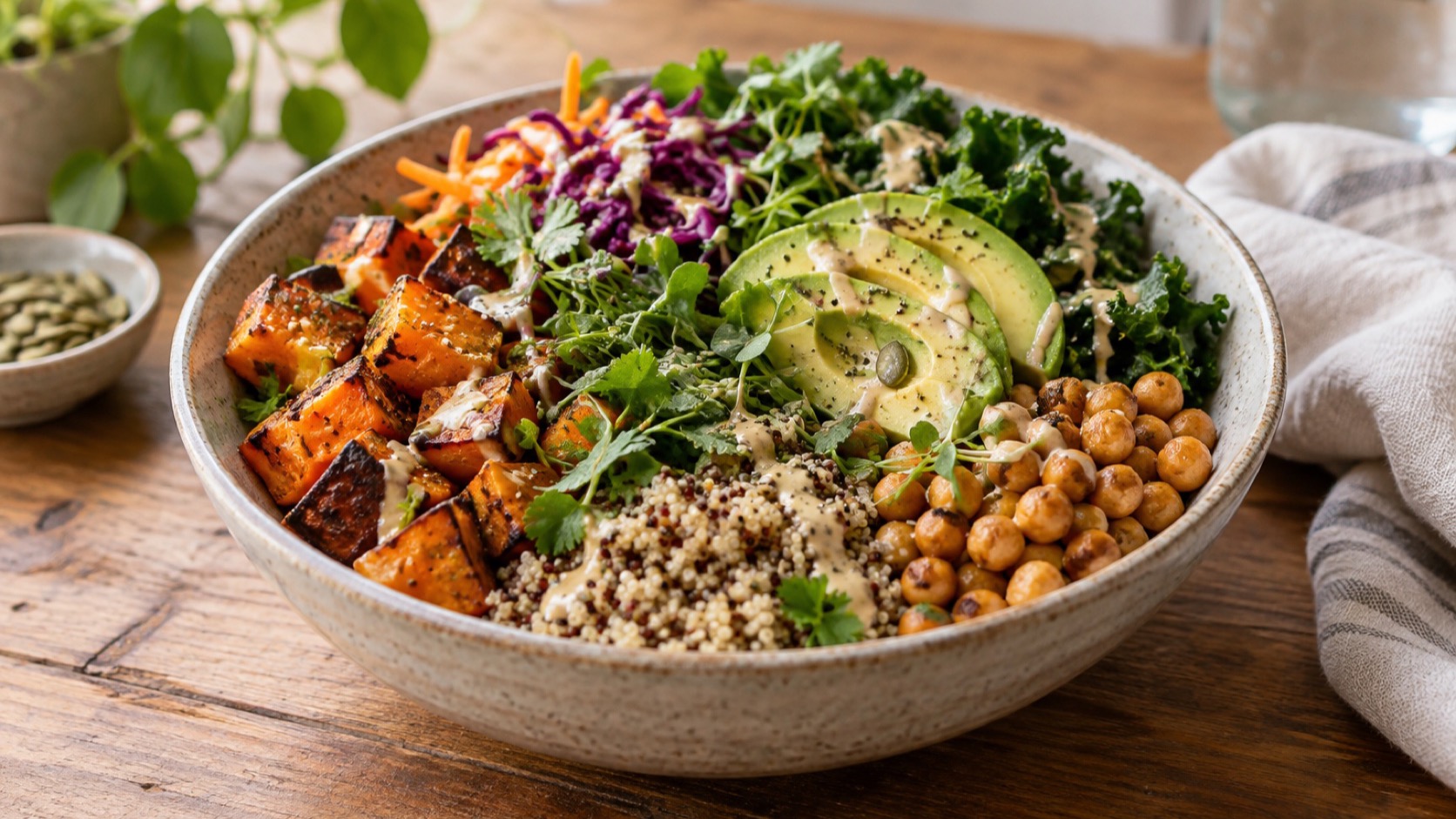
The Serving Question
Every meal starts a bounded episode of muscle protein synthesis: the response climbs with the protein in the meal, then plateaus. The classic dose-response trial fed young men increasing servings after training and found the response near its maximum around 0.24 g/kg of bodyweight per feeding (Moore 2009) — roughly 20 g for a small adult, 30 g for a large one. The practical 25–40 g band is that finding scaled for real plates and older bodies.
- 🍽️ Saturation, not waste — beyond the ceiling, extra protein is still digested and used — as calories, urea, and building blocks for other tissues — it just stops meaningfully adding muscle signal. The phrase "wasted protein" oversells it; "flat response" is accurate.
- 🧮 The band, not the gram — 25–40 g per meal is a target zone, not a measuring cup rule; an 80 kg adult eating four feedings of ~35 g is comfortably inside both this page's math and the parent topic's 1.6 g/kg daily contract.
- 🔄 Servings repeat across the day — with three or four meals, the day's total is the sum of several bounded responses, which is why spreading beats stacking; the MPS window page owns that 24-hour picture.
Product picks are generic categories, not brands. We may earn a commission on Amazon or iHerb purchases at no cost to you — this never changes our evidence conclusions. Full disclosure
Protein powder
A convenient way to add dietary protein when food intake is insufficient or impractical.
⚠️ May cause digestive symptoms; formulation matters for allergies and intolerances. It does not replace a varied diet.
Check price on Amazon →The Leucine Threshold
Leucine is the amino acid that pulls the trigger. Of the nine essential amino acids, it is the one whose concentration in the blood most directly switches on the muscle-building machinery, and reviews of the acute literature land the trigger zone near 2–3 g of leucine per meal. That is the hidden reason the per-meal dose exists: a meal can carry plenty of protein grams yet stall below the leucine gate (Moore 2009).
- 🔑 Why leucine changes the serving math — a 150 g chicken breast and a 30 g whey shake both land ~3 g of leucine, which is why such different plates can feed the same response.
- 👴 The age shift — older muscle needs a larger dose to reach the same response — roughly 0.4 g/kg per meal (Moore 2015), which explains the "~40 g for the over-60 crowd" advice.
- 🌱 The plant wrinkle — most plant proteins carry less leucine per gram, so plant-based servings need headroom; the plant protein page owns that arithmetic in full.
How the Numbers Were Measured
The serving ceiling comes from a specific kind of study: researchers infuse labeled amino acids, feed a test meal, and measure how fast muscle fibers incorporate them into new protein over the following hours. Those acute trials — Moore 2009 in young men, Moore 2015 in older men — drew the dose-response curve this page rests on. Their strength is precision; their limit is that a few hours of synthesis is a proxy for months of training outcomes. The chronic studies show the same shape indirectly — protein supplementation trials plateau near a daily 1.6 g/kg (Morton 2018) — but the per-meal curve itself is mostly acute data.
- 🧪 The isotope method — labeled amino acids let researchers watch new muscle protein appear hour by hour; the inflection point of that curve is the "near-max" serving.
- 📏 Why the band has width — individual responses scatter widely; the 25–40 g range is the honest envelope across studies, not a sharp breakpoint.
- 💡 What acute data can't say — whether the exact ceiling drifts after months of training or differs at the extremes of body size is beyond these designs; the daily total remains the better-established target.
Dose by Context
The 25–40 g band is a default, not a constant. Four contexts change the serving, and the changes all trace to the leucine trigger or the daily contract.
| Context | Serving that fits | Why it changes | Verdict |
|---|---|---|---|
| 🧑 Young adult, ~70 kg, training | ~20–30 g per meal | ~0.24 g/kg reaches near-max response (Moore 2009) | Supported |
| 👴 Over 60, anabolic resistance | ~35–40 g per meal | Each feeding is less efficient; larger servings restore it (Moore 2015) | Supported |
| 📉 Cutting or big calorie deficit | Upper end, ~40–50 g | Lean-mass preservation wants the full range; the weight-loss protein page has the deficit math | Contextual |
| 🌱 Plant-based plates | Roughly 25–30% more per serving | Lower leucine density per gram; the plant page closes the gap | Add headroom |
If the bodyweight math feels fiddly, use the band: 25–30 g for most younger adults, 35–40 g for older ones, and the top of the range when a deficit or a plant-based day leaves less room for error. One more honest note: meals are not infusions, and a plate of beans and rice digests slower than a shake. Real meals land their leucine later and softer — another reason the band is generous rather than surgical.
Pacing the Day
- 🌅 Start the counter at breakfast — a 25–40 g morning meal sets the day's pattern; a protein-light breakfast is the most common way the per-meal system fails before lunch.
- ⏰ Space servings 3–5 hours apart — close enough that the plateau from one meal is still warm, far enough apart that meals stay real meals and not snacking.
- 🥚 Real food first — eggs, dairy, meat, fish, soy, and legumes all carry the leucine; powders are the convenience layer, ranked honestly on the supplement page.
- 📋 The daily contract still governs — per-meal servings distribute the 1.6–2.2 g/kg total from the parent topic; no serving pattern rescues a short day.
- 🍳 Convenience logic — if a meal will run short, a shake closes the serving gap; that is the same food budget, spent more conveniently, not extra.
🔑 The leucine gate, not the gram count
When a plate fails to build, the usual suspect is the trigger, not the scale: low-leucine meals at 30 g behave like 20 g meals. Aim for the band, then check the source — two eggs and toast is protein-rich-looking but lands under the leucine gate, while the same calories in Greek yogurt or a chicken breast clears it. The Nutrition pillar's protein topic owns the full source-level comparison.
Questions, Answered Briefly
- ❓ Can I eat all 150 g in one giant meal? — The response saturates; the excess becomes energy and urea load rather than muscle signal. Spread the servings and the day handles the grams more gracefully.
- ❓ Does the ceiling rise if I weigh more? — The acute data scales by bodyweight (0.24 g/kg), so larger adults land at the top of the band naturally; nobody in the training literature has shown a benefit to chasing servings past ~0.4 g/kg.
- ❓ Why do I feel full before 40 g? — Protein is satiating; if appetite fights the serving, split it, choose liquids, or build it from dairy and eggs, which pack the grams into less volume.
- ❓ Is the leucine threshold the same for women? — Acute studies in women show the same shaped response; absolute servings scale with body mass, and the 25–40 g band covers the realistic range for both sexes.
- ❓ Should I take leucine supplements instead of eating protein? — The trigger needs the rest of the amino acid pool to build with; isolated leucine at normal doses is not a substitute for a complete protein serving, and the supplement tier ranks it accordingly.
- ❓ Is 40 g per meal hard on the kidneys? — In healthy kidneys, intakes across this whole range show no damage in the available evidence; with existing kidney disease, any change in protein intake is a clinician conversation.
- ❓ Why do reviews keep citing the same few acute studies? — Per-meal questions are expensive to study well; the dose-response core (Moore 2009; Moore 2015) plus the distribution trials (Areta 2013; Mamerow 2014) remain the load-bearing set, and later work mostly refines rather than overturns them.
The Bottom Line
- The per-meal response saturates. ~0.24 g/kg per meal reaches near-max in young adults (Moore 2009); the 25–40 g band is that scaled.
- Leucine is the trigger. ~2–3 g per meal switches on synthesis — source quality is part of the dose.
- Age raises the serving. ~0.4 g/kg for older adults (Moore 2015); deficits and plant plates add more headroom.
- Servings serve the total. Per-meal math distributes the daily contract; it never replaces it.
Related Topics
- Moore et al., "Ingested protein dose response of muscle and albumin protein synthesis after resistance exercise in young men," American Journal of Clinical Nutrition (2009)
- Moore et al., "Protein ingestion to stimulate myofibrillar protein synthesis requires greater relative protein intakes in healthy older versus younger men," Journals of Gerontology Series A (2015)
- Schoenfeld & Aragon, "How much protein can the body use in a single meal for muscle-building? Implications for daily protein distribution," Journal of the International Society of Sports Nutrition (2018)
- Morton et al., "A systematic review, meta-analysis and meta-regression of the effect of protein supplementation on resistance training-induced gains in muscle mass and strength in healthy adults," British Journal of Sports Medicine (2018)
- Mamerow et al., "Dietary protein distribution positively influences 24-h muscle protein synthesis in healthy adults," Journal of Nutrition (2014)