Plant Proteins & Muscle
Plant protein can absolutely build muscle — the research question is not whether, but how efficiently per gram. Plant sources carry less leucine and digest a little differently than animal protein, which creates a gap that planning closes: larger servings, complementary pairings, and a soy anchor. This page quantifies the leucine gap and lays out the strategies that close it.
What the evidence supports
- Per gram consumed, plant proteins produce a smaller acute muscle-building response than animal proteins, driven mainly by lower leucine content and digestibility (van Vliet 2015).
- The gap closes with dose: larger plant-based servings and higher daily totals bring the response in line — the leucine trigger is the lever.
- Soy is complete on its own, and grains plus legumes complement each other's amino acid gaps across the day.
What remains uncertain
- Few long-term training trials directly compare animal versus plant diets with matched totals; most evidence is acute or observational.
- Whether blended plant sources (pea plus rice, soy plus grains) fully erase the per-meal gap at equal grams is argued from short studies.
Evidence last reviewed: August 21, 2026. Conclusions may change as new research is published.
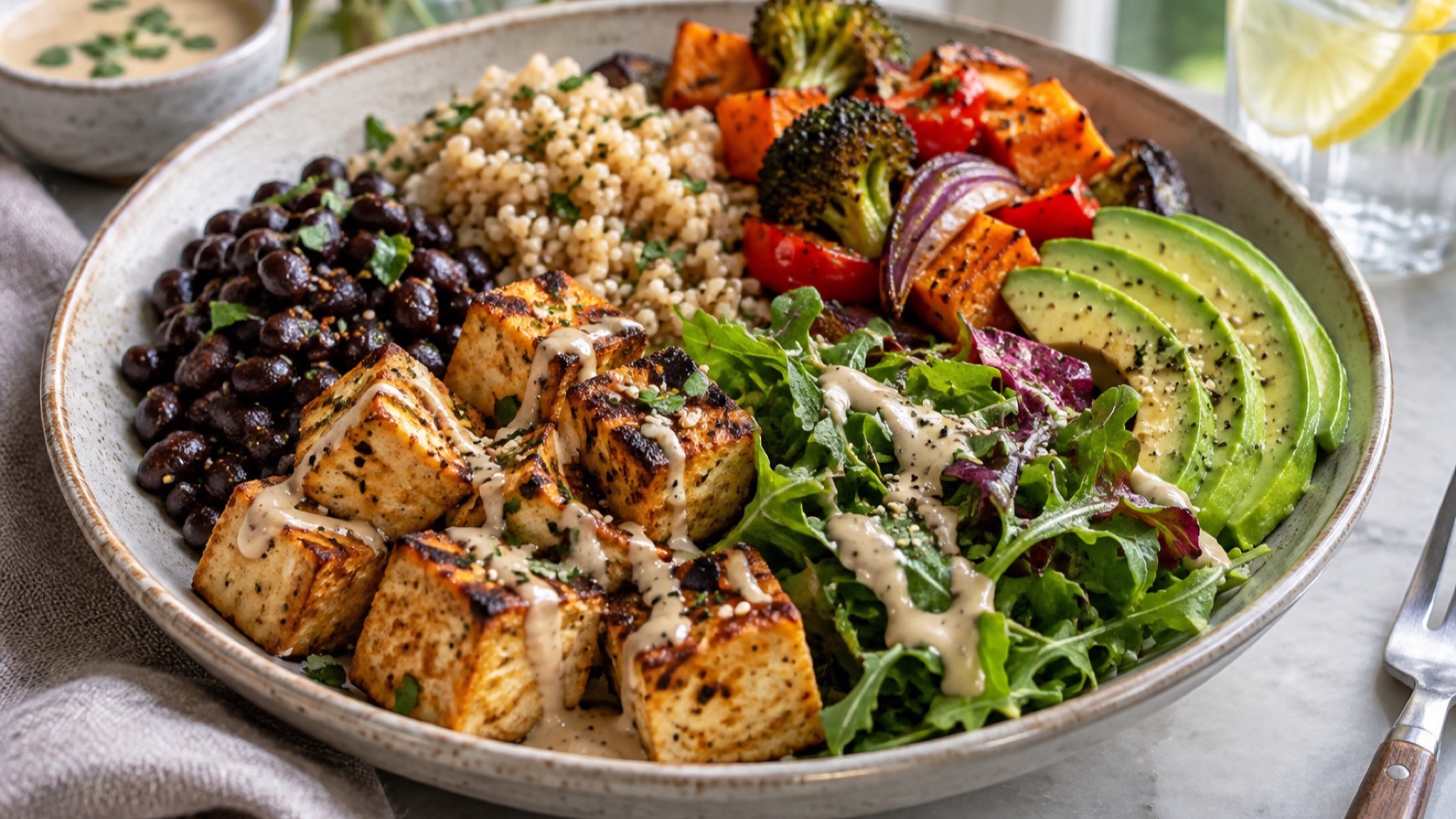
Why Plant Protein Gets Its Own Conversation
All protein is built from the same amino acids, but plant sources arrive with two handicaps. First, most carry less leucine per gram than animal protein — and leucine is the trigger from the per-meal dose page. Second, the plant matrix — fiber, antinutrients, and cell walls — makes some of their protein slightly less digestible. Reviews of the acute studies find that when equal grams are fed, animal protein produces a larger muscle-building response (van Vliet 2015). The honest translation is not "plants don't work" but "plants need planning": bigger servings and a higher daily total.
- 📉 The gap is real but bounded — per-meal differences shrink or vanish when plant servings are raised to match leucine delivery; no well-designed trial shows plant-based lifters cannot grow muscle.
- ⚖️ Total does the heavy lifting — the daily 1.6–2.2 g/kg contract from the parent topic still governs; plant-based days simply need more grams and more deliberate choices inside it.
- 🌍 It matters at scale — for older adults eating plant-based, the per-meal gap compounds with anabolic resistance, which is why the serving math below leans generous rather than minimal.
Product picks are generic categories, not brands. We may earn a commission on Amazon or iHerb purchases at no cost to you — this never changes our evidence conclusions. Full disclosure
Protein powder
A convenient way to add dietary protein when food intake is insufficient or impractical.
⚠️ May cause digestive symptoms; formulation matters for allergies and intolerances. It does not replace a varied diet.
Check price on Amazon →The Leucine Gap, Quantified
The trigger zone from the per-meal page is roughly 2–3 g of leucine per feeding. Here is what standard servings of common sources deliver — the gap between the animal column and the plant column is the work to be planned around:
- 📏 Read the gap — a 150 g tofu block lands about 40% of the chicken serving's leucine; the same plate size does not carry the same trigger.
- 🥄 The fix is arithmetic — roughly 25–30% more plant protein per meal (or a leucine-dense pick like seitan or soy) restores the trigger; the per-meal dose page has the serving math.
- 🧂 Powders as equalizers — pea and soy isolates concentrate leucine into a 30 g scoop (~1.9 g), which is why shakes are the standard gap-closer on busy plant-based days.
The Completeness Question
"Incomplete protein" is a technical term with a modest practical meaning: a source that is low in one or two essential amino acids. The classic pairing — grains low in lysine, legumes low in methionine — solves it across the day without eating them in the same bite. Soy is the outlier: it is complete on its own, which makes tofu, tempeh, and edamame the reliable anchors of a plant-based training diet.
| Source | Serving | Protein | Leucine | Completeness |
|---|---|---|---|---|
| 🫘 Tofu (firm) | 150 g | ~17 g | ~1.4 g | Complete |
| 🧆 Seitan | 150 g | ~36 g | ~2.5 g | Low in lysine |
| 🌱 Pea protein powder | 30 g scoop | ~24 g | ~1.9 g | Low in methionine |
| 🌾 Lentils, cooked | 250 g | ~18 g | ~1.3 g | Pairs with grains |
| 🍚 Rice, cooked | 200 g | ~5 g | ~0.4 g | Incomplete |
| 🥜 Peanut butter | 30 g | ~7 g | ~0.5 g | Mostly fat |
- 🧩 Complement, don't memorize — the practical rule is beans or lentils with rice, bread, or oats inside the same day; the amino acid clouds merge at the body's protein pool, not the plate (Gorissen 2018).
- 🫘 Soy as the anchor — complete profile plus respectable leucine makes soy the default plant "meat"; tempeh adds gut variety and a firmer bite for roughly the same numbers.
- 🥜 The peanut butter trap — a fat with a protein cameo; it counts toward the day's grams but cannot carry a meal's trigger, exactly like the parent topic's source audit warns.
Closing the Gap: The Strategies
- 📈 Portion up — plant servings run ~25–30% larger than their animal equivalents; 200 g of tofu where 150 g of chicken would sit, a heaped scoop where half would do.
- 🥄 Blend for leucine — soy or seitan anchor the meals that matter most (post-training, breakfast), and grains-plus-legumes cover the rest; pea-and-rice blends combine strengths in one product.
- 🧮 Aim high on the total — the upper half of the 1.6–2.2 g/kg range absorbs the per-gram inefficiency; a plant-based 80 kg lifter plans roughly 150–175 g per day rather than scraping the floor.
- 🥤 Keep a shake in the toolkit — pea, soy, or blended isolates close busy-day gaps in one pour; they are ranked honestly on the supplement page.
- 🍳 Older and plant-based? — stack the strategies: larger servings at the 0.4 g/kg anchor, a soy or shake meal near training, and no skipped breakfast; the dose page covers the age side.
The order matters less than the habit: portion size first, blend second, daily total third. Logging one day's servings — protein and leucine both — shows which of the three a plan is missing; most plant-based plans are missing volume, not variety.
🌱 The gap is closable, the planning is not optional
Nothing here argues against a plant-based training diet — it argues for arithmetic. The leucine gap is a per-gram difference, not a verdict: larger portions, a soy anchor, and an upper-half daily total bring plant-based lifters to the same building ground as their animal-eating peers. Skip the planning and the gap shows up in the results; do the math once a week and it disappears into the routine.
What the Training Evidence Says
Acute studies dominate this literature: feed equal grams of soy, wheat, or pea against milk or beef, measure synthesis, and the animal sources usually win that hour (van Vliet 2015). What training studies exist land more kindly on plants — when totals and energy are matched, plant-based and mixed diets produce similar strength and size outcomes over weeks to months, with the plant groups typically eating more total protein to get there. The honest summary: the acute gap is real, the chronic gap is closable, and the closing mechanism is dose.
- 🔬 The acute layer — isotope studies measure the per-gram difference precisely; they cannot measure months of training, and the difference they find is exactly what the strategies above target.
- 🏋️ The chronic layer — the training trials that exist show matched outcomes with matched (or slightly higher plant) intakes; the Nutrition pillar's protein topic owns the full review of both layers.
- 🧭 The practical synthesis — eat to the upper half of the daily range, keep every meal's trigger in view, and treat the scale of the plate as part of the program.
Questions, Answered Briefly
- ❓ Do I need to combine proteins at every meal? — No. The amino acid pools merge across the day; the "same bite" rule was retired decades ago. Beans at lunch and rice at dinner is already completion.
- ❓ Is soy safe for muscle building? — Yes; soy is complete and its protein quality is well documented. The old hesitation came from phytoestrogen headlines, not the training literature.
- ❓ Should I switch to whey to be safe? — No; staying plant-based with planning keeps you in the same building range. Whey's advantage is convenience per scoop, which the supplement tier prices honestly.
- ❓ How much more protein do I actually need? — Roughly 25–30% more per meal, or the upper half of the daily range; most plant-based lifters overshoot one or the other and drift into the same effective zone.
- ❓ Do plant sources digest as well as animal ones? — Slightly less, gram for gram — the fiber and antinutrient load is why. Cooking (soaking, fermenting) narrows the gap, and the larger servings strategy absorbs what remains.
- ❓ Are plant-based shakes as good as whey? — Close on convenience and leucine per scoop — a 30 g pea scoop lands ~1.9 g — while whey still leads per gram of trigger. The difference is dose-shaped, and the strategies above absorb it.
- ❓ What if my digestion is unhappy with beans and lentils? — Soak and cook thoroughly, add them gradually, and lean on tofu, tempeh, seitan, and peas — several low-fiber, high-leucine plants exist for exactly this case.
The Bottom Line
- The leucine gap is per-gram, not absolute. Plant protein builds muscle; it just needs more grams per trigger.
- Larger servings close the per-meal gap. ~25–30% more plant protein per meal matches leucine delivery.
- Soy anchors, grains and legumes complement. Completeness is a day-long property, not a plate property (Gorissen 2018).
- Plan to the upper half of the range. The daily total absorbs the inefficiency; the shake toolkit backs up busy days.
Related Topics
- van Vliet, Burd & van Loon, "The skeletal muscle anabolic response to plant- versus animal-based protein consumption," Journal of Nutrition (2015)
- Gorissen et al., "Protein content and amino acid composition of commercially available plant-based protein isolates," Amino Acids (2018)
- Moore et al., "Protein ingestion to stimulate myofibrillar protein synthesis requires greater relative protein intakes in healthy older versus younger men," Journals of Gerontology Series A (2015)
- Morton et al., "A systematic review, meta-analysis and meta-regression of the effect of protein supplementation on resistance training-induced gains in muscle mass and strength in healthy adults," British Journal of Sports Medicine (2018)
- Schoenfeld & Aragon, "How much protein can the body use in a single meal for muscle-building? Implications for daily protein distribution," Journal of the International Society of Sports Nutrition (2018)