Protein Around Training
Should you eat before lifting, after lifting, or both — and does the answer actually matter? The timing meta-analyses give a surprisingly clean answer: a protein meal within a few hours either side of training is sensible and sufficient, and daily totals outrank every clock position. This page walks the pre- and post-workout evidence without the urgency marketing sells.
What the evidence supports
- With adequate daily intake, no peri-workout timing scheme beats any other for strength or size across training studies (Schoenfeld 2013).
- Total daily protein is the strongest predictor of training gains — the position stands and meta-analyses agree (Kerksick 2017; Morton 2018).
- A protein meal within a few hours either side of the session is a sensible default; older adults benefit most from a deliberate post-training feeding.
What remains uncertain
- Whether pre- versus post-workout protein differs meaningfully at equal totals is unresolved; acute studies point one way, chronic trials another.
- Fasted training's long-term muscle cost, if any, is inferred from acute responses rather than measured in long trials.
Evidence last reviewed: August 21, 2026. Conclusions may change as new research is published.
The Question Timing Studies Actually Answer
Timing research asks whether the position of protein around the workout — before, after, or both — changes what training builds. The honest answer from a decade of trials is: hardly at all, once the day's total is right. The 2013 meta-analysis pooled randomized training studies of timed versus untimed protein and found no scheme superior for strength or hypertrophy; the predictor that mattered was simply total intake (Schoenfeld 2013). The sports-nutrition position stands have since converged on the same language: hit the daily target, distribute it, and treat peri-workout feeding as convenience rather than command (Kerksick 2017).
- 📊 What the meta-analyses share — the null for timing and the signal for totals; the MPS window page carries the full 24-hour framing this one leans on.
- 🔬 What acute studies still suggest — feeding before training raises amino acid availability during the session, and feeding after extends the recovery response; both are real effects that training trials rate as minor.
- 🧾 The honest hierarchy — total daily intake → per-meal spread → peri-workout timing, exactly the order the parent topic sets.
Product picks are generic categories, not brands. We may earn a commission on Amazon or iHerb purchases at no cost to you — this never changes our evidence conclusions. Full disclosure
Protein powder
A convenient way to add dietary protein when food intake is insufficient or impractical.
⚠️ May cause digestive symptoms; formulation matters for allergies and intolerances. It does not replace a varied diet.
Check price on Amazon →Before Training
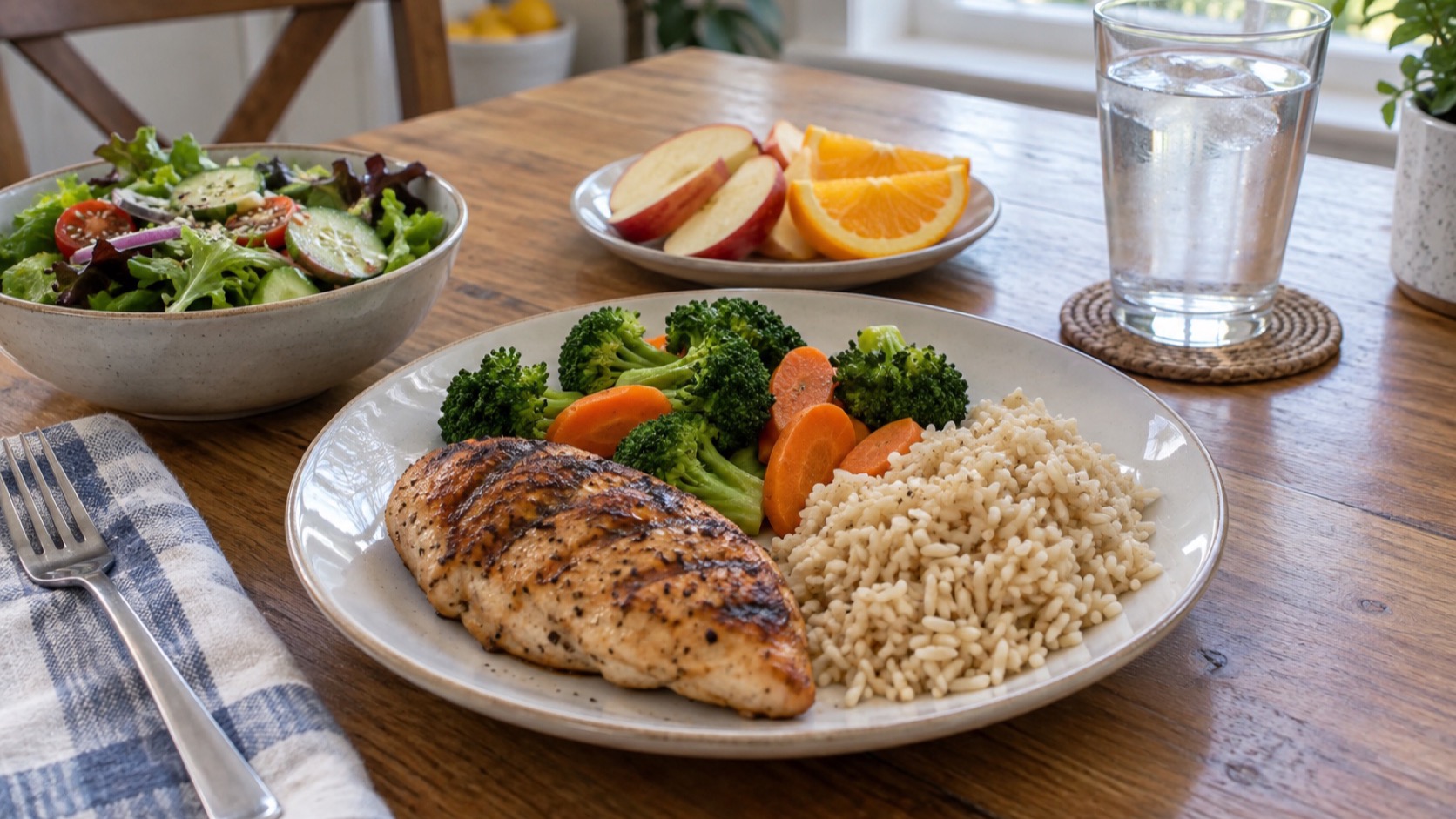
The pre-workout meal has two jobs: fuel the session and prime the recovery clock. A normal mixed meal one to three hours before lifting does both without any special "pre-workout" product. Training fasted is not a muscle emergency either — acute studies show a blunted early synthesis response when protein is absent beforehand, but the day's later meals restore the totals, and chronic trials have not shown fasted training costing muscle when overall intake holds.
- 🍚 A real meal beats a bar — rice, oats, or bread with a palm of protein an hour or two out covers fuel and trigger in one plate; no pre-workout formula adds anything the meal lacks.
- 🌅 Fasted morning sessions — fine for most people if the first post-training meal is solid; the habit to protect is the day's total, not the empty stomach.
- 🤢 Digestive reality — large meals too close to training sit poorly for some; the fix is timing the meal earlier, not dropping protein from the pre-session window entirely.
After Training
Post-workout protein is where the old window legend lives, and where the data is kindest to a relaxed rule: a serving within a few hours finishes the job the pre-session meal started. The acute response is real — a post- training meal sustains synthesis through the recovery period — but the meta-analytic finding is that its clock position barely matters. The "within two hours" guidance is a scheduling target with a slope, not a cliff; an evening workout followed by a normal dinner lands inside it every time. None of this changes if the session is early or late in the day: the meal that follows is the post-training meal whether it is breakfast or dinner, and the daily total counts it once.
- 🥛 The shake's real job — convenience when food is inconvenient; it counts toward the day's total and is ranked honestly on the supplement page.
- 👴 Age changes the emphasis — anabolic resistance gives older lifters the strongest case for a deliberate, solid post-training meal at the 35–40 g end of the dose band.
- 🌙 Late training, sleep, and protein — the recovery ledger's other half belongs to the Training vs Recovery page: sleep is where the building response cashes out.
The 24-Hour Shape
Put the pre- and post-workout pieces together and the day draws a simple shape: several solid feedings keep the building response up across the whole elevated period, while one giant meal concentrates and then collapses it. The even pattern is what the distribution studies measure — and what the timing meta-analyses reward indirectly, because even patterns are how adequate daily totals get eaten in the real world:
- 📉 The valley is the cost — a single heroic dinner makes the first 20 hours of the day building-poor, which is why even spread outperforms feasting and fasting in the distribution trials (Mamerow 2014).
- 🍳 Training slots into the pattern — whichever meal sits near the session is the "around training" meal; no extra serving is required to earn the timing benefit.
- 🧮 The same total, two outcomes — both lines are the same daily grams; the shape, not the sum, is what differs.
Claims vs the Meta-Analyses
| Question | What the studies show | Verdict |
|---|---|---|
| 🥤 "Protein must land within 30–60 minutes after lifting" | No advantage beyond adequate daily intake in training studies (Schoenfeld 2013) | Unsupported |
| 🍚 "Eating protein before training matters" | Acute priming is real; chronic trials do not show a consistent edge at equal totals | Fine, not required |
| 🌅 "Fasted training wastes muscle" | No harm found when the day's total holds; acute response is blunted, not lost | No harm found |
| 📅 "Total daily protein overrides timing" | Total intake is the strongest predictor of gains in the meta-analyses (Schoenfeld 2013; Morton 2018) | Established |
| ⚖️ "Timing is the tiebreaker at equal totals" | The data does not show a consistent edge for any clock position | Not shown |
The table's through-line is that the null results all share one precondition: adequate daily intake. Where the meta-analyses cannot see is the marginal week — someone eating far below target while life runs over. There, a shake pinned to training time is a genuine rescue, which is how the per-meal dose page frames the top-up: a repair, not a strategy.
The Rules That Survive
- 🍗 Eat a real meal one to three hours before training — food, not formulas; the session needs fuel and the recovery clock needs a running start.
- 🥛 Keep a serving within a few hours after — a normal meal, or a shake when logistics demand one; the "within two hours" rule is a target with slack, not a deadline.
- 🧮 Count everything once — the pre-session shake and the post-session dinner both belong to the daily total; double-counting convenience as "extra" is how totals creep past appetite.
- 👴 Over 60? Make the post-training meal deliberate — the biggest servings of the day, highest-leucine sources, no skipped breakfast.
- 🔄 Review the pattern monthly — if gains stall, the timing is rarely the suspect; check the total and the training first, per the order this series keeps repeating.
🥛 The shake is a schedule tool, not a lever
When a shake rides along at training time, it is doing real work — it is a convenient serving inside the day's total. What it is not doing is unlocking a muscle-building effect that food at other hours lacks. Plan the shake where the schedule is tightest; that is its job, and the evidence says that job is enough.
Questions, Answered Briefly
- ❓ Should I take protein and carbs together after training? — Carbohydrate after training mainly refuels glycogen; for muscle building, protein is the load-bearing half, and the Nutrition pillar owns the full fuel picture.
- ❓ Is a pre-workout shake plus a post-workout shake double-counting? — Only if both sit on top of a full day; if they replace servings, they are the day. Count the day once and the confusion disappears.
- ❓ Do early-morning lifters need a different plan? — The same rules shift earlier: dinner the night before is the pre-workout meal, and breakfast becomes the post-session feeding; totals and spread do the work either way.
- ❓ Does timing matter more during a cut? — The weight-loss evidence nudges protein up, not around the clock; the weight-loss protein page has the deficit-specific numbers.
- ❓ What if I train twice in a day? — The first session draws on the previous day's totals, the second on the day's own spread; the same few-hours rule applies to both, and the daily contract simply demands more planning.
- ❓ What about protein before bed? — A slow-digesting evening serving is a reasonable way to close a short day; it is a spread fix, not a sleep-specific anabolic trick.
The Bottom Line
- Timing is the smallest lever. No peri-workout scheme beats another at adequate totals (Schoenfeld 2013).
- Totals win every analysis. Daily intake is the strongest predictor of gains (Morton 2018).
- A few hours either side is plenty. Pre-workout meal, post-workout serving — normal schedule, no stopwatch.
- Age upgrades the post-training meal. Older lifters get the most from deliberate, larger feedings after sessions.
Related Topics
- Schoenfeld, Aragon & Krieger, "The effect of protein timing on muscle strength and hypertrophy: a meta-analysis," Journal of the International Society of Sports Nutrition (2013)
- Kerksick et al., "International society of sports nutrition position stand: nutrient timing," Journal of the International Society of Sports Nutrition (2017)
- Morton et al., "A systematic review, meta-analysis and meta-regression of the effect of protein supplementation on resistance training-induced gains in muscle mass and strength in healthy adults," British Journal of Sports Medicine (2018)
- Mamerow et al., "Dietary protein distribution positively influences 24-h muscle protein synthesis in healthy adults," Journal of Nutrition (2014)
- Areta et al., "Timing and distribution of protein ingestion during prolonged recovery from resistance exercise alters myofibrillar protein synthesis," Journal of Physiology (2013)