The Vegetarian Diet & Plant Hormesis
Plants can't run from stress — so they fight it chemically. The theory of xenohormesis: when we eat plants that survived hardship, their defensive compounds switch on our own stress-defense machinery. Broccoli, garlic, berries, matcha — the vegetarian diet may be a hormetic practice in disguise.
What the evidence supports
- Vegetarian diets associate with ~12% lower mortality in the Adventist cohorts (pesco-vegetarian patterns the strongest).
- Sulforaphane (broccoli sprouts) activates Nrf2 — the cell's antioxidant-defense switch — in well-controlled human trials.
- Plant stress compounds (polyphenols, allicin, catechins) have real, measurable bioactivity in humans.
What remains uncertain
- How much of the vegetarian longevity benefit is diet chemistry vs the healthy-user lifestyle cluster is unresolved.
- Xenohormesis as a general theory is plausible but not proven — elegant hypothesis, incomplete evidence.
- Whether "stressed" plants (organic, wild) measurably outperform unstressed ones in humans is untested.
Evidence last reviewed: August 13, 2026. Conclusions may change as new research is published.
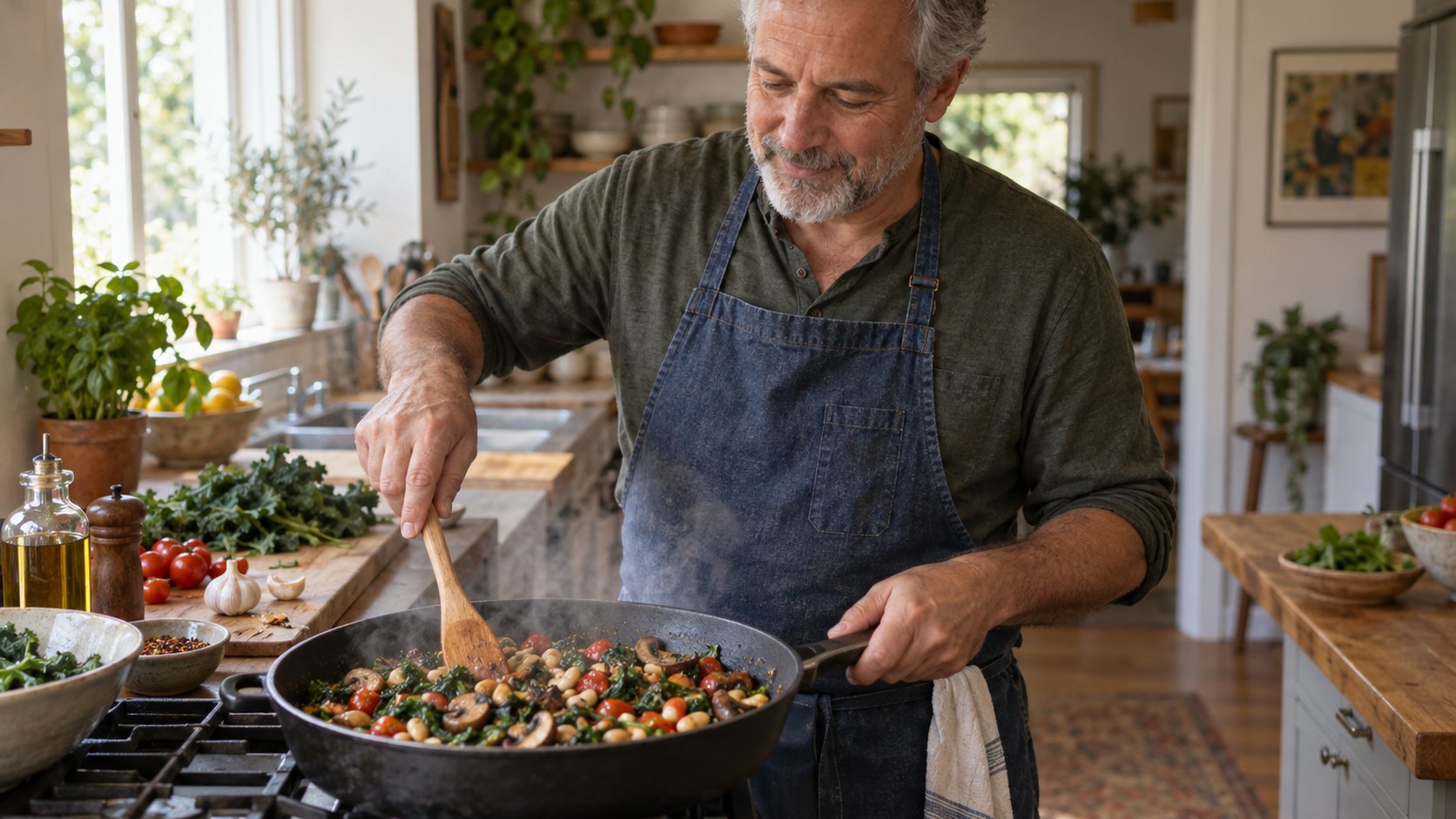
The Idea: Xenohormesis
The concept, from plant biology: a plant that can't flee defends itself chemically. Drought, UV, pests, and cold trigger the production of defensive compounds — polyphenols, glucosinolates, flavonoids — that protect the plant's own cells from stress damage. Xenohormesis (literally "stress from another species") proposes that when we eat those compounds, they mildly stress our cells in the same protective direction: the Nrf2 pathway switches on, antioxidant and repair enzymes ramp up, and the cell gets better at handling future stress.
- 🌱 The logic: "eat plants that had a hard life" — their stress chemicals are our training signals.
- 🧪 The solid core: the Nrf2 activation by sulforaphane is among the best-documented phytochemical effects in human trials.
- ⚠️ The honest limit: as a grand unified theory, xenohormesis remains an elegant hypothesis — the chemistry is real, the "passing on resilience" framing is inference.
Product picks are generic categories, not brands. We may earn a commission on Amazon or iHerb purchases at no cost to you — this never changes our evidence conclusions. Full disclosure
Beetroot juice
A convenient nitrate-rich vegetable-juice option for people who choose it as food or a beverage.
⚠️ Can color urine or stool; nitrate-rich juice may be unsuitable for some people with kidney-stone concerns, low blood pressure, or blood-pressure medicines. It is not a substitute for clinical care.
Check price on Amazon →The Poster Children: Stress Compounds That Work in Humans
| Compound | Source | What the evidence shows |
|---|---|---|
| 🥦 Sulforaphane | Broccoli sprouts, crucifers | Activates Nrf2 — antioxidant defenses — in human trials; sprout extracts measurably shift detoxification markers |
| 🧄 Allicin | Garlic, onions (alliums) | Released when garlic is crushed; modest blood-pressure and lipid effects in trials |
| 🫐 Polyphenols (anthocyanins, oleocanthal, resveratrol) | Berries, olive oil, grapes, cocoa | Consistent associations with vascular health; oleocanthal mimics ibuprofen's anti-inflammatory mechanism |
| 🍵 Catechins (EGCG) | Green tea, matcha | Concentrated in matcha — the next topic's territory |
The practical rule that falls out of the chemistry: eat the bitter, the pungent, and the vividly colored — the flavors that signal plant stress compounds are exactly the ones modern food processing breeds out.
The Vegetarian Longevity Data
The best human evidence comes from the Adventist Health Studies — large cohorts with unusually high rates of plant-based eating:
- 📊 Overall: vegetarian patterns associated with ~12% lower all-cause mortality vs non-vegetarian in the Adventist cohorts.
- 🐟 Pesco-vegetarian best: the strongest mortality reductions appeared in the patterns that include fish — a nuance worth remembering.
- 🫀 Cardiovascular: lower ischemic heart disease mortality across plant-based patterns.
- ⚠️ The caveat: Adventist vegetarians differ from meat-eaters in many ways beyond diet — no alcohol, less smoking, more exercise. The associations are real; the causal share of plant chemistry is unknown.
Broccoli sprouting seeds
Makes it practical to grow broccoli sprouts where an article specifically teaches that food preparation method.
⚠️ Raw sprouts can carry foodborne-illness risk; pregnancy, immunocompromise, older age, and other higher-risk contexts require the article’s cooked alternative or individualized food-safety guidance.
Check price on Amazon →The Honest Nutrition Section
A vegetarian pattern is not automatically optimal — the gaps are real and manageable:
- 🅱️ B12 — essentially absent from plants; deficiency risk is real. Supplementation is standard practice, not optional, for strict vegetarians.
- 🥩 Protein — achievable but requires intention; the Protein topic's 1.6–2.2 g/kg targets apply fully (legumes, soy, dairy/eggs if included).
- ⚙️ Iron & zinc — less bioavailable from plants; pairing with vitamin C and monitoring is sensible.
- 🍟 Junk vegetarianism exists — "plant-based" ultra-processed food loses the entire point. The benefit lives in whole plants, not plant-based cookies.
🥗 The practical synthesis
You don't need to be vegetarian to practice plant hormesis. The evidence-based version: crucifers several times weekly (the sulforaphane source), alliums daily (garlic and onion — crushed, rested, then cooked), berries and deeply colored produce regularly, and the bitter and pungent flavors modern diets have bred out. The vegetarian data supports leaning plant-heavy; the chemistry supports eating the stressed ones.
The Blue Zone Plant Patterns
The world's longest-lived populations eat mostly plants — but the composition, not the label, is the lesson:
- 🫘 Beans daily — the single most consistent Blue Zone food, and a fiber + polyphenol double-hit.
- 🥬 Bitter greens and wild plants — Sardinian and Ikarian diets are full of the bitter, stressed-plant flavors this topic's chemistry describes.
- 🥩 Meat as garnish, not centerpiece — animal foods appear weekly, not daily, in most of these regions.
Plant Questions, Answered Briefly
- Does organic matter for hormesis? Theoretically interesting (stressed plants may produce more defense compounds), but human outcome data is absent — buy organic for the reasons that matter to you, not for proven hormetic benefits.
- Raw or cooked? It depends on the compound: sulforaphane needs the crushing-then-waiting step and survives light cooking; allicin forms when garlic is crushed and rests before heat; lycopene in tomatoes increases with cooking. The general rule: variety across raw and cooked.
- Sprouts? Broccoli sprouts are the sulforaphane heavyweight — dozens of times the mature-plant concentration. A tiny daily handful is the highest-density plant-hormesis move available.
The Sulforaphane Deep-Dive
- 🧪 The chemistry: sulforaphane forms when glucoraphanin meets myrosinase — the enzyme released when crucifers are crushed or chewed. Heat destroys the enzyme, which is why the "chop, wait 40 minutes, then cook" trick exists (and is legitimately supported by food-chemistry studies).
- 🌱 The sprout advantage: broccoli sprouts carry 10–100× the glucoraphanin of mature broccoli — the reason sprout extracts are the research-standard sulforaphane source.
- 🛡️ What Nrf2 activation means: sulforaphane flips the cell's master antioxidant switch — upregulating dozens of protective enzymes. Human trials show it measurably boosts detoxification and antioxidant markers; whether that translates to longevity is the open question.
Matcha powder
Makes an unsweetened matcha routine convenient for people who enjoy and tolerate caffeine.
⚠️ Caffeine can worsen insomnia, anxiety, palpitations, reflux, or medication-related concerns; timing and total intake matter.
Check price on Amazon →The Nitric Oxide Angle: Beets and Greens
One more plant-stress pathway worth knowing, because it's among the best-evidenced in exercise physiology: dietary nitrate — concentrated in beets, spinach, and arugula (again: stressed, vigorous plants) — converts to nitric oxide, relaxing blood vessels. The trials are consistent: beetroot juice lowers blood pressure and measurably improves exercise efficiency. It's a different chemistry from the polyphenol story but the same shape — plant compounds that tune vascular and cellular stress responses — and it rounds out the practical version of this topic: the plants that taste sharp, bitter, or earthy are the ones doing the hormetic work.
The Bottom Line
- Xenohormesis is a genuinely elegant idea with a solid chemical core — plant stress compounds activate human defense pathways.
- The vegetarian longevity association is real and modest — ~12%, strongest with fish included, confounded by lifestyle.
- You don't need the label to get the benefit: crucifers, alliums, berries, and bitter foods do the work.
- Mind the gaps — B12, protein, and iron deserve attention on strict patterns.
Go Deeper: Subtopics
- 🔎 Xenohormesis, explained — why plant stress compounds (polyphenols) signal our cells: the theory and its limits. Read it →
- 🔎 Polyphenol families — flavonoids, resveratrol, sulforaphane: which have human evidence and which are hype. Read it →
- 🔎 The cruciferous case — broccoli sprouts and sulforaphane: the strongest plant-hormesis story. Read it →
- 🔎 Spices as hormetins — turmeric, ginger, capsaicin: the dose-response honestly read. Read it →
- 🔎 Plant-based ≠ hormetic automatically — why a processed vegan diet misses the point entirely. Read it →
Related Topics
- Howitz & Sinclair, "Xenohormesis: sensing the chemical cues of other species," Cell (2008)
- Orlich et al., "Vegetarian dietary patterns and mortality in Adventist Health Study 2," JAMA Internal Medicine (2013)
- Fahey et al., "Sulforaphane bioavailability and Nrf2 activation in humans," Proceedings of the National Academy of Sciences (2002)
- Beauchamp et al., "Phytochemistry: ibuprofen-like activity in extra-virgin olive oil," Nature (2005)
- Key et al., "Mortality in vegetarians and comparable nonvegetarians in the UK," American Journal of Clinical Nutrition (2016)