Plant-Based ≠ Hormetic Automatically
"Plant-based" describes what a food lacks, not what it contains — and the difference decides whether a plant-forward diet delivers hormesis or just calories. This page closes the topic series with the uncomfortable finding: the cohort data split cleanly in half by diet quality, and a processed vegan diet lands on the wrong side of the split.
What the evidence supports
- A healthful plant-based diet index was associated with roughly 25% lower coronary heart disease risk in pooled U.S. cohorts.
- An unhealthful plant-based diet index was associated with roughly 32% higher risk in the same data.
- In a controlled feeding trial, ultra-processed diets caused people to eat about 500 more calories per day than whole-food versions of the same meals.
What remains uncertain
- Which properties of ultra-processed food — texture, palatability, nutrient density, additives — drive the harm is unresolved.
- Plant-based diet indexes are observational; people choosing healthful patterns differ in many unmeasured ways.
- Whether a vegetarian identity adds anything beyond the foods themselves has never been isolated.
Evidence last reviewed: August 15, 2026. Conclusions may change as new research is published.
The Label Tells You What's Missing, Not What's Inside
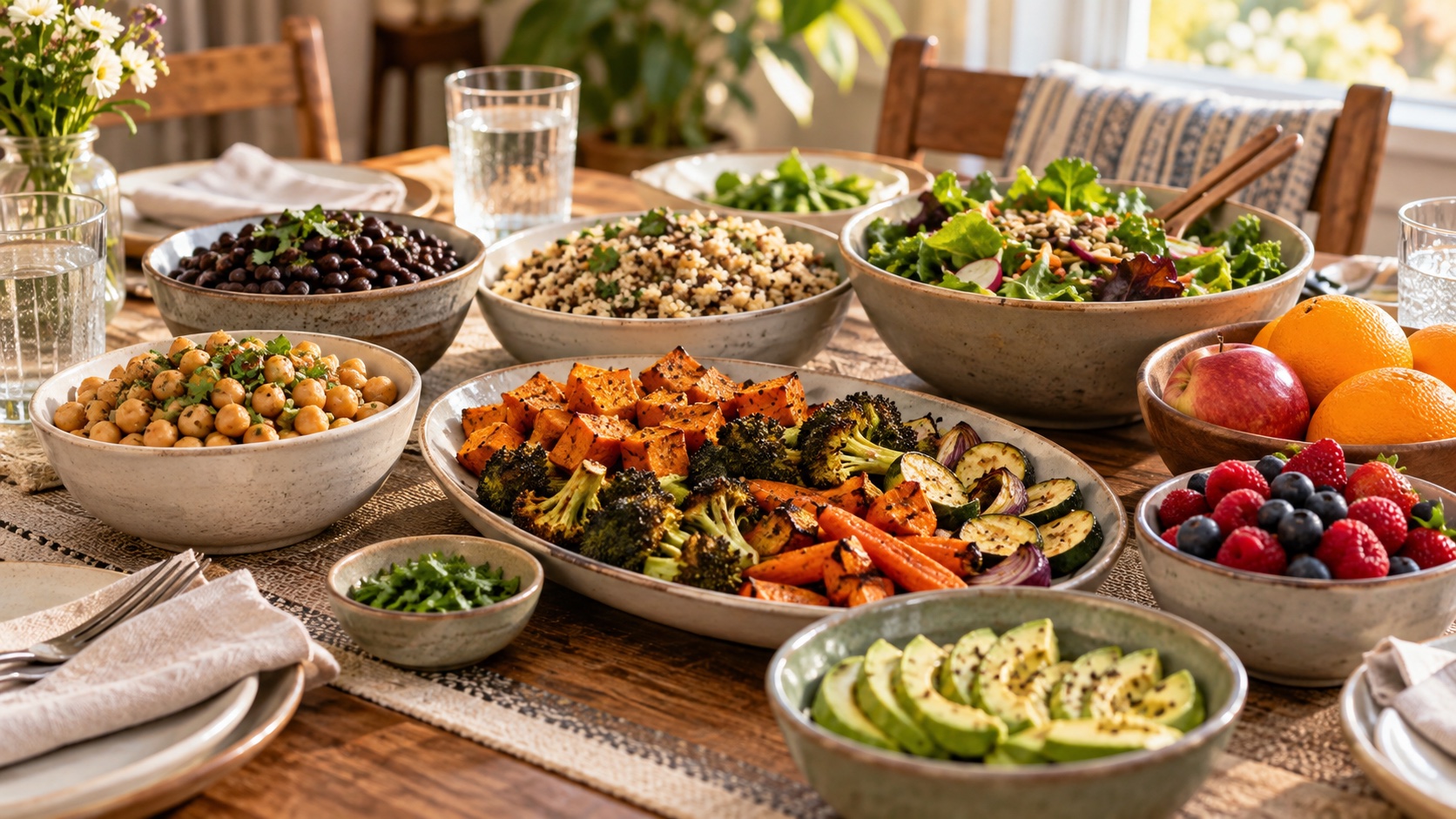
This topic series has built a specific claim: plant foods deliver hormesis through the stress chemistry the parent topic, The Vegetarian Diet & Plant Hormesis, describes — polyphenols, glucosinolates, pungent compounds — embedded in fiber and food structure. Nothing in that claim survives industrial processing. A "plant-based" cookie, burger, or protein bar is plant-derived in the way sawdust is tree-derived: the source organism is correct, and the chemistry that mattered has been removed, diluted, or reformulated for shelf life and eatability. The nutrition-science literature now distinguishes these formally — the NOVA system classifies foods by degree of processing rather than origin (Monteiro et al., Public Health Nutrition, 2018) — and the health data follow that line, not the vegetarian one.
Product picks are generic categories, not brands. We may earn a commission on Amazon or iHerb purchases at no cost to you — this never changes our evidence conclusions. Full disclosure
Vitamin B12
May help prevent or correct low B12 intake or deficiency when indicated, particularly for people with plant-based diets or absorption risk.
⚠️ Usually well tolerated, but symptoms or suspected deficiency need proper assessment; it is not a general energy enhancer.
Check price on Amazon →The Cohort Data Splits in Half
The cleanest demonstration comes from three large U.S. cohorts analyzed by Satija and colleagues (Journal of the American College of Cardiology, 2017). They scored diets on a plant-based index, then split it into a healthful version (whole grains, fruits, vegetables, nuts, legumes, oils) and an unhealthful version (refined grains, fruit juices, potatoes, sweets, sweetened beverages). The two versions predicted opposite futures: the healthful index associated with about 25% lower coronary heart disease risk, and the unhealthful index with about 32% higher risk — within the same data, the same populations, and the same statistical machinery. Being plant-based, in other words, is not one variable; it is two, pointing in opposite directions.
What Processing Removes
- 🌾 The fiber. Milling, juicing, and extrusion strip the matrix that slows digestion and feeds the gut — the substrate the fiber and fermented foods topic shows is doing much of the protective work.
- 🌿 The stress chemistry. Plant breeders have spent millennia selecting against bitterness and pungency — the very flavors that signal the compounds the xenohormesis page and the spices page document. Processing finishes the job by washing, sweetening, and deodorizing what remains.
- 🍩 The eatability. Ultra-processed foods are engineered to be eaten fast and in volume — soft, energy-dense, and low in the chewing resistance that paces intake. The controlled feeding trial by Hall and colleagues (2019) is the cleanest evidence: matched meals, matched macros, and people on the ultra-processed version still ate about 500 calories more per day and gained weight.
- 🧂 The additions. Sugar, refined oils, and salt arrive where the plant chemistry used to be — the "plant-based" label describes the subtraction, not the substitution.
| Form the plant arrives in | What survives the journey | Hormetic value |
|---|---|---|
| 🫘 Whole legumes | Fiber, polyphenols, and protein arrive together, intact | Strong |
| 🥬 Fresh or lightly cooked greens | Most stress chemistry survives; brief cooking trades some compounds for digestibility | Good |
| 🥤 Juices and blended drinks | Fiber stripped, sugar concentrated, some polyphenols retained | Mixed |
| 🍟 Refined grains and extruded snacks | Matrix destroyed, bitterness bred out, salt and sugar added | Weak |
| 🍔 Plant-based meat alternatives | Reassembled isolates with little of the original plant's chemistry remaining | Weak |
The table is the page's thesis in one glance: the hormetic value of a plant food is a property of how it arrives, not of what kingdom it came from. "Plant-based" covers the top and bottom rows equally.
Vegan Junk Food Exists — and the Cohort Data Shows It
The ultra-processed evidence does not spare vegetarians, because the exposure is the processing, not the animal products. In the French NutriNet-Santé cohort, each 10% increase in the share of ultra-processed food in the diet was associated with roughly 12% higher cardiovascular disease risk (Srour et al., BMJ, 2019) — a gradient that applies equally to meatless burgers as to meat ones. Meanwhile the vegetarian cohorts that do show lower mortality, like the Adventist Health Study 2 (Orlich et al., JAMA Internal Medicine, 2013) and EPIC-Oxford (Key et al., American Journal of Clinical Nutrition, 2009), are not just meatless: they are whole-food, legume-heavy, largely home-cooked populations with low alcohol and smoking. And the comparison group matters enormously: in EPIC-Oxford, the mortality advantage of vegetarians largely disappeared when they were compared with similarly health-conscious non-vegetarians rather than the general population — strong evidence that the lifestyle cluster, not the meat exclusion, is doing much of the work. Read together, the literature's message is blunt — the mortality benefit tracks the foods, not the identity.
🚦 The two-question audit
For any food claiming to be plant-based, two questions recover most of the evidence: Is it recognizably a plant? and Would its great-grandparent recipe recognize it? A bowl of lentils passes both; a pea-protein patty with a 40-ingredient label passes neither. This is not purity theater — it is a rough detector for the fiber, matrix, and stress chemistry the whole topic series has been about.
Plant-Based, Done Hormetically
The constructive version of this page is a working checklist — the plant-forward pattern that keeps the hormetic chemistry intact:
- 🥦 Crucifers several times weekly — sprouts if you can, with the chop-and-wait step from the cruciferous case.
- 🫐 Berries, tea, and deeply colored produce regularly — the families with real human evidence from the polyphenol families page.
- 🫘 Legumes daily — the food that anchors both the Blue Zone pattern and the healthful plant-based index, delivering fiber and protein at once.
- 🫚 Spices as flavor, not supplements — the spice dose-response holds inside food.
- 🦠 Fermented plants in the rotation — the gut axis from the fiber and fermented foods topic decides what the plant chemistry actually reaches.
- 🅱️ B12, handled seriously. Plant foods contain essentially no B12, and deficiency is a real clinical problem on strict patterns. The big five supplements page covers dosing, and ⚠️ B12 status on vegan diets is clinician territory, not a self-managed guess.
Questions, Answered Briefly
- 🍔 Is an impossible burger healthier than beef? The evidence cannot say it is healthier — the decisive variable in the cohorts is processing, and both products sit on the processed side. Choose whichever you prefer for ethical reasons; do not expect a health dividend from the swap.
- 🥤 Do plant-based milks count as hormetic? Mostly not — they are fractionated and fortified, a long way from the stressed plant. They are fine foods; they are not hormesis vehicles.
- 🌱 Is a vegan diet better for longevity? The Adventist data say vegetarian patterns associate with modestly lower mortality — and the diet-quality data say the same benefit is available to meat eaters with healthful plant-based indexes. The foods, not the label, carry the evidence.
- 🍪 Where is the line on processed? The two-question audit above is a working line: recognizably a plant, and recognizable to its ancestors. Most of the benefit lives on that side.
- 🌱 Is going fully vegan the hormetic move? No — the evidence rewards the foods, not the identity. A whole-food omnivore with legumes, crucifers, and berries gets the plant benefit; a vegan living on engineered alternatives does not. Choose the pattern for values, but do not expect the label to do the chemistry's work.
The Bottom Line
- "Plant-based" is not one variable, it is two — the healthful and unhealthful indexes pull coronary risk in opposite directions in the same cohorts.
- Processing removes the exact chemistry this topic series exists for — fiber, bitterness, stress compounds, and food structure.
- The vegetarian longevity data come from whole-food populations — the benefit tracks the foods, not the identity.
- Do plant-based well or not at all — crucifers, berries, legumes, fermented plants, and serious B12 handling; skip the engineered middle.
Related Topics
- Satija et al., "Healthful and unhealthful plant-based diets and the risk of coronary heart disease in U.S. adults," Journal of the American College of Cardiology (2017)
- Srour et al., "Ultra-processed food intake and risk of cardiovascular disease: prospective cohort study (NutriNet-Santé)," BMJ (2019)
- Hall et al., "Ultra-processed diets cause excess calorie intake and weight gain: an inpatient randomized controlled trial of ad libitum food intake," Cell Metabolism (2019)
- Orlich et al., "Vegetarian dietary patterns and mortality in Adventist Health Study 2," JAMA Internal Medicine (2013)
- Key et al., "Mortality in British vegetarians: results from the European Prospective Investigation into Cancer and Nutrition (EPIC-Oxford)," American Journal of Clinical Nutrition (2009)
- Monteiro et al., "The UN Decade of Nutrition, the NOVA food classification and the trouble with ultra-processing," Public Health Nutrition (2018)