The protein-first rule at every meal
Protein is the most satiating of the three macronutrients, and the simplest way to use that fact is a rule you can apply without any logging: at every meal, eat the protein before the starch. The chicken before the rice, the eggs before the toast. This page walks the short-term evidence on meal sequencing, the protein doses that earn the effect, and the honest limits — where the rule helps, where it merely rearranges the same calories, and how it joins forces with the volume playbook.
What the evidence supports
- Protein suppresses hunger more effectively per calorie than carbohydrate or fat in controlled feeding studies.
- Short-term trials of protein-and-vegetable-first sequencing show smaller post-meal glucose excursions and better-reported fullness.
- Higher-protein meals reduce later snacking and evening intake in several small trials.
What remains uncertain
- Whether order alone — without a change in total protein or calories — produces meaningful long-term weight change.
- How much of the effect comes from the protein's dose versus the mere pause of eating slower.
- The size of the benefit outside carefully controlled test meals, in real mixed meals eaten at speed.
Evidence last reviewed: August 15, 2026. Conclusions may change as new research is published.
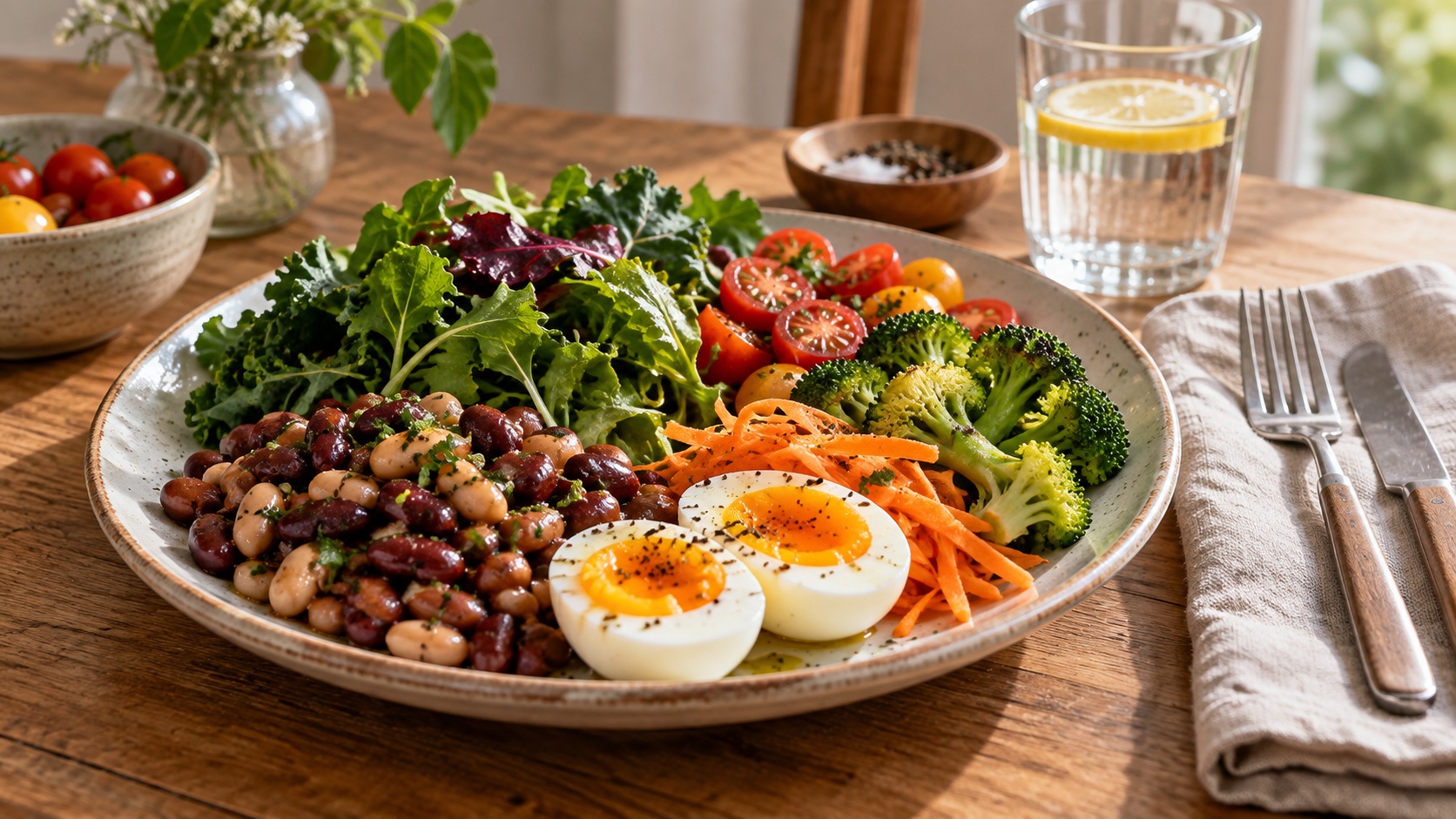
The Rule, Stated
The rule is a sequence, not a recipe: when the plate — or the buffet, or the family dinner — arrives, the protein goes down first. Meat, fish, eggs, or the vegetarian equivalent opens the meal; the starch, bread, and dessert come after. There are two versions of the rationale running underneath it. The first is physiological: protein triggers the gut hormones that signal fullness and slows gastric emptying, so the meal that starts with protein produces an earlier and longer-lasting fullness signal than the meal that starts with starch. The second is practical: front-loading the satiating food means you fill up on the nutrient you actually need before the dense, low-satiety foods get a chance to fill you first. Neither version requires weighing, counting, or a food diary — which is why the parent protocol ranks it among the highest-leverage adherence tricks on the list.
Product picks are generic categories, not brands. We may earn a commission on Amazon or iHerb purchases at no cost to you — this never changes our evidence conclusions. Full disclosure
Protein powder
A convenient way to add dietary protein when food intake is insufficient or impractical.
⚠️ May cause digestive symptoms; formulation matters for allergies and intolerances. It does not replace a varied diet.
Check price on Amazon →What Protein Does Inside a Meal
Of the three macronutrients, protein has the most reliable reputation for satiety — the lay summary of a consistent line of controlled studies rather than a single headline trial. Reviews covering protein and weight management find that higher-protein meals and diets tend to report lower hunger and better fullness across studies (Westerterp-Plantenga et al., Annual Review of Nutrition, 2009). The mechanisms are plural: protein stimulates the release of the gut peptides that act as fullness signals, it takes more energy to digest than carbohydrate or fat, and it slows how quickly the stomach empties. The practical reading for a weight-loss plate is blunt: a meal's satiety-per-calorie is largely set by its protein — which is exactly why every version of the plate on this site puts protein on the plate at full dose before worrying about the rest. The specific daily doses and the muscle-preservation argument belong to the Protein topic and the Protein & Muscle protocol page, which own the evidence this page only borrows.
What the Order-of-Eating Trials Show
The specific claim of the protein-first rule — that sequence matters within a single meal — rests on a smaller, newer, but consistent body of short-term trials. The best-known of them tested identical meals eaten in different order: vegetables and protein before carbohydrate produced smaller post-meal glucose and insulin excursions than the same food eaten with carbohydrate first, in small groups of people studied over a few hours (Shukla et al., Diabetes Care, 2015). The glucose side of that finding is where the effect is most consistent, and it is the territory the Glucose 101 topic documents in depth. The fullness side is real but gentler: participants report better satiety with the protein-first order, and evening intake tends to drop in the follow-up windows. The honest caveat is that these are short, small, laboratory test-meal studies — the kind that can detect a real biological signal without proving what happens across months of real meals. The rule is well-supported as a lever; it is not presented anywhere as a complete strategy on its own.
How Much Protein Earns the Effect
The satiety advantage is dose-dependent, and the rule only works if the dose is real. Reviews of protein and weight control converge on roughly 25–30 g of protein per meal as the range where the fullness benefit shows up consistently — a chicken breast or a couple of eggs plus dairy gets you there, while a sprinkle of cheese on pasta does not (Leidy et al., American Journal of Clinical Nutrition, 2015). Two qualifications matter before you build a plate. First, the effect plateaus: more than about 40 g in a single sitting buys little extra satiety for most people, and the total daily protein target — roughly 1.6 to 2.2 g per kilogram of body weight during a cut — is what the volume playbook's protein column and the Protein & Muscle page orchestrate. Second, protein-first is not protein-only: the point is to open the plate with the satiating food and let it shape the portions that follow, not to turn every meal into a protein shake.
Putting Protein First, for Real
The rule translates into a short decision sequence you can run in any eating situation:
- 🥩 Plate it first, eat it first — put the protein on the plate and take the first bites from it. At a shared table, plate your protein before you reach for the bread basket.
- 🥚 Breakfast counts — eggs, yogurt, or cottage cheese open the morning meal; a cereal-or-toast-only breakfast starts the day with the weakest satiety macro and sets up the 11am graze.
- 🍲 The volume version — vegetables and protein together open the meal, then the starch; this fuses the protein-first rule with the volume playbook on the previous page.
- 🥗 Restaurants and bowls — order protein-forward dishes, and eat the protein component before the rice or noodles regardless of how they arrive.
- 🍫 Dessert is last, deliberately — the sweet tooth gets served after the satiating part of the meal, when the fullness signal is already running; that is the entire order-of-eating insight in one sentence.
None of this requires a food diary. The sequence is the mechanism — it quietly enforces the protein dose and pushes the dense foods to the end of the meal where appetite has already softened — which is why the parent protocol calls it the "silent" version of its nutrient dosing rule.
What This Rule Does Not Promise
The honest limits are worth stating plainly. Rearranging an identical meal's order can measurably change the glucose curve and modestly change fullness, but it does not change the meal's calories — if the protein first is followed by the same starch, the same dessert, and the same portion sizes, the arithmetic is unchanged. The rule earns its keep in two places: it makes it easier to eat less of the dense stuff (because fullness arrives earlier), and it nudges a plate toward more protein overall, the actual driver. If it becomes a ritual that leaves total intake untouched, it is window dressing. It also asks for a real protein dose — the 25–30 g per meal range — and people who run the rule with a sliver of chicken over a mountain of rice are running the label without the mechanism. For medical contexts — kidney disease, certain metabolic conditions — a high-protein pattern is a conversation for your clinician, not a default.
🥩 Sequencing is portion control without the label
You never say no to the rice, the bread, or the dessert — you simply put them after the chicken and let the fullness signal arrive first. The politest reason and the physiological one are the same: protein opens the plate, and appetite closes it smaller.
Common Pitfalls and How to Overcome Them
The rule fails in predictable, fixable ways.
| Pitfall | Why it happens | The countermove |
|---|---|---|
| 🥩 Protein-first with a token dose | A sliver of protein won't trigger the satiety mechanism | Hit the 25–30 g range per meal; plate the full portion before anything else |
| 🍞 Same portions afterward | Order alone doesn't change intake if you eat everything anyway | Plate the starch last and smaller; let the earlier fullness set the portions |
| 🥞 Breakfast skips the protein | Cereal-and-toast mornings start with the weakest satiety macro | Eggs, yogurt, or cottage cheese open the meal; the 11am graze is the tell |
| 🍽️ Buffets and family dinners | Sequencing collapses when food arrives all at once | Serve your own plate protein-first; eat the protein before reaching back |
| 🥤 The protein-drink shortcut | Liquid protein registers weaker fullness than chewing it | Prefer whole-food protein at meals; keep shakes for genuine gaps |
| 📈 The rule runs but the week is still dense | The rest of the plate — oils, desserts, drinks — carries the calories | Pair with the volume playbook and the kitchen reset |
The Bottom Line
- Protein is the strongest fullness signal per calorie — and the dose that earns it is roughly 25–30 g per meal.
- Order matters at the margin — short-term trials show protein-and-vegetable-first sequencing blunts the glucose curve and improves fullness.
- The rule's power is portion shaping — it doesn't change a meal's calories by itself; it helps you eat less of the dense stuff that follows.
- Run it with a real dose and a real plate — token protein, skipped breakfasts, and protein drinks all quietly nullify the mechanism.
Related Topics
- Leidy et al., "The role of protein in weight loss and maintenance," American Journal of Clinical Nutrition (2015)
- Westerterp-Plantenga et al., "Dietary protein, weight loss, and weight maintenance," Annual Review of Nutrition (2009)
- Paddon-Jones et al., "Protein, weight management, and satiety," American Journal of Clinical Nutrition (2008)
- Shukla et al., "Food order, not macronutrient composition, improves postprandial glucose and insulin excursions in young adults with prediabetes," Diabetes Care (2015)