The Pattern Library
The protocol works from a small move list: one first-pick exercise per pattern, for each of the three equipment tiers. This page is that library — fifteen picks, the reasoning behind each one, and the honest truth about how much the specific exercise matters next to the pattern and the load.
What the evidence supports
- The same five patterns can be trained with bodyweight, bands, or gym equipment, with strength gains that land close to each other in the head-to-head trials that exist.
- Bodyweight options like the push-up produce similar hypertrophy and strength gains to comparable loaded presses in untrained lifters.
- Exercise choice matters less than progressive loading and volume — the engine lives in the log, not the lift.
What remains uncertain
- Direct tier-versus-tier trials are short and mostly small; the differences between a band row and a cable row are inferred from neighboring studies, not measured head-to-head.
- The exact "best" pick within a pattern has never been settled for health-focused lifters — the literature compares a handful of exercises, not every variant in the gym.
Evidence last reviewed: August 21, 2026. Conclusions may change as new research is published.
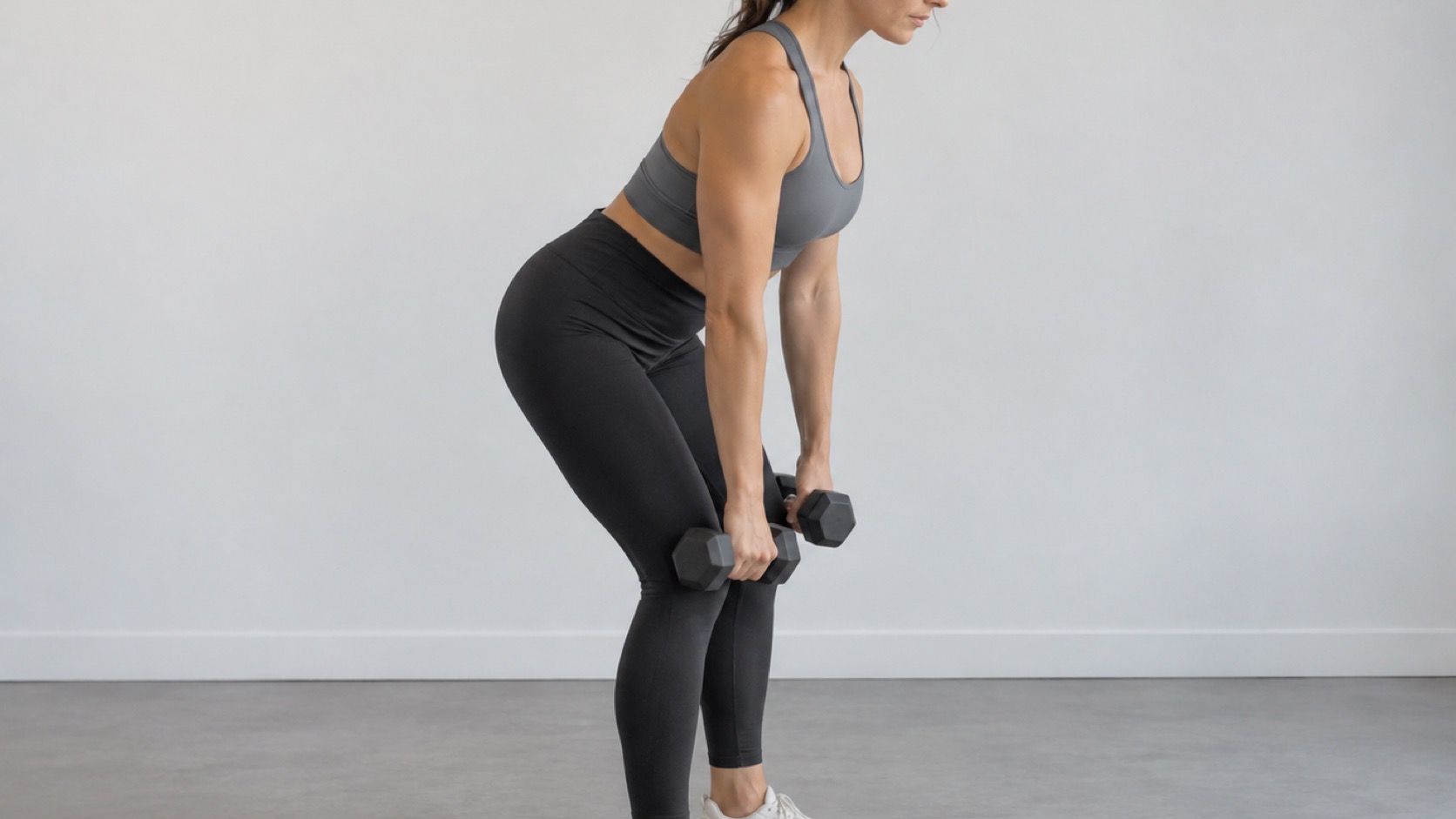
What a Pattern Library Is
The Exercise Selection page made the case that five movement patterns — squat, hinge, push, pull, carry — cover the body. The library is what follows from that: a fixed menu of one first-pick exercise per pattern, across all three equipment tiers, so selection becomes a two-minute decision instead of a weekly debate.
- 🧰 One library, three shelves — bodyweight options for home, band options for light gear, gym options for full equipment; all five patterns appear on every shelf.
- ✅ One pick per pattern per session — a second exercise in the same pattern rarely earns its slot when time is fixed; the frequency evidence shows volume, not exercise count, drives most of the effect (Grgic 2018).
- 🪜 Picks are defaults, not commitments — the swapping rules page owns how and when to trade a pick for its neighbor; the library just keeps the menu organized.
- 📐 The tier ladder is the escape hatch — every pick has an easier rung and a harder rung; the Three Equipment Tiers page maps those ladders in detail.
Product picks are generic categories, not brands. We may earn a commission on Amazon or iHerb purchases at no cost to you — this never changes our evidence conclusions. Full disclosure
Adjustable dumbbells
Allows progressive loading at home across common strength movements.
⚠️ Poor technique or rapid load increases raise injury risk; not required to begin moving more.
Check price on Amazon →The Tier Grid: Fifteen Picks
The full library is five patterns wide and three tiers deep. Each cell below is a defensible default — not a courtroom verdict, just the pick that mostly plays nice with the tier's constraints and the pattern's purpose.
| Pattern | Bodyweight tier | Band tier | Gym tier |
|---|---|---|---|
| 🪑 Squat | Chair squat / box squat | Banded goblet squat | Goblet → back squat |
| 🔗 Hinge | Glute bridge | Banded Romanian deadlift | Trap-bar or conventional deadlift |
| 🚪 Push | Push-up (wall → floor) | Band press or band push-up | Dumbbell press → bench or overhead press |
| 🪝 Pull | Towel or doorframe row | Band row (anchored) | Cable row or dumbbell row → chin-up |
| 🎒 Carry | Loaded backpack walk | Band-resisted walk | Farmer's walk / one-arm carry |
- → Means a ladder, not a list — the arrow reads "start here, climb when the current rung is easy with honest form"; you never have to run every rung.
- 🪝 Pull is the one true gap — it is the lone pattern with no effortless bodyweight option; the towel row and doorframe row are workable, but a band or bar makes the pattern dramatically easier to load.
- 🎒 Carry hides in plain sight — a backpack with books is a legitimate farmer's walk; the pattern never actually needs a gym.
Why the Gym Picks Set the Reference
The gym tier is the reference for a boring reason: barbells, dumbbells, and cables load in small, precise, repeatable steps. That is what progressive overload wants — the Progressive Overload page's whole engine. Bands do add load, but the resistance curve bends with the stretch, and bodyweight tops out at your own mass. None of this damns the other tiers; it explains the hierarchy.
- ⚙️ Precision of loading — a 2.5 kg jump is legible in a log; band tension is guessed by feel, and bodyweight progression means harder levers, not more weight.
- 🫀 Muscle activation runs higher, modestly — in a cross-over study of multi-joint exercises, conventional equipment produced higher prime-mover activation than elastic bands (Iversen 2017); a p<.001 difference in EMG, but trials differ on how far that translates to growth.
- 📉 And yet bands come close — a meta-analysis of elastic versus conventional resistance found broadly similar strength gains (Lopes 2019), with the caveat that most of its studies were small and short.
- 🧭 The honest read — the gym reference is about convenience of progression, not superiority of outcome; a band-only lifter is not running a weak program.
The Bodyweight Tier Is Underrated
The stereotype is that bodyweight training is a starter kit. The evidence says otherwise for at least one famous case: in untrained men, low-load bench press and push-ups produced similar hypertrophy and strength gains (Kikuchi & Nakazato 2017). The pattern — not the price of the equipment — was doing the work.
- 🚪 Push-up as a real press — wall, incline, floor, then weighted; the progression is long enough to serve years, especially with a loaded backpack added.
- 🪑 Chair squat as a real squat — box squats teach depth and control precisely because the chair is a checkpoint; sitting is the pattern's daily-life target anyway.
- 🪝 The pull needs one piece of gear — a $15 doorframe band or a sturdy towel-through-door row closes the one real gap in the tier; expect chin-ups to stay out of reach for most beginners, which is fine.
- 🎒 Loaded locomotion for free — the carry pattern was designed by humans carrying things; a backpack walk is not a workaround of the pattern, it is the original version.
Resistance bands
A low-space way to begin or supplement resistance training.
⚠️ Bands can snap and unstable anchoring can cause injury; stop movements that provoke pain.
Check price on Amazon →The Slack in the System
Here is the liberating finding hiding behind all the fine print: within a pattern, nearby exercises are close cousins. The trials that compare exercise to exercise find small, usually non-significant differences; the variables that reliably move outcomes are load, volume, and consistency. That means the library's picks are interchangeable enough that the right choice is the one you can do well, pain-free, and without dread.
- 📈 The log beats the list — the Reps, Sets & Weights page owns the loading math; the point here is that each pick just needs to be loadable and loggable.
- 🦵 Joints outrank minutiae — a lifter whose knees dislike back squats should take the goblet or split-squat rung for months; no study overturns a joint that talks back.
- 😐 Enjoyment is a variable, not a luxury — the variation evidence shows motivation responds to changing exercises (Baz-Valle 2019), and adherence decides more outcomes than any single lift choice.
- 🔄 Sticking with one pick for weeks is a feature — skill acquisition within a movement is real; the swapping rules page sets the rotation window so novelty and mastery stay in balance.
How to Choose Your Current Pick
- ✅ Form-first filter — from each pattern's menu, take the rung you can already perform with control for 3–5 clean reps; an ugly back squat loses to a tidy goblet squat every time.
- 🩺 Joint-tolerance filter — if a pick reliably aggravates a joint, step down the ladder within the pattern before you ever consider skipping the pattern; persistent pain is clinician territory, not substitution arithmetic.
- 🗓️ One pick per pattern per session — two squat variants in one session is how time evaporates; the second pick belongs to the rotation, not the same hour.
- 📝 Write the pick down — the library only helps if your log says which rung you are on; next week's decision reads from the log, not from memory.
🧰 A menu, not a cage
The library exists to end selection paralysis, not to police your exercise choices. Every pick has neighbors it can trade places with, and the swap rules in this series tell you when to trade. What the library guards is the pattern itself: stay inside the five verbs, keep the load climbing, and the specific noun on today's menu is the least important part of the sentence.
Questions, Answered Briefly
- ❓ Which tier should I start from? — The tier you can run twice a week for six months. Home bodyweight beats a gym membership that goes unused; the tier page has the honest comparisons.
- ❓ Do I need a different pick per training day? — No. Day A and Day B can share the same library; the rotation windows in the swapping page decide when variety earns its keep.
- ❓ Can I mix tiers inside a session? — Yes, freely. A gym goblet squat, a band row, and a backpack carry are a coherent session; tiers are shelves, not silos.
- ❓ My gym is missing a pick. Now what? — Take the neighboring rung on the same pattern's ladder; the pattern is the requirement, the specific machine is not.
- ❓ Is one pick per pattern really enough? — For this protocol, yes: every major muscle group is covered by the five patterns, and the evidence ties most outcomes to volume and progression rather than exercise count (Grgic 2018).
The Bottom Line
- The library is fifteen picks — one per pattern per tier — and every cell is a defensible default, not a verdict.
- Gym picks are the reference for loading precision, while bands and bodyweight land within striking distance in the trials that exist.
- The pull is the one pattern that wants a band or bar; the other four train honestly with zero equipment.
- Within a pattern, form, joints, and enjoyment beat subtle exercise differences — the log is the referee.
Related Topics
- Kikuchi & Nakazato, "Low-load bench press and push-up induce similar muscle hypertrophy and strength gain," Journal of Exercise Science & Fitness (2017)
- Lopes et al., "Effects of training with elastic resistance versus conventional resistance on muscular strength: A systematic review and meta-analysis," SAGE Open Medicine (2019)
- Iversen et al., "Multiple-joint exercises using elastic resistance bands vs. conventional resistance-training equipment: A cross-over study," European Journal of Sport Science (2017)
- Baz-Valle et al., "The effects of exercise variation in muscle thickness, maximal strength and motivation in resistance trained men," PLOS ONE (2019)
- Grgic et al., "Effect of resistance training frequency on gains in muscular strength: A systematic review and meta-analysis," Sports Medicine (2018)
- Kraemer & Ratamess, "Fundamentals of resistance training: progression and exercise prescription," Medicine & Science in Sports & Exercise (2004)