Zone 2 in the wild
The baseline picture of zone-2 training happens indoors — treadmill, bike ergometer, rower — but the daily version most people can actually sustain happens outside: on a trail, in a pool, on a commuting bike, under a rucksack. This page covers the non-machine options, how to hold the zone in each one, and the honest limits that make some environments better zone-2 territory than others.
What the evidence supports
- Large volumes of low-intensity exercise accumulated across the day underpin the aerobic adaptations the zone-2 protocol targets.
- Non-machine modes — walking, hiking, cycling, swimming — carry the same low injury and dropout risk that makes easy effort sustainable.
- The talk test translates across modes, giving an off-machine intensity check that needs no equipment.
What remains uncertain
- Whether the same minutes in the zone, earned off-machine, produce identical adaptations to machine work is not directly measured.
- Terrain, weather, and load make "steady effort" harder to define outside — the zone reading is necessarily fuzzier.
- In the pool, where speech is impossible, every zone estimate is a proxy, and its precision is less studied.
Evidence last reviewed: August 15, 2026. Conclusions may change as new research is published.
The Machine Bias
There is a quiet bias in how training advice is written: the treadmill and the bike ergometer make intensity easy to control, so they become the default illustration of zone 2. But the research case for easy volume never depended on the machine — it depended on accumulated low-intensity exercise (Seiler & Tønnessen, Sportscience, 2009), and daily life is full of ways to earn it. The off-machine versions trade a little precision for a lot of sustainability: a hike or an active commute is easier to repeat daily than a deliberate appointment with a machine, and repeatability is what actually builds the base.
The instrument does not change with the mode. The talk test works on a trail exactly as it does on a treadmill: full sentences and an audible breath mean zone 2, short phrases mean you have climbed above it. Keep that check in your head and the environment becomes a detail, not a barrier.
Product picks are generic categories, not brands. We may earn a commission on Amazon or iHerb purchases at no cost to you — this never changes our evidence conclusions. Full disclosure
Adjustable weighted vest
May add loading to walking or simple strength movements for experienced users.
⚠️ Can aggravate joint, back, or balance problems; not appropriate for everyone and not needed for walking benefits.
Check price on Amazon →Hiking: Zone 2's Natural Habitat
Hiking is arguably the most natural zone-2 environment that exists, for one structural reason: terrain paces you. Uphill sections raise effort automatically, flats and descents lower it, and without a pace screen the effort settles wherever your legs and lungs agree — which, for most people, is inside or just below the zone. The practical moves are to let the hills set the pace rather than fighting them, run the sentence check on every sustained climb, and treat descents as the recovery they are.
- ⛰️ Climb at speech speed. On a steep section, the climb's job is to stay at the talk-test boundary — slow the step, shorten the stride, and keep sentences intact.
- ⛷️ Walk the downhills, resist the sneeze. Gravity makes descents free; letting pace quadruple there quietly turns the whole effort gray. Keep a relaxed, chatty pace all the way down.
- 🎒 Add load only after the pace is boring. When a familiar hike holds zone 2 easily, that is the moment to consider a pack — the Walking & Rucking page covers the progression in detail.
- 🌦️ Weather edits the zone. Heat and altitude push effort up at the same pace; on hot or high days, drop the ambition and keep the speech check running.
Swimming: The Breath Is the Zone
Swimming is the one mode where the talk test simply does not apply — you cannot speak underwater, and the stroke rhythm owns your breathing. The substitute is a breath-count rule: steady breathing every three to five strokes marks the easy band, while needing to grab air after every second stroke means you have pushed well past it. The read is fuzzier than speech, which is the honest price of the water, but with a fixed stroke rhythm it is still a usable low-intensity gauge.
Open water adds its own corrections. Cold water raises the sense of effort and can spike heart rate early, currents demand more of the same stroke, and there is no wall clock or screen to sanity-check against. In the pool, the lap clock fills that role: a steady lap count at a comfortable breath rhythm is a workable zone-2 session with none of the equipment the rest of this series assumes.
Rucking, Commuting, and the Daily Layer
The least glamorous options are often the most habit-forming, because they layer into a day that would have happened anyway. A loaded backpack turns a neighborhood walk into a deliberate easy-effort session; a bike commute converts dead time into fifty minutes of steady work with the route itself as the pace governor. The Walking topic and the Walking & Rucking page own the daily-movement layer underneath this series; the point here is that those minutes count toward the same base the machines build, as long as the intensity stays honest.
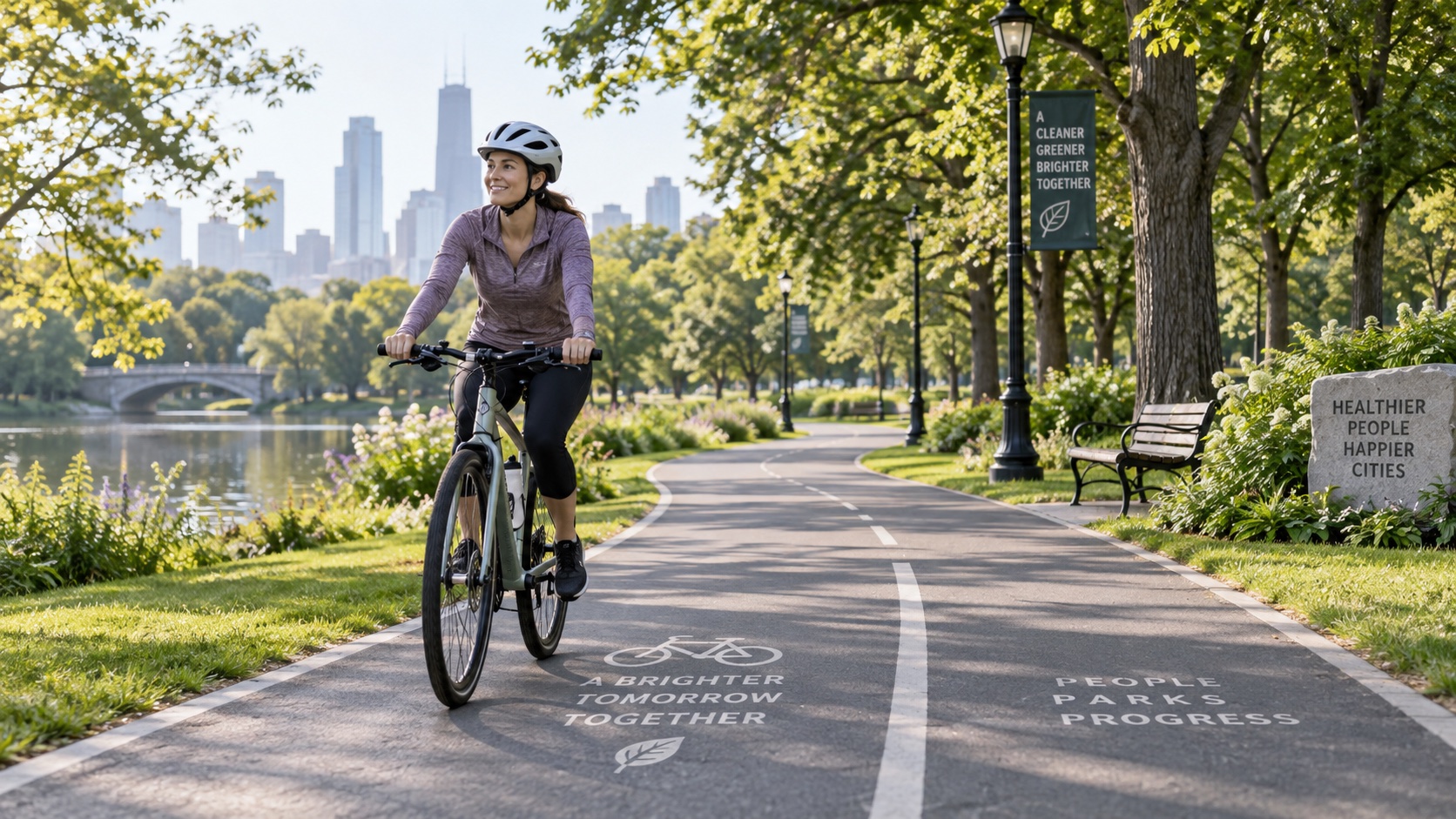
- 🚲 Route equals intensity control. A flat, low-light-traffic route where full sentences hold is a self-contained zone-2 setup. Headwinds and hills are the variable — treat them as effort and slow down.
- 🎒 Start the load light. Rucking enters the zone when the weight forces a deliberate, slightly faster-than-easy walk — which takes more load than beginners expect. Add weight only as the pace stays talk-test-easy.
- 🐢 Embrace the plod. A ruck at zone-2 pace feels comically slow to the unloaded eye and unglamorously steady to you. That is the sign the load-time balance is right.
- 📈 Daily counts, but honesty audits. The commute-ruck minutes only count if they hold the zone; a rushed, gray-effort commute is neither here nor there and should not be double-counted in the weekly total.
🥾 The trail hands you zone 2 — if you let the hills set the pace
The machine's appeal is control; the trail's gift is repeatability. The failure mode off-machine is the exact opposite of the failure mode indoors: instead of drifting up into the gray zone out of ambition, you drift up because terrain, weather, or a tight schedule pushes the effort. The fix is the same in both worlds — run the sentence check, obey it, and let the easy hours be easy. Sustainability is the point of the whole protocol, and nothing is more sustainable than exercise that looks like life.
Making It Count Without a Schedule
The off-machine versions trim the planning overhead, but they still obey the parent page's arithmetic: the currency is time in the zone, added slowly. Two 25-minute hikes on separate days total roughly like one 50-minute session for base purposes, so a busy week of short outdoor pieces still moves the engine forward. The parent page's 10% rule — add about a tenth of weekly volume every week or two — applies to trail time and pool time exactly as it does to treadmill time, and it exists to keep the additions invisible until the fitness arrives.
| Mode | How to hold the zone | Failure mode | Read |
|---|---|---|---|
| 🥾 Hiking | Talk test on every hill; chatty pace on flats and descents | Descent pace creeping up turns the session gray | Native zone 2 |
| 🚲 Bike commute | Flatter route where full sentences hold; headwinds are effort | Racing the clock instead of the sentences | Easy hold |
| 🏊 Swimming | Breath every 3–5 strokes; steady lap rhythm | Comparing to machine pace; grabbing air every stroke | Breath proxy |
| 🎒 Rucking | Start light; tune the load to the talk-test pace | Adding weight faster than time, pushing effort up | Tune the load |
The Honest Limits
The off-machine story deserves its cautionary paragraph, because the strengths are also the failure modes. Terrain makes steady effort genuinely hard to hold — a single aggressive climb can spend a session's worth of easy-time budget in five minutes. Weather edits every reading, and consistency, not novelty, is where outdoor plans typically break: the trail is motivating in June and easy to skip in January, while the treadmill stays neutral year-round. The honest fix is not to abandon the outdoors but to let the two camps trade — machines for the weeks when life is chaotic, the wild for the weeks when it is not — and to keep the speech check as the shared referee across both. Undue breathlessness, chest discomfort, or dizziness at any of these efforts is a stop signal, not a training challenge, and anyone with a cardiac or respiratory condition should clear intensity work with a clinician first; nothing on this site prescribes.
Outdoor Questions, Answered Briefly
- 🏔️ Is a steep hike zone 2 or zone 3? Depends on the gradient and your fitness — which is exactly why the sentence check runs on every sustained climb. If phrases break apart, it is zone 3, and that is fine as long as you are calling it that.
- 🏊 How do I stay in zone 2 without a talk test in the pool? Use the breath rhythm — three to five strokes per breath in steady laps. It is a proxy, fuzzier than speech, and better than nothing.
- 🚲 Does a hard commuting pace undo the easy session? Only if every commute becomes hard. Occasional efforts are fine; a weekly gray-zone commute that displaces easy work is the version to fix.
- 🎒 How heavy should my ruck start? Light — roughly a tenth of body weight or less — and then grow it only while the pace stays talk-test-easy. The Walking & Rucking page has the full ramp.
- 🌧️ Can I count zone 2 on a bad-weather month? Only the sessions you actually do. When the wild becomes unreliable, let the machines carry the base until the weather turns — the protocol survives the swap.
The Bottom Line
- The zone travels with you — the talk test works on a trail exactly as it does on a treadmill, so no mode is a barrier to the base.
- Terrain is a pace-setter, not a problem — hills hike the effort and descents recover it; let the speech check arbitrate both.
- The pool swaps speech for breath — a three-to-five-stroke rhythm is a fuzzier proxy but a workable zone-2 gauge.
- Sustainability is the point — the commute, the ruck, and the daily walk count toward the same base when the easy hours stay honestly easy; machines are the winter backup, not the identity of the protocol.
Related Topics
- Seiler & Tønnessen, "Intervals, thresholds, and long slow distance: the role of intensity and duration in endurance training," Sportscience (2009)
- Persinger et al., "Consistency of the talk test for exercise prescription," Medicine & Science in Sports & Exercise (2004)
- Foster et al., "The Talk Test as a marker of exercise training intensity," Journal of Cardiopulmonary Rehabilitation and Prevention (2008)