The drift problem
Hold a pace steady for an hour and your heart rate will slowly climb even though nothing else changed. That is cardiac drift — a normal, predictable feature of prolonged exercise — and it quietly breaks every heart-rate steering system based on the per-minute reading. This page explains what the drift is, what it is telling you, and why pace, not heart rate, is the better steering wheel for long easy sessions.
What the evidence supports
- At constant work rate, heart rate rises progressively during prolonged steady exercise — the classic cardiac-drift pattern.
- The drift reflects real physiological changes: rising body temperature, a shifting fluid distribution, and the cardiovascular system's response to both.
- Fitter individuals tend to show less drift at the same relative effort, which makes the drift a crude but usable adaptation signal.
What remains uncertain
- How much drift is "normal" versus a warning sign is not pinned down — it depends heavily on heat, humidity, hydration, and the individual.
- Whether suppressing drift (by drinking more or cooling off) changes training outcomes, not just the number on the watch, is not established.
- The exact mix of temperature, fluid, and cardiac factors behind drift is still debated in the physiology literature.
Evidence last reviewed: August 15, 2026. Conclusions may change as new research is published.
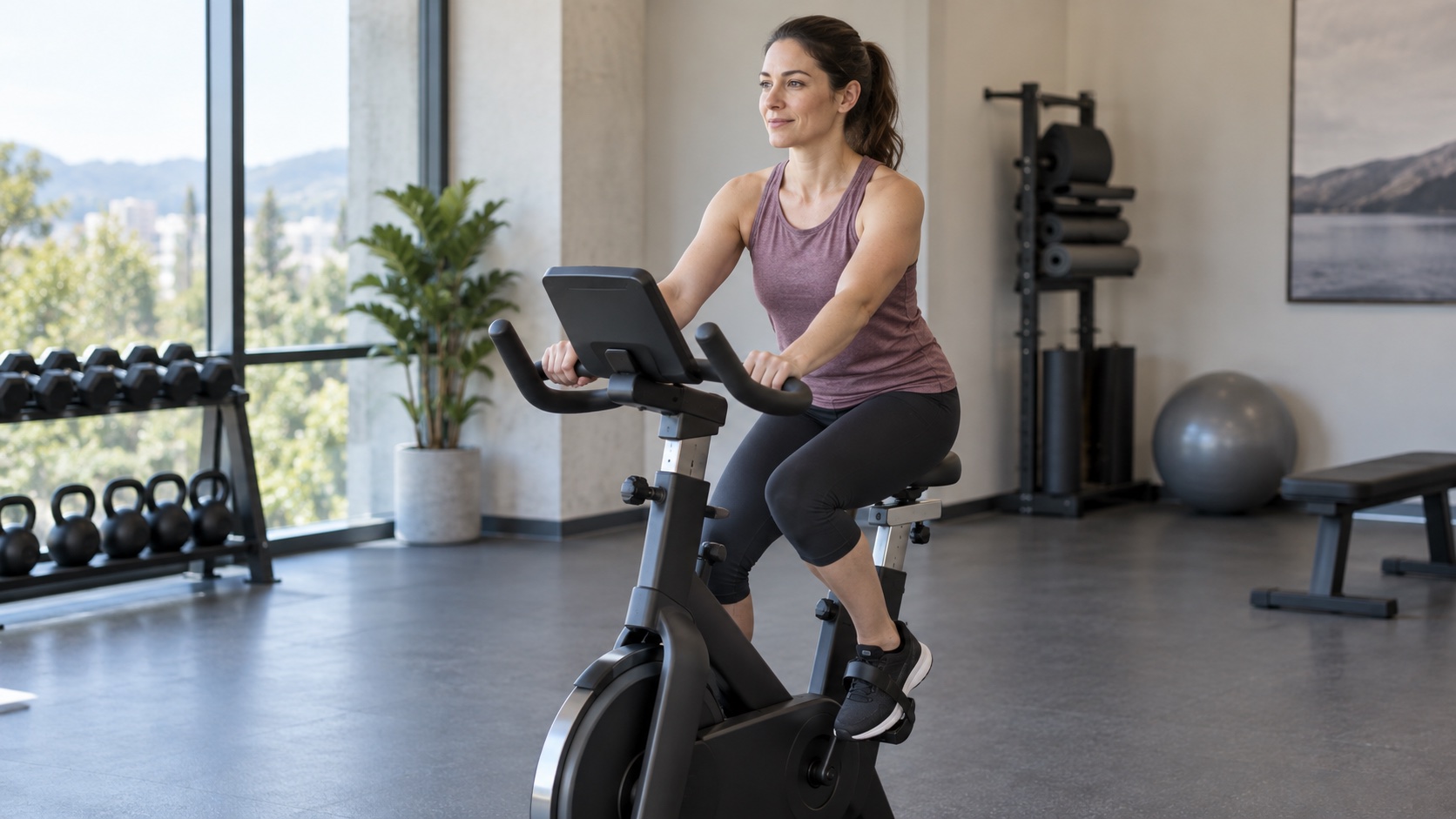
What Cardiac Drift Actually Is
Cardiac drift is the slow upward creep of heart rate during exercise at a fixed work rate. You set an easy pace on a bike, sit there for 45 minutes, and the watch slowly climbs — 132, then 138, then 143 — while your speed never changes. Decades of exercise physiology have documented this pattern in prolonged steady-state exercise, and the classic explanation is two-part: as you generate heat, blood shifts toward the skin to shed it, and as fluid is lost to sweat and breathing, the volume of blood returning to the heart edges down (Coyle & González-Alonso, Exercise and Sport Sciences Reviews, 2001). The heart compensates by beating a little more per minute to move the same amount of blood.
The key insight is that this happens while your actual output stays the same. The pace is identical, the work is identical — only the heart rate moves. That single fact is the whole problem with heart-rate-based steering on long sessions: the thing you are trying to hold constant is changing for reasons that have nothing to do with your effort going up.
Product picks are generic categories, not brands. We may earn a commission on Amazon or iHerb purchases at no cost to you — this never changes our evidence conclusions. Full disclosure
Smart band or smartwatch
Can make activity, exercise, and routine patterns easier to notice over time.
⚠️ Step, heart-rate, and sleep estimates can be inaccurate and may encourage unhelpful over-monitoring; consumer readings are not medical diagnoses.
Check price on Amazon →The Two Kinds of Rise
It helps to separate the rise that means something from the rise that is just the workout unfolding. Both are real, and neither is a reason to panic:
- 🌡️ The predictable drift. Slow, steady, expects you: a gradual 10–20 beats over an hour in ordinary conditions, roughly tracking the temperature and fluid story above. This is the normal cost of a session.
- 🚨 The fast rise. A quick, large jump in the first quarter of a session — especially accompanied by dizziness, unusual breathlessness, or a fading ability to speak — is a different animal. That is a signal to stop, cool off, drink, and check yourself, not to push through.
- 😓 The effort-coupled rise. When pace creeps up without you noticing, heart rate rises because output really is higher. This is the talk test's favorite quarry — pace creep masquerading as a cardio event.
- ☀️ The heat-amplified rise. In warm conditions the same session produces a bigger drift. The body is shedding heat, not failing; drop the effort, keep the fluid up, and accept the higher number.
Why the Watch Lies to You on Long Sessions
Here is the trap. Most zone-2 guidance says "keep your heart rate in this band." But drift means the band is a moving target: maintain a perfectly honest zone-2 pace and your heart rate will drift out of the band by the end of the session, purely as a normal consequence of duration. The watch then reads exactly what a well-run session produces and calls it an overreach.
The consequence is a cascade of wrong decisions. Trust the watch and you slow down mid-session to satisfy a number your own effort already made meaningless — trading productive base time for a synthetic "correct" reading. Then you judge the session a failure for the same reason. The way out is to change what you steer with: hold the pace, let the heart rate drift, and use speech as the boundary check. The talk-test page is the instrument that makes that possible without a monitor.
Heart-rate chest strap
May provide more consistent exercise heart-rate feedback than wrist estimates for some users.
⚠️ Consumer readings can be wrong and should not be used to self-diagnose heart problems.
Check price on Amazon →Steer by Pace, Audit by Heart Rate
Here is the decision rule in its practical form. On zone-2 sessions, set the effort by pace and speech; treat the heart rate as a story told after the fact, not a command given during it. On interval days, the opposite — pace matters less than hitting the hard minutes, and heart rate is a useful secondary check. The table below is the two-steering-wheel picture.
| Instrument | What it measures | When to trust it | Read |
|---|---|---|---|
| 🚴 Pace | Actual output — ground or work per minute | The everyday steering wheel for zone-2 sessions; immune to drift | Primary |
| 🩺 Heart rate (instant) | A proxy that lags effort and drifts with conditions | Red flags and rough trend, not per-minute decisions | Audit only |
| 📉 Heart rate (weekly trend, incl. resting) | The direction of adaptation, averaged over many sessions | Confirming fitness gains across weeks rather than within one | Tracks adaptation |
| 🗣️ Talk test | Your live ventilatory threshold, in real time | Resolving disputes between pace and watch on any given day | Tiebreaker |
🌊 The number that rises while you hold still
Drift is the reason the zone-2 watch band fails exactly when you need it most — on the long sessions that make up the bulk of the week. Once you know what the rise is, it stops being an alarm and becomes background noise: expected, harmless, and self-correcting. The discipline is remembering that on an easy day, the pace is the contract, the heart rate is commentary, and the speech grade is the referee.
Drift as a Fitness Signal
The same phenomenon that defeats the per-minute number is a gift at the scale of weeks. If you hold the same pace and route across two months of consistent training, the drift on a fixed-pace session tends to shrink — the heart rate climbs less over the hour, and the talk test stays easy longer into the session. When you can name that trend, you are watching adaptation accumulate in the most honest currency the watch offers.
- 📉 Measure the same session. Same route, same conditions, same start time, weekly. Drift is only comparable when the setup is too.
- 🧊 Control the weather in your head. A hot week inflates drift and makes you look less fit; a cool week flatters you. Compare across months, not across a heat wave.
- 📈 Pair it with the resting trend. A dropping resting heart rate plus shrinking drift is the two-finger signal of a genuinely bigger engine — the VO2 Max page owns the physiology underneath.
- 🚩 A big drift after a rest plateau is a check, not a badge. If the same pace suddenly drifts much more than usual while you feel off — especially with heaviness or unusual breathlessness — treat it as a signal to ease back for a week and let the system catch up, not as effort to admire.
When the Watch Should Win
Steering by pace has its own failure modes, and the honest page names them. Pace loses its usefulness on hills where staying "steady" is impossible, in extreme heat where the drift balloons, and for anyone whose heart rate is altered by medication — beta-blockers blunt the very signal these methods all rely on. In those cases the balance shifts: trust the watch's warnings more, shorten the sessions, and if you have a cardiac or respiratory condition, intensity guidance belongs with your clinician before any of this arithmetic — nothing on this site prescribes. A fast early rise with dizziness, chest discomfort, or unusual breathlessness is always a stop-and-check event, whatever the theory says.
Drift Questions, Answered Briefly
- 🌡️ Is my heart rate supposed to drift at all? Yes. At a fixed pace, a gradual rise over a long session is normal physiology, documented for decades in prolonged-exercise studies. It is the fast, early, big rise that is the exception worth acting on.
- ⌚ Should I keep slowing down to hold the band? No. Slowing to satisfy a drifting number converts a good session into a slow one while producing the same drift ten minutes later. Hold the pace, let speech judge the effort.
- 💧 Will drinking more stop the drift? It can blunt the rise, because part of the drift is fluid-related. But chasing a perfectly flat heart rate is not the goal; the goal is an honest session, and mild drift is its price.
- 🩺 I take a beta-blocker — does any of this apply? Only under your clinician's guidance. The medication changes how heart rate responds to effort, so the watch, the pace, and speech all need re-interpretation that only your care team can provide.
- 🏔️ What about hills, where pace cannot hold? On terrain, effort becomes the anchor instead of pace — climb at a speech-manageable effort, let pace do whatever the hill demands. The Zone 2 in the Wild page covers the off-machine version of this.
The Bottom Line
- Drift is normal, not a malfunction — at constant pace, heart rate rises over an hour for temperature and fluid reasons unrelated to your effort going up.
- The watch band is a moving target on long sessions — steering by per-minute heart rate makes you slow down to satisfy a number your own output already rendered meaningless.
- Pace is the steering wheel, speech is the referee — hold the pace, let the heart rate drift, and use the talk test to judge the effort.
- Across weeks, shrinking drift is a real adaptation signal — measure the same session, mind the weather, and pair it with the resting-heart-rate trend.
Related Topics
- Coyle & González-Alonso, "Cardiovascular drift during prolonged exercise: new perspectives," Exercise and Sport Sciences Reviews (2001)
- Seiler & Tønnessen, "Intervals, thresholds, and long slow distance: the role of intensity and duration in endurance training," Sportscience (2009)
- Persinger et al., "Consistency of the talk test for exercise prescription," Medicine & Science in Sports & Exercise (2004)