Resistance Training for Blood Pressure
Strength training earns its place in the blood-pressure plan less for dramatic reductions and more for reliability: moderate-load resistance work shows a small, consistent signal across meta-analyses, and it builds the muscle mass that supports metabolic health broadly. The catch is technique — breath-holding under load can spike pressure in the moment, which is why the breath rule matters more than the weight on the bar.
What the evidence supports
- Dynamic resistance training at moderate loads is associated with a small reduction in resting blood pressure in meta-analyses.
- The effect appears roughly comparable in size to aerobic training's, with systolic shifts in the single digits.
- Muscle mass and strength gains ride along, supporting the metabolic levers that matter long term.
What remains uncertain
- Whether heavy low-rep training confers the same pressure benefit as moderate-load, higher-rep work.
- How the acute pressure spike during a set interacts with training safety over years.
- Whether the benefit comes from the training itself or from the body-composition changes it produces.
Evidence last reviewed: August 20, 2026. Conclusions may change as new research is published.
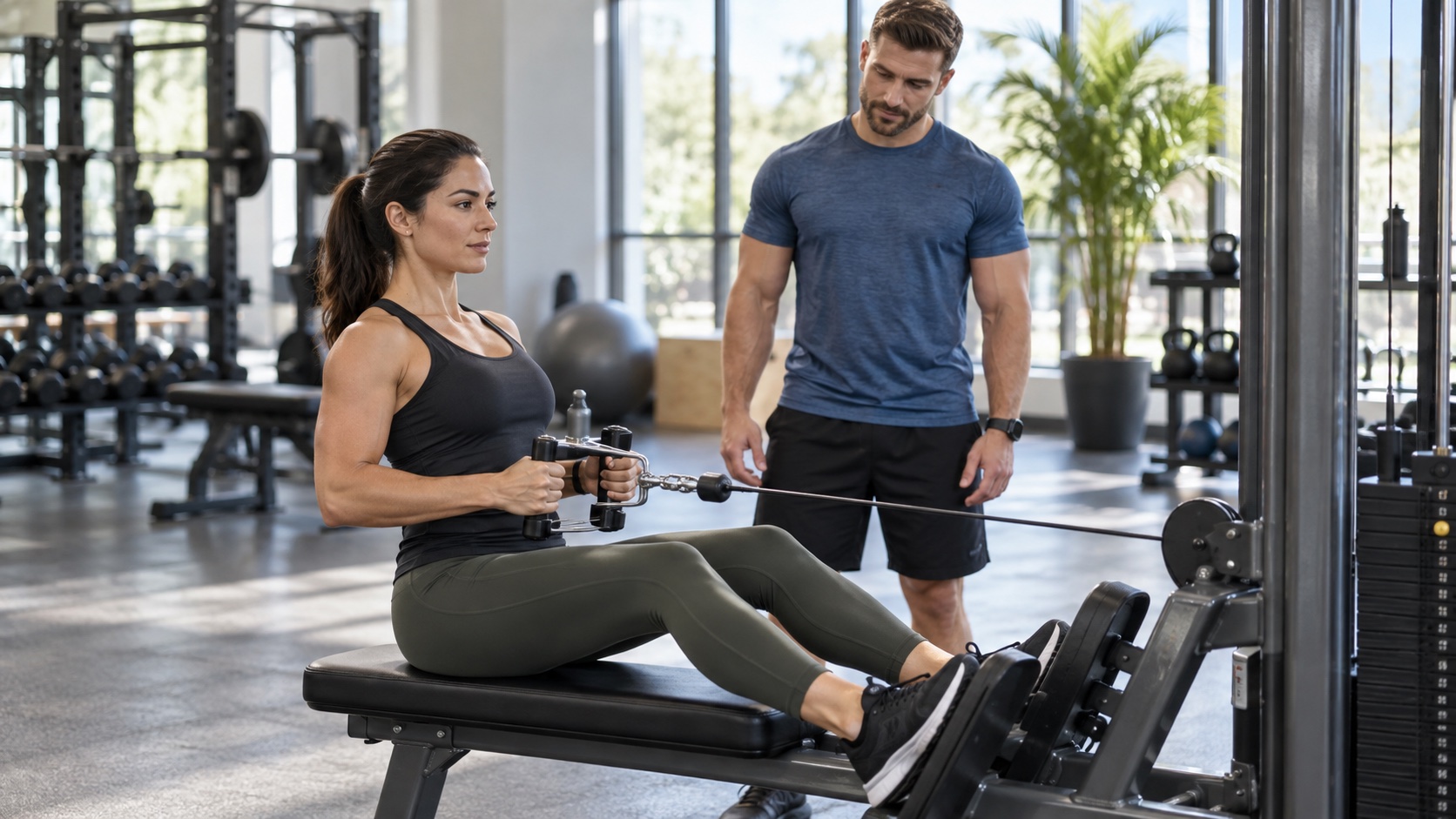
The Strength Signal, Sized Honestly
The resistance literature is smaller than the aerobic literature but consistent in direction. The Cornelissen and Fagard meta-analysis in Hypertension (2011) pooled dynamic resistance trials and found reductions on the order of a few mmHg systolic — the same modest neighborhood as aerobic training. A later analysis of resistance training as a stand-alone intervention in Journal of the American Heart Association (MacDonald et al., 2016) came to a similar conclusion: real, single-digit, and worth having, but not a lever that outperforms the others.
- 📏 Single-digit systolic shifts — pooled reductions typically land in the 2–5 mmHg range, comparable to aerobic work.
- 🔄 Consistent direction — meta-analyses from different groups and years keep arriving at the same modest conclusion.
- 🦾 A second job — strength, muscle mass, and glucose handling improve along the way, which matters for the metabolic web around blood pressure.
- 🧱 Different from isometric — the isometric hold literature reports larger numbers; dynamic resistance is a separate lever with a separate signal (see the wall-squat data).
Product picks are generic categories, not brands. We may earn a commission on Amazon or iHerb purchases at no cost to you — this never changes our evidence conclusions. Full disclosure
Adjustable dumbbells
Allows progressive loading at home across common strength movements.
⚠️ Poor technique or rapid load increases raise injury risk; not required to begin moving more.
Check price on Amazon →Moderate Loads Are the Point
The trials that show the blood-pressure benefit cluster around moderate loads and higher repetitions — weights you can move for 10 to 15 controlled reps rather than maximal attempts. That rep range keeps the set long enough to matter metabolically while staying well short of the grinding efforts where technique breaks down. The practical translation: choose a load that feels challenging by rep ten, not a load that makes rep one a fight.
| Loading style | Trial pattern | Blood-pressure reading |
|---|---|---|
| 🏋️ Moderate load, 10–15 reps | The dominant pattern in the meta-analyses | Good Consistent modest reductions |
| 📊 Circuit-style sessions | Short rests, whole-body rotation | Good Appears in several trials |
| 💪 Heavy, low-rep (1–5) | Rare in the BP-specific literature | Moderate Less studied for pressure |
| 🫁 Breath-held maximal efforts | Not represented as a training protocol | Limited Acute spikes, avoid |
- 🔢 10–15 reps is the studied zone — the pooled trials lean on this range; it is also the range beginners can execute with clean form.
- 🔄 Full-body rotation — alternating upper and lower body movements keeps sessions short and covers the muscle groups the metabolic levers care about.
- ⏱️ Rest one to two minutes — enough to recover between sets without turning the session into a marathon.
The Breath-Holding Caution
Here is the part that matters more than the load: holding your breath during a maximal effort — the Valsalva maneuver — raises pressure sharply for the seconds of the rep, and the spike is larger with heavier weights and harder efforts. The transient rise is a normal physiological event, but for someone with elevated readings it is exactly the wrong moment to add pressure. The fix is a breathing rule, not a lighter bar: exhale on the effort, inhale on the return, and never hold your breath through a rep.
- 🫁 Exhale on the effort — breathe out as you lift, breathe in as you lower; the rule applies to every rep, every set.
- 📉 The spike is transient — pressure climbs during the rep and settles after, which is normal; the goal is to keep the climb modest.
- ⚖️ Load follows breath — if a weight makes you hold your breath to move it, the weight is too heavy for this purpose.
- 🛑 Stop on warning signs — dizziness, chest discomfort, or unusual breathlessness means pausing the session, not pushing through.
⚠️ The breath rule is the safety rule
Resistance training's acute pressure spike is temporary and mostly harmless in healthy people, but it is the reason the breath rule exists. Anyone with known cardiovascular disease, very high readings, or new symptoms should check with a clinician before starting strength work — and should keep the breathing cue at the center of every session, because no rep is worth a spike.
Building a Pressure-Friendly Session
A resistance session for blood-pressure purposes looks different from a maximal-strength session: moderate loads, controlled reps, short circuits, and a breathing rhythm that never breaks. The goal is a session that feels like work without ever feeling like a grinder. Two sessions a week of roughly thirty minutes covers the signal the meta-analyses describe.
- 🗓️ Two sessions weekly — the frequency most consistent with the trial evidence and with recovery.
- 🔁 2–3 sets of 10–15 reps — per movement, at a load that makes the last two reps honest work.
- 🧍 Six to eight movements — squat pattern, hinge, push, pull, and a couple of isolation moves cover the body.
- 🔄 Alternating upper/lower — keeps rest short and the heart rate up without breath-holding.
- 🧊 Cool down deliberately — a few minutes of easy movement and breathing lets pressure settle before the session ends.
A Worked 30-Minute Session
Here is what a pressure-friendly strength session looks like end to end — the shape matters more than the exact movements, and the bookends are part of the session, not extras.
- 🕐 Minutes 0–5: warm-up — easy marching, arm circles, and a few unloaded squats to bring the heart rate up gradually.
- 🕐 Minutes 5–25: the main circuit — squat pattern, hip hinge, push, and pull, two to three sets of 10–15 reps each, alternating upper and lower body so rest stays short.
- 🕐 Minutes 25–30: cool-down — easy walking and a few slow breaths until conversation is fully comfortable.
- 📓 After the session — log the movements, loads, and any notes; the log is what tells you whether the session is working.
| Form error | What it does | The fix |
|---|---|---|
| 🫁 Holding breath on the rep | Spikes pressure mid-set | Stop Exhale on effort |
| 🏋️ Loads too heavy for 10 reps | Breaks the breathing rhythm | Moderate Drop to a 12-rep weight |
| ⚡ Bouncing reps | Turns controlled work into momentum | Moderate Two seconds up, two down |
| 📏 Skipping the last two reps' form | Where breath-holding sneaks in | Good End the set when form breaks |
Resistance in the Context of the Week
The strength lever earns its slot by adding what aerobic and isometric work do not: muscle tissue, metabolic resilience, and a training stimulus that keeps working as the years accumulate. The weekly plan pairs the two strength sessions with the aerobic backbone and the isometric holds, keeping each mode on its own day so the acute effects of one never muddy the chronic signal of another.
Questions, Answered Briefly
- ❓ Is lifting safe with elevated blood pressure? — moderate-load work with continuous breathing appears in the trials; the breath-holding caution is what keeps it safe, and a clinician check comes first for anyone with known disease.
- ❓ Do I need heavy weights to get the benefit? — no; the studied protocols are moderate-load, and heavy efforts bring the largest acute spikes.
- ❓ What if I cannot do barbell work? — machines, bands, and bodyweight movements all count; the lever is resistance, not the equipment.
- ❓ Should I check my pressure during a session? — measuring during exercise is unreliable; the home protocol's resting windows are the numbers that matter.
- ❓ How long until strength training shows on my log? — a few weeks to a couple of months, in line with the trial durations; the metabolic benefits accumulate on a longer clock.
- ❓ Can I do strength and isometric holds in one session? — you can, but the plan keeps them separate so each mode's effect is legible in your data.
- ❓ What if I feel a strain in my lower back during a lift? — stop the set, recheck the setup, and lighten the load; a session that ends early is a success if the form lesson sticks.
- ❓ Does the order of movements matter? — large movements first and isolation moves later is a common convention; consistency between sessions matters more than the exact order.
- ❓ How do I pick starting weights without a coach? — choose a load you can lift for 12 controlled reps with clean breathing; if rep 13 is impossible without holding your breath, the load is right for now.
- ❓ Can bands replace dumbbells entirely? — yes; resistance is resistance, and bands make the last reps harder in a way that suits the moderate-load pattern.
The Bottom Line
- Small, consistent, and real. Moderate-load resistance training is associated with a few mmHg of systolic reduction across meta-analyses.
- Moderate loads, higher reps. The 10–15 rep range is the studied pattern and the beginner-friendly pattern.
- Breathe on every rep. Exhale on effort; if a weight forces breath-holding, the weight is too heavy for this purpose.
- Two sessions a week, as a complement. Strength adds muscle and metabolic resilience alongside the aerobic and isometric levers.
Related Topics
- Cornelissen VA, Fagard RH. "Effect of resistance training on resting blood pressure: a meta-analysis of randomized controlled trials," Journal of Hypertension (2005)
- MacDonald HV, et al. "Dynamic resistance training as stand-alone antihypertensive lifestyle therapy: a meta-analysis," Journal of the American Heart Association (2016)
- Cornelissen VA, Smart NA. "Exercise training for blood pressure: a systematic review and meta-analysis," Journal of the American Heart Association (2013)
- Williams MA, et al. "Resistance exercise in individuals with and without cardiovascular disease: 2007 update," Circulation (2007)
- American College of Sports Medicine. "Progression models in resistance training for healthy adults," Medicine & Science in Sports & Exercise (2009)