AGEs in the Kitchen
Advanced glycation end products sound like a biology lecture and behave like a cooking lesson. They form in food during dry, high-heat cooking — and the differences between methods are large, measured, and repeatable. What stays genuinely open is how much any of it matters for human health. This page stays in the kitchen: the chemistry, the measurements, and the honest size of the evidence.
What the evidence supports
- AGEs form when sugars react with proteins and fats during dry, high-heat cooking — the same Maillard browning that flavors roasted and grilled food (Uribarri et al., 2010).
- The measurements are real: a validated laboratory database shows dry heat promoting new AGE formation by more than 10- to 100-fold above the uncooked state, with wide differences between methods.
- Moist heat, shorter cooking times, lower temperatures, and acidic ingredients such as lemon juice or vinegar significantly reduce new AGE formation in the same measurements.
- The practical direction overlaps with standard nutrition guidance: more steamed, poached, and stewed dishes; fewer deep-fried ones.
What remains uncertain
- Human outcome evidence is mostly observational and modest — no trial has established that lowering dietary AGEs changes disease outcomes.
- Small studies show reduced markers of oxidative stress and inflammation on lower-AGE diets; that is suggestive, not decisive.
- Mouse findings — including a lifespan result — have not translated into demonstrated human benefit, and animal diets do not map cleanly onto human kitchens.
Evidence last reviewed: October 7, 2026. Conclusions may change as new research is published.
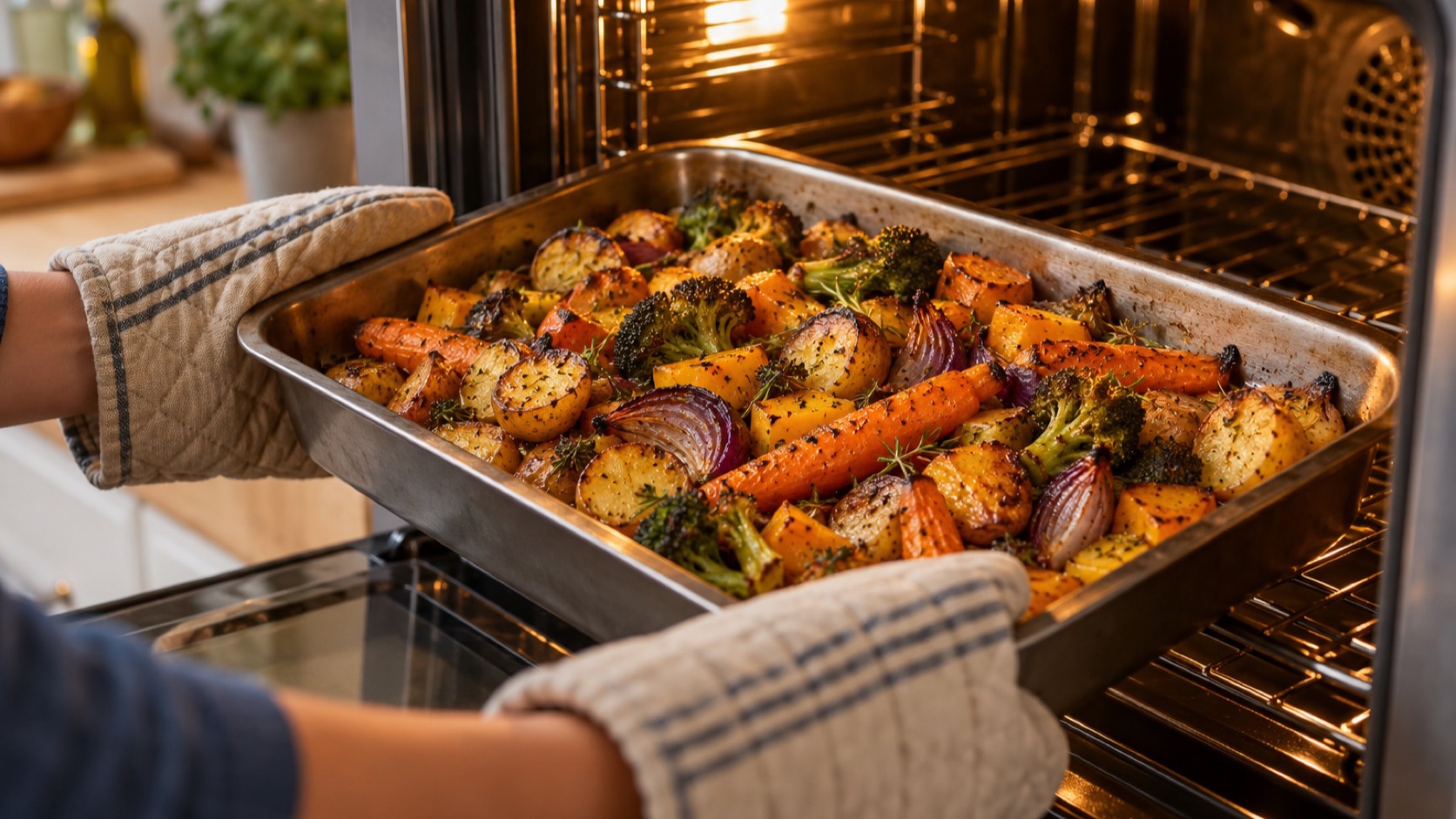
What Dietary AGEs Are
Advanced glycation end products (AGEs) form when reducing sugars react with the amino groups of proteins, fats, or nucleic acids — a nonenzymatic browning reaction from the same chemical family as the Maillard reaction that browns toast and roasts (Uribarri et al., 2010). They exist naturally in uncooked animal foods, and cooking generates more. Grilling, broiling, roasting, searing, and frying accelerate the process most. Chemically they are a diverse group; the better-studied ones include carboxymethyllysine (CML) and methylglyoxal derivatives.
Your body also makes AGEs internally, and that story — glycation as a proposed contributor to aging and metabolic disease — is owned by the sugar and glycation topic. This page stays strictly in the kitchen: what cooking does to the AGE content of food, and what that is — and is not — worth.
What the Measurements Show
The reference work is Uribarri and colleagues' 2010 paper in the Journal of the American Dietetic Association. It validated a laboratory method for measuring AGEs in food, grew the existing database of 249 foods by more than twofold, and compared cooking procedures head to head. The foods were typical of a multiethnic urban American diet — sampled from hospital cafeterias, restaurants, supermarkets, and a research kitchen between 2003 and 2008 — real plates, not idealized recipes. The headline findings are as practical as they are consistent:
- 🔥 Dry heat multiplies them. New AGE formation under dry heat ran more than 10- to 100-fold above the uncooked state across food categories.
- 🥩 Animal foods dominate. High-fat, high-protein animal foods are AGE-rich to begin with and form more during cooking; vegetables, fruits, whole grains, and milk contain relatively few, even after cooking.
- 🥚 The fat matters too. Scrambled eggs cooked with oil or cooking spray measured 50 to 75 percent lower in AGEs than the same eggs cooked with butter.
- 🍋 Moist heat and acid cut formation. Boiling, steaming, and poaching — plus shorter times, lower temperatures, and acidic marinades — significantly reduced new AGE formation.
The clearest illustration is a single food cooked several ways. The database's chicken breast numbers are not vague directional claims — they are measurements:
What the Human Evidence Shows
This is where the page slows down, because the human side of dietary AGEs is far less settled than the kitchen chemistry. Studies in people — many of them small and short — have found that restricting dietary AGEs reduces markers of oxidative stress and inflammation, in diabetes, kidney disease, and even healthy subjects (summarized in Uribarri et al., 2010). What none of them establishes is an outcome benefit: no trial has shown that eating lower-AGE diets prevents heart attacks, diabetes, or death. Running a long, blinded trial is genuinely hard when the intervention is a cooking method — one reason the evidence stalls at markers instead of outcomes.
The mouse literature is what made the field interesting. In one widely cited study, mice fed a low-glycotoxin diet showed reduced oxidant stress and lived longer (Cai et al., 2007). That is a real and striking result — from mice. Human diets, human cooking, and human lifespans are different problems, and the translation has not happened yet.
So the honest status of dietary AGEs is: a plausible mechanism, large and repeatable differences in food, promising biomarker studies in people, and no proven outcome benefit. Hold all four at once.
The Pragmatic Overlap
Here is the quiet good news. The moves that lower dietary AGEs are the moves general nutrition guidance already recommends for other reasons: more dishes built on steaming, poaching, and stewing; fewer deep-fried foods; less butter, more olive oil; more plants, which are low in AGEs however you cook them.
That overlap means you do not need to track AGEs, buy a meter, or reorganize your kitchen around a number. If your cooking already leans Mediterranean-adjacent — fish, legumes, vegetables, olive oil, limited frying — you are in the low-formation lane by accident.
🍲 The honest size of this
Dietary AGEs sit at the least-certain end of this topic's risk ledger: the food measurements are large and repeatable, the human outcome benefits are unproven, and the recommended changes are ones you would plausibly want anyway. Treat the kitchen shifts as low-cost insurance with a sensible mechanism — not as a proven lever on aging, and not as something to monitor.
What to Actually Do
- 🍲 Shift the method mix, not the menu. Keep the foods; change how often they meet dry heat. Roasts become occasional; stews and steams become defaults.
- ⏱️ Shorter and lower when you do roast. Shorter cooking times and lower oven temperatures measurably reduce new AGE formation.
- 🍋 Marinate with acid. Lemon juice or vinegar significantly cuts new formation — the same trick that brightens flavor.
- 🍟 Keep deep-frying occasional. Breaded, deep-fried chicken measured near the top of the database — and it is the move the rest of nutrition science dislikes most.
- 🌡️ Food safety still outranks this. A thermometer matters more than a browned edge — lower-heat cooking never means undercooking, and the food-safety page owns those rules.
- 🍞 One oven, two chemistries. Dry browning also forms acrylamide in starchy foods — the toast page covers it. The practical direction is shared: golden rather than dark, moist more often.
Questions, Answered Briefly
- 🥩 Do I need to give up grilled steak? No. Broiled steak measured well above stewed beef in the database (~7,500 vs ~2,400 kU per 100 g), but the pattern is what adds up — frequency and method mix, not bans.
- 🍳 Is pan-frying worse than roasting? The measured differences are method-and-food specific: in the chicken comparison, deep-frying led, roasting and broiling clustered just below, and boiling trailed far behind. Time and fat matter as much as the method's name.
- ☕ What about browned toast and coffee? Those are acrylamide questions, not AGE questions — different compounds from the same browning chemistry, covered on the toast page.
- 💊 Are AGE-blocking supplements worth it? Nothing in this evidence supports a product. The levers are cooking methods, they are free, and the human outcome data would not justify paying for blockers.
- 📉 How much should this change my week? Modestly: shift some cooking toward moist heat, keep frying occasional, and let the rest of the plate — plants, fish, legumes — do the heavy lifting.
The Kitchen Version of the Argument
Strip away the acronym and dietary AGEs are the mildest claim in this topic: a real chemical difference between cooking methods, a plausible but unproven human benefit, and advice that costs almost nothing because it is advice you have heard before. The right response is not vigilance — it is a gentle default: moist heat more often, dry heat deliberately, frying occasionally. If you take one habit from this page, make it the swap that costs nothing: the same dish, brought to a simmer instead of a sear.
It all sits inside the parent topic, Cooking, Char & Storage, between the toast question, the grill question, and the food-safety floor — each with its own evidence weight, and this one carrying the lightest of the four.
The Bottom Line
- The measurements are real; the outcomes are not proven. Dry heat raised new AGE formation more than 10- to 100-fold above uncooked in a validated database, and no human trial has shown an outcome benefit.
- Method is the variable you can change. The same chicken breast measured ~9,700 kU per 100 g breaded and deep-fried versus ~1,200 boiled.
- Moist heat, shorter times, lower temperatures, and acid all cut formation. They also happen to be good cooking — that overlap is the whole reason to bother.
- This is the lightest claim in the series. Treat the shifts as low-cost insurance with a sensible mechanism, not a proven anti-aging lever.
Related Topics
- Uribarri J et al., "Advanced glycation end products in foods and a practical guide to their reduction in the diet," Journal of the American Dietetic Association (2010) — pubmed.ncbi.nlm.nih.gov
- Cai W et al., "Reduced oxidant stress and extended lifespan in mice exposed to a low glycotoxin diet: association with increased AGER1 expression," The American Journal of Pathology (2007) — pubmed.ncbi.nlm.nih.gov