Cooking, Char & Storage: The Kitchen Risk Ledger
Kitchen-risk headlines — burnt toast, charred steak, "AGEs" — arrive with a lot of fear and very little proportion. This hub sorts the cooking-chemistry claims by evidence strength, puts them next to established food-safety guidance with practical steps to reduce risk, and keeps a running ledger of where attention pays off.
What the evidence supports
- Foodborne illness is common. FDA/CDC guidance — refrigerate within two hours, cook to temperature, keep leftovers three to four days — describes practical steps that reduce risk, and rests on long-established microbiology.
- Acrylamide forms above roughly 120°C in starchy foods, and EFSA's 2015 review concluded it is genotoxic in animals, with margins of exposure indicating concern for cancer effects on animal evidence.
- High-temperature and charred meat cooking produces HCAs and PAHs; the human epidemiology is modest but consistent enough for cancer-prevention guidance to advise against making char a habit.
What remains uncertain
- Human dose-response data for acrylamide are inadequate — EFSA's own conclusion — so nobody can translate a toast habit into a personal risk number.
- Whether dietary AGEs meaningfully affect human outcomes is unresolved, and intake measurement is crude.
- No trial has tested browned or charred food against disease endpoints, and none is feasible.
Evidence last reviewed: October 7, 2026. Conclusions may change as new research is published.
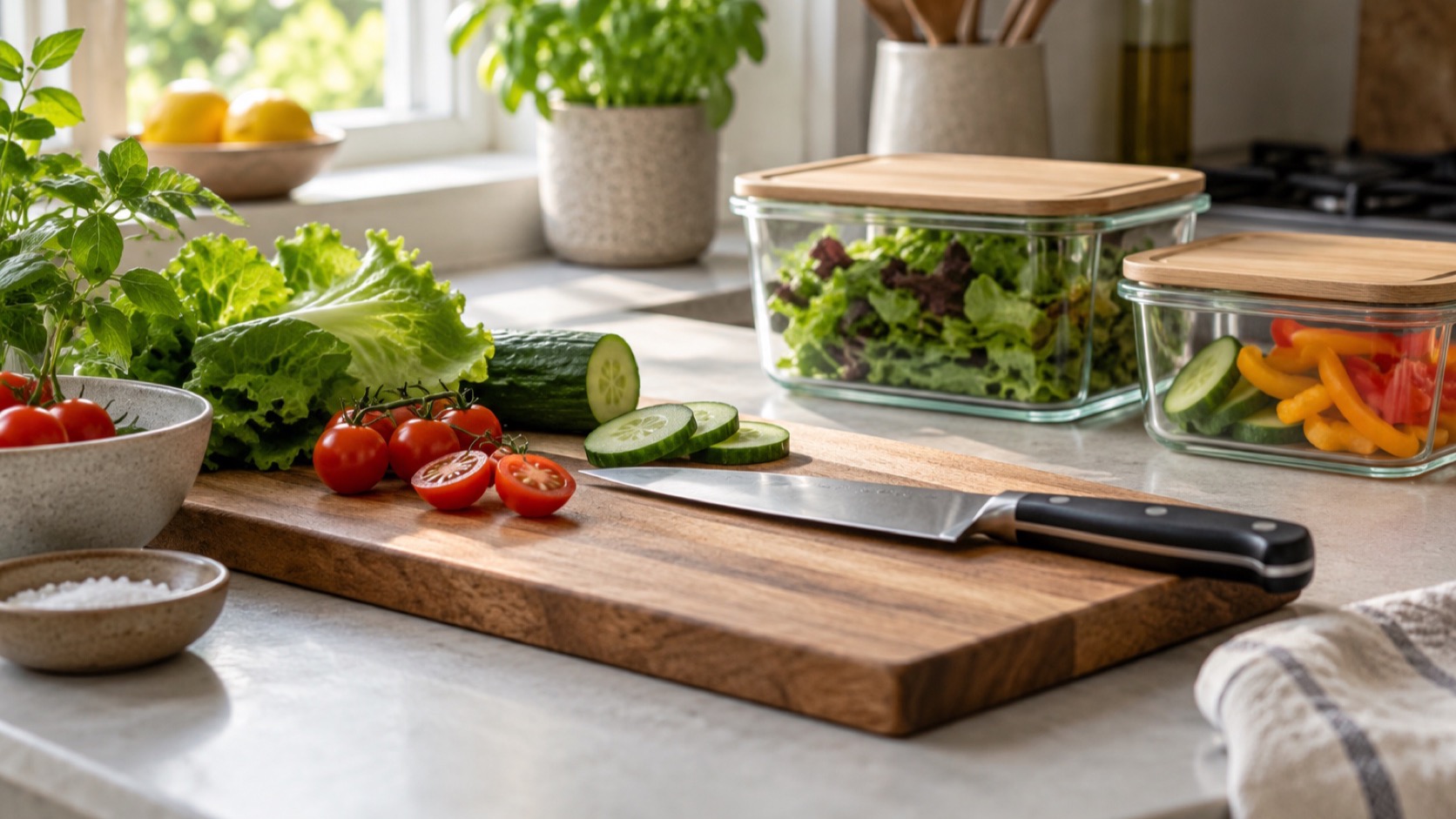
What the Kitchen Actually Serves Up
The kitchen's real risk profile is lopsided, and the headlines invert it. Foodborne illness — the domain of the boring rules — is estimated by the CDC to strike roughly 48 million Americans a year, with a severe tail of hospitalizations and deaths. The cooking-chemistry concerns that get the scary coverage — acrylamide, charred-meat compounds, advanced glycation end products — rest on far thinner human evidence. That does not make them fake; it makes them small ledger entries with large uncertainties.
So this page audits rather than alarms. Three framings to carry through: dose matters, food-safety guidance provides clear, actionable risk-reduction steps, and most chemistry claims are modest associations from observational studies — not measured harm in your kitchen.
Food Safety: The Decisive Rules
If the ledger has a bottom line, this is it. The FDA and CDC consumer rules are not glamorous, but they are the items on this page backed by a century of microbiology and a direct mechanism: pathogens multiply in the danger zone (40–140°F), so the clock and the thermometer do the work.
- 🌡️ The two-hour rule: refrigerate perishable food within two hours of cooking or serving — one hour above 90°F. The two-hour rule is a simple, evidence-based way to limit bacterial growth in perishable food; the sources cited here do not quantify its effect relative to the dietary questions in this series.
- 🥡 Leftovers: three to four days in the fridge, then the freezer or the bin; reheat to 165°F, hot enough to kill stored-food pathogens.
- 🍗 Cook to temperature: poultry to 165°F, ground meats to 160°F, whole cuts of beef and pork to 145°F with a rest.
- 🧼 Wash and separate: hands, produce, and surfaces; raw meat gets its own board — cross-contamination is how salad greens become a risk food.
- 👶 High-stakes groups: pregnancy, young children, older adults, and immunocompromised readers should treat these as hard rules, not heuristics — the severe tail of foodborne illness lands disproportionately there.
Nothing else here has a mechanism that direct: the chemistry claims are lifetime-exposure questions with uncertain epidemiology; food safety is a this-week question.
The Big Three Claims, Sized
Three cooking-chemistry claims dominate the discourse. Sizing them honestly means naming what forms them and how strong the human evidence actually is:
- 🍞 Acrylamide: forms in starchy foods cooked above roughly 120°C — toast, fries, crisps, coffee. Animal genotoxicity is real; human epidemiology has not shown a consistent cancer link; exposure is dominated by fried potato products, not toast.
- 🔥 HCAs and PAHs: heterocyclic amines and polycyclic aromatic hydrocarbons form on meat cooked hot or over open flame — especially when charred or when fat drips onto coals.
- 🍲 AGEs: advanced glycation end products rise with dry high heat — broiling, frying, roasting — and stay lower with moist methods like boiling, steaming, and stewing. The human outcome evidence is thin.
Each gets its own section below, with the numbers attached. The pattern you will see: the scariest-sounding claim has the weakest evidence, and the most established mechanism gets the least attention.
Char and Smoke: Small Effects, Easy Fixes
Cooking meat hot enough to char — grills, broilers, screaming-hot pans — generates HCAs from creatine and amino acids in muscle, and PAHs when fat and juices hit flame and the smoke deposits back onto the food. The chemistry is well established in the lab; the human risk picture is modest but consistent. Cohorts of high-temperature and well-done meat cooking show small positive associations with colorectal and related cancers, and the World Cancer Research Fund advises limiting red and processed meat while keeping cooking to golden rather than charred.
- 🥩 Marinate and flip: acidic marinades reduce HCA formation in lab studies; frequent flipping keeps surface temperature lower.
- ✂️ Trim and pre-cook: cut visible fat, and a quick microwave pre-cook means less fat drips into the fire.
- 🔥 Tame the flare-ups: avoid open flames licking the meat; medium heat and a raised grate cut both PAHs and char.
- 🥗 Keep the dose in perspective: the advice is not "never grill" — it is that risk lives in frequency and doneness habits, not one barbecue.
Acrylamide and the Toast Question
The toast scare deserves its own section, because the gap between the evidence and the reaction is widest here. Acrylamide forms via the Maillard reaction between asparagine and reducing sugars — the same browning that makes toast and fries taste good also makes acrylamide. EFSA's 2015 opinion is the reference document: it found acrylamide genotoxic in animals, considered it inappropriate to establish a tolerable daily intake, and concluded that margins of exposure indicate concern for cancer effects — while explicitly noting that human studies were inadequate for dose-response assessment.
That last clause is the whole story. The National Cancer Institute's fact sheet lands in the same place: human studies of dietary acrylamide and cancer have not shown consistent associations. And exposure is dominated by fried potato products — in EFSA's surveys that category, not bread, was the largest single contributor to dietary acrylamide. Your morning toast is a small line in the ledger; a daily dark-fry habit is a bigger one.
The practical rule is the UK Food Standards Agency's, echoed by the World Cancer Research Fund: aim for golden yellow rather than dark brown when frying, baking, roasting, or toasting starchy foods. A free tweak — not a reason to fear the toaster. The acrylamide subtopic works through the chemistry and the human-evidence gap in full.
AGEs: The Least Certain Ledger Entry
Advanced glycation end products are real chemistry: sugars cross-link proteins under heat, and Uribarri and colleagues (Journal of the American Dietetic Association, 2010) measured the result across hundreds of foods. Dry high-heat methods — broiling, frying, roasting — generate far more than moist methods like boiling, steaming, and stewing, and meats generate more than most plant foods.
Where the evidence thins out is everything after that. Dietary AGEs raise blood AGE markers in some feeding studies; whether that translates into human disease outcomes is unresolved, and the body produces AGEs internally regardless. The 2010 paper's own framing was practical, not alarmist: choose moist cooking when easy, and do not treat a browned crust as a threat. The AGEs subtopic keeps the measurement caveats honest.
The Ledger, Ranked
Here is the page's own assessment — not measured risk data — of where kitchen attention pays off, ordered by the size and certainty of what is at stake:
| Risk | Evidence strength | Reasonable response |
|---|---|---|
| 🥡 Foodborne pathogens | Strong | Refrigerate within two hours; leftovers three to four days; reheat to 165°F; wash and separate. |
| 🔥 Charred and grilled meat (HCAs, PAHs) | Moderate | Keep char occasional; trim fat, avoid flare-ups, flip often, consider marinades. |
| 🍞 Acrylamide in browned starch | Limited | Golden rather than dark brown where easy; no reason to stress about toast. |
| 🍲 Dietary AGEs | Early | Prefer moist methods when convenient; not worth restructuring meals over. |
🌡️ The two habits that actually prevent harm
If you keep one thing from this page, keep the thermometer and the clock: cook meat to its target temperature, and get perishable food into the fridge within two hours. Every chemistry claim on this page is a lifetime-exposure question with contested epidemiology; food poisoning is a this-week question with a known cause and a cheap fix. The food-safety subtopic carries the full ruleset, storage charts included.
Kitchen Questions, Answered Briefly
- ❓ Is burnt toast harmful? Not from occasional toast. The dark-fry habit is the bigger acrylamide line item, and the human evidence is thin anyway.
- ❓ Is reheated rice dangerous? It is the classic leftover exception — Bacillus cereus spores survive cooking. Cool rice quickly, refrigerate within an hour, and eat it within a day or two.
- ❓ Does grilling cause cancer? The associations are modest and dose-shaped: doneness and frequency habits matter, a single cookout does not. The fixes above cover the habits.
- ❓ Should I avoid browned food entirely? No — the guidance is golden rather than dark brown as a default, not avoidance; undercooking carries its own, better-documented risks.
The Bottom Line
- The ledger is lopsided: food-safety rules are the kitchen items here with direct mechanisms and large, preventable harms — treat them as the floor, not the fine print.
- Acrylamide is a real animal-toxicity finding with thin human evidence: exposure is dominated by fried potatoes, and golden-not-brown is a cheap tweak, not a ban on toast.
- Char and smoke carry modest but consistent epidemiology: the fixes — trim, flip, marinate, moderate heat — cost little.
- Dietary AGEs are the least certain entry: prefer moist cooking when convenient, and leave the anxiety off the menu.
Go Deeper: Subtopics
- 🍞 Acrylamide: The Toast Question — the browning chemistry and the human-evidence gap. Read it →
- 🔥 Charring, HCAs and PAHs — what forms them, and what the epidemiology shows. Read it →
- 🥡 Leftovers and the Food-Safety Floor — the rules that actually prevent illness, storage charts included. Read it →
- 🍲 AGEs in the Kitchen — what the food measurements show, and what they don't. Read it →
- 📋 The Risk Ledger — the full ranked audit in one place. Read it →
Related Topics
- EFSA Panel on Contaminants in the Food Chain, "Scientific Opinion on acrylamide in food," EFSA Journal (2015)
- Uribarri et al., "Advanced glycation end products in foods and a practical guide to their reduction in the diet," Journal of the American Dietetic Association (2010)
- National Cancer Institute, "Acrylamide and Cancer Risk" fact sheet — cancer.gov
- World Cancer Research Fund, "Burnt food (acrylamide) and cancer" and meat-and-cancer guidance — wcrf.org
- U.S. Food and Drug Administration, "Refrigerator & Freezer Storage Chart" and consumer food-storage guidance — fda.gov
- U.S. Centers for Disease Control and Prevention, food safety and foodborne-illness estimates — cdc.gov