When Meditation Backfires
Meditation has a side-effect profile; it is just rarely asked about. Surveys put unwanted experiences somewhere between one in ten and one in four practitioners depending on how the question is asked — most of them mild and transient, a minority severe, and a few people genuinely vulnerable. This page is the honest map of that risk, and of the safety practices that keep meditation where it belongs: helpful, optional, and never a substitute for care.
What the evidence supports
- Unwanted effects are a documented phenomenon, not a rumor: about a quarter of surveyed meditators report at least one, mostly transient (Cebolla, PLOS ONE, 2017).
- Significant adverse effects are much rarer — roughly one in ten in a US population sample (Goldberg, Psychotherapy Research, 2022).
- Adverse events in meditation-based therapy trials run around 8%, comparable with psychotherapy (Farias, Acta Psychiatrica Scandinavica, 2020).
- Risk concentrates in intensive retreats and in people with trauma histories or certain psychiatric conditions.
What remains uncertain
- True prevalence — definitions range from "any unpleasant experience" to "lasting impairment," which is why estimates span an order of magnitude.
- How many events meditation causes versus coincides with — anxiety and mood episodes occur without meditation too.
- Which formats and doses are safest for which people — controlled research on this barely exists.
Evidence last reviewed: August 15, 2026. Conclusions may change as new research is published.
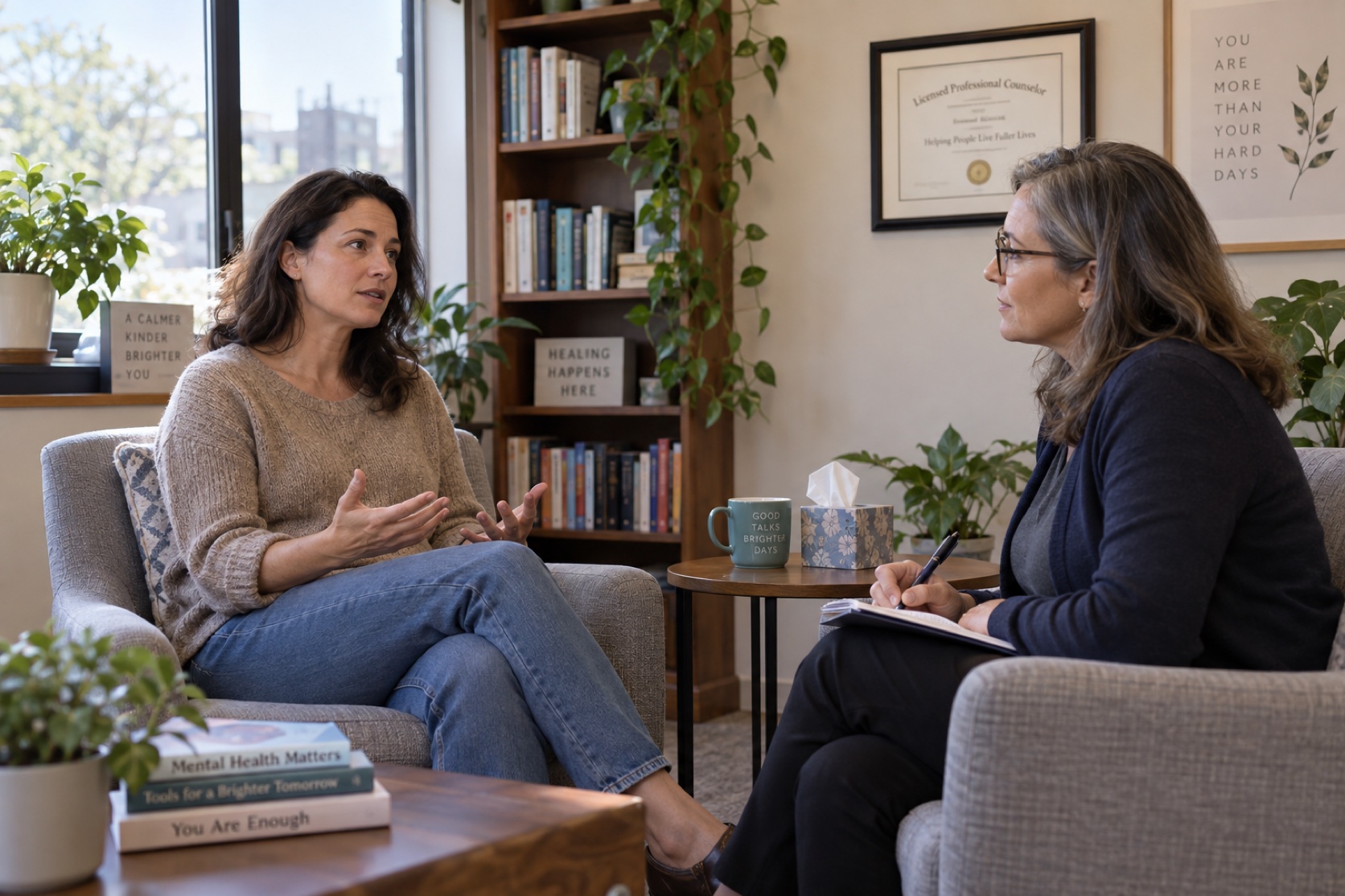
The Side-Effect Question Nobody Asked
For four decades the meditation literature measured benefits and rarely measured harms — adverse events went uncollected in most trials, and the field marketed a practice with no known downside. A widely cited critique laid the problem out plainly: enthusiasm had outrun measurement (van Dam, Perspectives on Psychological Science, 2018). The correction is recent. Only in the last several years have systematic reviews assembled the adverse-event data (Farias, Acta Psychiatrica Scandinavica, 2020), and only now are prevalence surveys giving the phenomenon numbers. The practical lesson for a reader: the absence of warnings in a meditation product's marketing reflects the absence of measurement, not the absence of risk.
How Common Is Common?
Ask four studies the same question four ways and you get four honest, incompatible answers — and the spread is itself the finding. At one end, surveys asking meditators about any unwanted experience find about a quarter say yes (Cebolla, PLOS ONE, 2017; Schlosser, PLOS ONE, 2019). At the other, questions restricted to significant, lasting effects find roughly one in ten (Goldberg, Psychotherapy Research, 2022), and clinical-trial monitoring of meditation-based therapies finds adverse events in about 8% of participants (Farias, Acta Psychiatrica Scandinavica, 2020). Read the band, not any single number: mild and transient is common, significant harm is uncommon, severe harm is rare but real — and all of it was invisible until researchers started asking.
What People Actually Report
| Experience | What it looks like | Where the reports concentrate | Read |
|---|---|---|---|
| 🌫️ Depersonalization & derealization | Feeling detached or unreal, "watching yourself" | Recurrent theme in surveys and case reports | Watch |
| 😰 Anxiety & panic | Spikes during or hours after practice | Among the most-reported unwanted effects | Watch |
| 🩹 Trauma re-experiencing | Intrusive memories and flashbacks during body-focused practice | Reported mainly by people with trauma histories | Screen first |
| 😴 Sleep disturbance | Meditation-induced wakefulness, vivid dreams, early waking | Common in intensive retreat contexts | Watch |
| 🌧️ Low mood & numbness | Apathy, blunted motivation, emotional flatness | Documented but less frequent in surveys | Watch |
| 🌀 Psychosis-like states | Acute perceptual changes in predisposed people | Case reports and small series | Rare, serious |
Who Is Vulnerable
The risk is not evenly distributed. Surveys find higher rates of unwanted effects among people with psychiatric histories, past trauma, and intensive retreat practice (Schlosser, PLOS ONE, 2019). The patterns make sense mechanistically: a body scan asks you to sit still and attend to sensation, which is exactly the situation in which unprocessed traumatic material tends to surface; deep attention practice can soften the sense of self in ways that, for people prone to dissociation, tips into depersonalization; and sleep deprivation plus silence plus hours of practice — the retreat recipe — is a known stressor for vulnerable brains. Case series document meditation-precipitated psychosis, concentrated in people with predisposing conditions (Kuijpers, Psychopathology, 2007). And one group deserves special framing: people with current severe depression. Meditation is not a treatment for acute depression — the strong evidence is for relapse prevention after treatment, as the effect-size map documents. Using a meditation app as a substitute for care in an acute episode is a real and preventable harm.
The Retreat Problem
Intensity concentrates everything — benefits and harms. The most detailed qualitative study of meditation-related challenges, interviewing serious practitioners, found that difficulties were common and could persist long after the retreat ended (Lindahl, PLOS ONE, 2017). Retreats compress a semester of practice into ten days, add sleep disruption and social isolation, and remove the ordinary checks on a deteriorating state: nobody at home notices you are unwell, and the person running the retreat may have no clinical training. A reasonable prior, consistent with the data: a daily practice of 10 to 45 minutes carries low risk; multi-day silent retreats are a different intervention with a different risk profile, and they warrant screening — the same principle the pitfalls of stress management topic applies to every "healthy habit" taken to an extreme.
⚠️ Start guided, not on a retreat
If you have a history of trauma or PTSD, bipolar disorder, psychosis, or are in a severe depressive episode or acute crisis, the first step is a conversation with a clinician — meditation is a complement to treatment, not a replacement, and some formats may be counterproductive for you. For everyone else the order is simple: short guided sessions first, a stable daily habit for months, and retreats — if ever — only after both. This is clinician territory; nothing on this page prescribes.
Practicing Safely
- 🩺 Screen before you start. Active psychosis, mania, severe depression, or untreated PTSD → begin with clinician guidance, not an app. That is the whole of the screening rule, and it covers the vast majority of serious cases.
- 🚶 Start guided and shorter. The meditation protocol's 20-minute daily format is the safe middle of the dose range — see the minimal dose question for why less is where you start.
- 🪷 Choose formats carefully. For people with trauma histories, movement-based practices with the eyes open are often gentler than still, eyes-closed body scans — the evidence is thin, but the logic is sound and the cost is low (see the traditions page).
- 📉 Watch the trend, not the session. One strange sit is normal; persistent anxiety, depersonalization, or low mood across weeks is the signal to reduce the dose, then stop, and talk to a clinician.
- 🏔️ Earn retreats. Months of a stable daily habit first, an honest self-screen second, and a teacher with clinical referral pathways third — then consider whether you need the retreat at all.
Why This Isn't a Reason to Quit
A safety page can read like a case against the practice. It isn't. The honest balance: the adverse-event rate in meditation-based therapy trials is comparable with psychotherapy (Farias, Acta Psychiatrica Scandinavica, 2020), and psychotherapy is the reference treatment for the conditions meditation targets — so risk is not the deciding variable. Most unwanted effects are mild and transient, most practitioners never experience any, and the counterfactual deserves equal weight: unmanaged stress carries its own well-documented costs, which is the entire premise of the Stress pillar. The right conclusion is not avoidance; it is screening and dose discipline — start guided and shorter, respect the flags, reduce the dose if symptoms appear, and treat retreats as a different intervention entirely. Practiced that way, meditation earns the safety profile its marketing always claimed for free.
The Bottom Line
- Side effects are real and under-measured: about 1 in 4 meditators report unwanted experiences, mostly mild and transient.
- Significant harm is uncommon but real: roughly 1 in 10 in population surveys, with severe events clustering in retreats and vulnerable groups.
- Trauma histories, bipolar disorder, psychosis, and severe depression are the screening flags for clinician guidance before starting.
- The safety rules are simple: start guided and shorter, avoid retreats early, reduce the dose if symptoms appear — and keep meditation alongside care, never instead of it.
Related Topics
- Cebolla et al., "Unwanted effects: is there a negative side of meditation? A multicentre survey," PLOS ONE (2017)
- Schlosser et al., "Unpleasant meditation-related experiences in regular meditators: prevalence, predictors, and conceptual considerations," PLOS ONE (2019)
- Goldberg et al., "Prevalence of meditation-related adverse effects in a population-based sample in the United States," Psychotherapy Research (2022)
- Farias et al., "Adverse events in meditation practices and meditation-based therapies: a systematic review," Acta Psychiatrica Scandinavica (2020)
- Lindahl et al., "The varieties of contemplative experience: a mixed-methods study of meditation-related challenges in Western Buddhists," PLOS ONE (2017)
- Britton, "Can mindfulness be too much of a good thing? The value of a middle way," Current Opinion in Psychology (2019)
- Kuijpers et al., "Meditation-induced psychosis," Psychopathology (2007)
- van Dam et al., "Mind the hype: a critical evaluation and prescriptive agenda for research on mindfulness and meditation," Perspectives on Psychological Science (2018)