The Stress-Biomarker Picture
Cortisol is the biomarker meditation headlines love: "lowers your stress hormone." The trials tell a more careful story — some studies show cortisol changes, many show none, and self-reported stress improves more consistently than any hormone. This page separates what the biomarkers show from what they don't, and why a shift in a lab value is not the same as an outcome that matters.
What the evidence supports
- Some randomized trials of mindfulness programs report lower cortisol in meditators compared with controls — but the pattern across studies is inconsistent.
- Self-reported stress (the felt experience) improves more reliably than any measured biomarker in the same trials.
- Repeated practice appears more relevant to stress signals than single sessions — the dose-response question is still open.
What remains uncertain
- Whether any cortisol change outlasts the practice period — follow-up measurements are rare.
- Whether a cortisol shift, when it happens, means anything for long-term health — the biomarker-to-outcome chain is unproven.
- Which measurement (saliva, hair, awakening response) is the meaningful one — studies disagree on method.
Evidence last reviewed: August 20, 2026. Conclusions may change as new research is published.
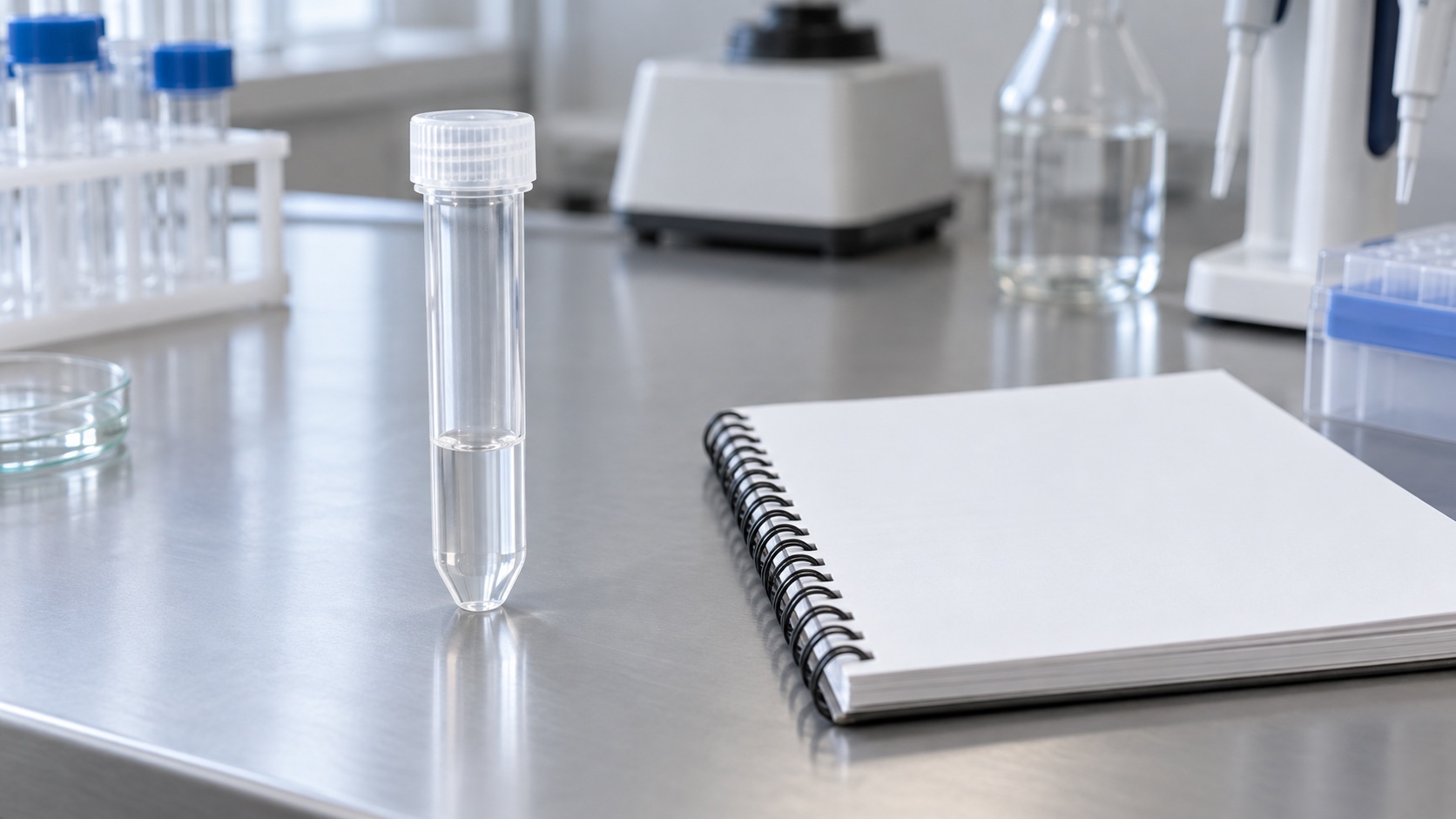
Why Cortisol Became the Poster Child
Cortisol is the body's main glucocorticoid, released along a daily rhythm that peaks around waking and falls through the day, with an extra burst in the first 30–45 minutes after awakening. Because it is easy to measure in saliva and responds to acute stressors, it became the default "objective" stress readout in meditation research. The appeal is obvious: a number from a lab tube feels more real than a questionnaire score.
- 🌅 The rhythm: waking peak, a sharp awakening response, then a gradual decline to a nighttime low — a single sample is one point on a moving curve.
- 🧪 The matrix: saliva reflects the last hour or two; hair reflects months of cumulative exposure; serum reflects an instant — studies mix all three.
- 📉 The confounds: sleep, caffeine, food timing, exercise, and even the act of being measured all move cortisol — more than most interventions do.
- 🎯 The hope: if meditation lowers stress, a stress hormone should fall too — a clean, testable prediction that turned out messier than expected.
What the Cortisol Trials Actually Found
The honest summary of the cortisol literature is "sometimes, under some conditions." A 2017 systematic review by Pascoe and colleagues pooled studies of mindfulness and physiological stress markers and reported that roughly half the included trials showed lower cortisol after mindfulness-based programs, with the rest showing no meaningful difference. A 2016 review by O'Leary and colleagues reached the same mixed conclusion: beneficial cortisol findings in some studies, null findings in others, and no consistent pattern tied to any specific program format.
- ✅ Positive trials: some randomized studies report lower afternoon or waking cortisol in meditators after 8–12 weeks — usually alongside self-reported stress improvements.
- ➖ Null trials: an equal share finds no cortisol difference even when self-reported stress improved — the felt change and the lab value can move independently.
- 🔁 One-day studies: acute laboratory stress tests after a single meditation session show blunted cortisol responses in some studies, no effect in others — short-term reactivity is not the same as chronic level.
- 🧭 The direction problem: a few studies even report higher cortisol after practice, which is a reminder that "lower is better" is not a law of stress physiology.
Why Single Samples Prove Almost Nothing
Most cortisol studies measure a handful of samples at a few time points, and the results depend heavily on when the sample was taken. A morning sample captures the awakening response; an afternoon sample captures the flat middle of the curve; a bedtime sample captures the low end. Two studies measuring at different times can reach opposite conclusions about the same intervention, and the published literature does exactly that.
- ⏰ Timing decides the answer: the awakening response is its own biological event, and it behaves differently from afternoon cortisol.
- 😴 Sleep is the hidden variable: a bad night shifts the whole curve — many meditation studies do not measure or adjust for sleep.
- ☕ Everyday confounds: coffee before a sample, a hurried morning, or a stressful commute each move the number more than eight weeks of practice typically does.
- 📊 Power problems: most biomarker substudies are small, and small samples make inconsistent findings the expected outcome, not a surprise.
🧪 A lab value is not a verdict
Suppose your cortisol reads lower after six weeks of practice. That is a measurement, not proof that your stress burden changed — and not proof of anything about your future health. Suppose it reads the same while your self-reported stress clearly improved. That is not a failed experiment; the two signals answer different questions. Judge the practice by how you feel and function, and treat the hormone as scenery.
Self-Report: The Signal That Keeps Showing Up
Across the same trials where cortisol results wobble, the questionnaire scores move in one direction: people report feeling less stressed. The Perceived Stress Scale and anxiety inventories improve more consistently than any biomarker in mindfulness research, and the Goyal 2014 review in JAMA Internal Medicine built its moderate-evidence verdict for stress reduction on exactly those self-report measures.
- 📋 The measures: the PSS asks about felt overload and coping over the past month; anxiety scales capture worry and tension — both are validated, reproducible instruments.
- 🎯 What they capture: the experience that actually matters for daily life — the feeling of being stretched thin — which no hormone reading can reproduce.
- ⚠️ Their weakness: people who volunteer for meditation trials expect to feel calmer, and expectancy nudges questionnaire scores upward — the active-control trials exist to discount exactly that.
- 🤝 The pairing: the most informative trials report both — self-report moving with at least some physiological signal is stronger evidence than either alone.
Biomarkers Are Not Outcomes
The recurring error in meditation coverage is the leap from "cortisol moved" to "stress was reduced" to "health improved." Each step is an inference, and the evidence supports the first one only inconsistently. No trial to date shows that a meditation-associated cortisol change leads to a measurable downstream health outcome — the chain simply has not been demonstrated, and no study should be read as if it had.
- 🔗 Association, not causation: cortisol changes appear alongside practice in some studies — that is correlation, and it may be driven by sleep, routine, or expectancy rather than meditation itself.
- 🧭 Direction is not settled: even where cortisol moves, whether the change is beneficial, neutral, or context-dependent is unknown — cortisol is not uniformly "bad."
- 📏 Level versus reactivity: resting cortisol and the acute response to a stressor are different systems; studies conflate them constantly.
- 🚫 The honest frame: meditation may appear to influence stress physiology in some settings — that is a claim about a lab value, never a claim about lifespan or disease risk.
| Measure | What it captures | Trial pattern in mindfulness research | Read on it |
|---|---|---|---|
| 🌅 Awakening cortisol | The morning response peak | Mixed — some reductions, many nulls | Mixed |
| ☀️ Diurnal slope | Decline across the day | Inconsistent across studies | Mixed |
| 💇 Hair cortisol | Months of cumulative exposure | Few studies; promising but thin | New territory |
| 📋 Perceived Stress Scale | Felt overload and coping | Improves more consistently than any biomarker | Strong |
| 😟 Anxiety inventories | Worry and tension symptoms | Consistent moderate improvements | Strong |
What This Means for Your Practice
- 🎯 Practice for the felt outcome: the defensible target of meditation for stress is the experience of stress — measured by how you sleep, react, and cope — not a hormone number.
- 📉 Ignore the single sample: one cortisol reading, before or after, is noise on a moving curve; even researchers hesitate to interpret a lone value.
- 🕰️ Give it the schedule: biomarker studies that show anything at all typically measured after 8–12 weeks of regular practice, not after a single session.
- 📋 Track what you can act on: a weekly two-minute self-report of stress, sleep, and tension is a more honest progress meter than any lab test you can buy — the personal-trial page (the-6-week-personal-trial.html) builds exactly that structure.
Questions, Answered Briefly
- ❓ Should I get my cortisol tested before and after meditation? — No. Single time points are uninterpretable, at-home tests are poorly validated, and no result would change the recommendation: practice for felt stress, not for a lab value.
- ❓ My cortisol didn't change but I feel calmer. Did the meditation fail? — The opposite. Felt improvement is the outcome the evidence supports most consistently; a flat biomarker does not contradict it.
- ❓ Is hair cortisol a better test? — It captures months of exposure and is the most promising research tool, but consumer versions are not yet validated for decision-making — treat it as research-grade, not personal-grade.
- ❓ Does one calm session do anything physiologically? — Acute studies show some short-lived shifts in reactivity in some people; none of it is established as lasting, and single sessions are not what the stress-relief evidence is built on.
The Bottom Line
- Cortisol findings are mixed, not magical. About half of mindfulness biomarker trials show lower cortisol; the rest show nothing — that is the honest picture.
- Self-report is the stronger signal. Felt stress improves more consistently than any hormone, and that is the outcome worth pursuing.
- A biomarker is not an outcome. No trial connects a meditation-linked cortisol change to a downstream health benefit — treat any such claim as speculation.
- Practice for the experience, measure the experience. Track stress, sleep, and tension on paper; skip the lab tests; and if symptoms are severe, the handoff line on the not-the-tool page (when-meditation-is-not-the-tool.html) applies.
Related Topics
- Pascoe, Thompson, Jenkins & Ski, "Mindfulness Mediates the Physiological Markers of Stress: Systematic Review and Meta-Analysis," Journal of Psychiatric Research (2017)
- O'Leary, O'Neill & Dockray, "A Systematic Review of the Effects of Mindfulness Interventions on Cortisol," Health Psychology Review (2016)
- Matousek, Dobkin & Pruessner, "Cortisol as a Marker for Improvement in Mindfulness-Based Stress Reduction," Complementary Therapies in Clinical Practice (2010)
- Goyal et al., "Meditation Programs for Psychological Stress and Well-Being: A Systematic Review and Meta-analysis," JAMA Internal Medicine (2014)
- Cohen, Kamarck & Mermelstein, "A Global Measure of Perceived Stress," Journal of Health and Social Behavior (1983)
- Creswell, "Mindfulness Interventions," Annual Review of Psychology (2017)