The Additive Audit
Nobody's fast dies in the middle. It dies in the margins — the splash of cream that stopped being a splash, the "just broth" at 4pm, the pump of syrup labeled zero that is not quite zero. This page is the audit: a field guide to the ingredients that ride into the fasting state disguised as nothing, with the calorie math on each one and a label-reading method that survives marketing. The parent page supplies the dictionary; this page shows you how to read the fine print.
What the evidence supports
- Anything with real fat, protein, or sugar calories ends the fast for honest purposes — cream, broth, collagen, and gummies are food by any definition (Anton, Obesity, 2018).
- US labeling may round a serving under about 5 kcal to zero, so "zero-calorie" is a legal category, not a chemical fact.
- Calorie-free additives — salt, electrolytes, lemon, cinnamon, extracts — carry no meaningful glucose or insulin signal.
What remains uncertain
- Whether a 20–40 kcal "invisible" addition changes anything for weight-loss fasting — almost certainly noise for weight, technically a break for the strictest goals.
- Whether marketed "fasting-friendly" creamers preserve any fasting marker — that claim has no trial behind it at all.
Evidence last reviewed: August 21, 2026. Conclusions may change as new research is published.
The Audit Method
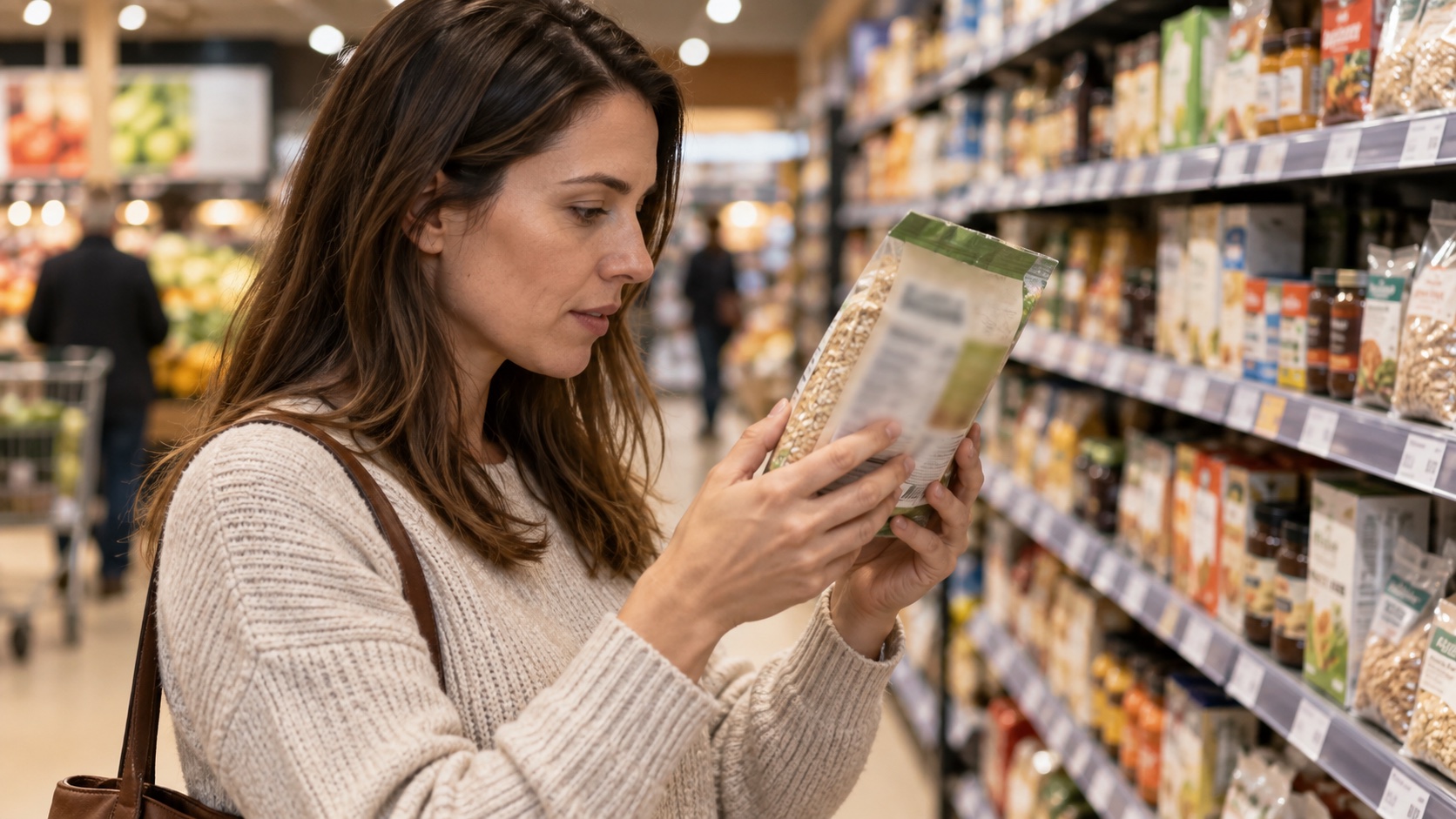
The audit is five questions, asked of anything that touches your lips between the last meal and the first. They take thirty seconds and settle most arguments permanently:
- 📖 Does the label list real food? — cream, milk, sugar, syrup, honey, protein, or oil, in any form, means calories with intent.
- 🔢 What does the serving size hide? — the label's calories are per serving, and a "serving" of creamer is often smaller than the splash you pour.
- 🪄 Is "zero" doing legal work? — under ~5 kcal per serving, US labels may print zero. Two pumps, three sprays, or a hearty splash moves you past rounding.
- 🍃 Is it a seasoning or a meal? — cinnamon, salt, lemon, extracts, and plain electrolytes are seasonings. Collagen, broth, and cream are meals, however small.
- 📝 Does the product say "fasting-friendly"? — marketing is the one label you can skip reading. If it is marketed as safe for your fast, check its calories twice.
Product picks are generic categories, not brands. We may earn a commission on Amazon or iHerb purchases at no cost to you — this never changes our evidence conclusions. Full disclosure
Unsweetened coffee
A beverage option only where an article specifically presents coffee as a food or substitution practice.
⚠️ Caffeine can worsen sleep, anxiety, palpitations, reflux, or medication-related concerns; pregnancy and individual tolerance matter.
Check price on Amazon →The Creamer Family
Coffee is the fast's most armored position — the 16/8 coffee page defends the black cup — and creamer is how the position gets overrun. A single honest splash of half-and-half lands around 20–30 kcal; a generous pour of heavy cream is closer to 60–100; a "sugar-free" flavored creamer still carries the fat calories of the cream base. The pattern is the same across the family: nobody breaks a fast with a creamer's sweetness. They break it with its calories, usually on a slope that started at "just a splash."
The fix is measurement, not resolve. For one week, pour your splash into the measuring spoon the label expects and see what the honest serving actually is — most people discover their "splash" is three to five label servings, which changes the arithmetic from ritual to real. Nothing about the creamer changes; the ledger just gets honest, which is the audit's entire purpose.
The keto creamer is the family's marketing wing: MCT oil and butter powder, marketed as fasting fuel. It is also pure fat calories — about 115 kcal per tablespoon of MCT oil, per the parent page's ledger — and "fasting fuel" is a phrase invented by the label, not the science. If the goal is ketosis, fat calories are gentler than sugar; if the goal is a fast, they end it the same way.
The Broth Problem
Bone broth occupies the strangest position in fasting culture: it looks like a drink and behaves like a meal. A cup typically carries ~40 kcal and several grams of protein, and protein is the most potent insulin signal per calorie of the macronutrients — the parent page lists it with the things that break a fast. The honest uses are real: broth with electrolytes is a legitimate tool on prolonged fasts, and the prolonged-fasts series covers it as such. The dishonest use is the sipping-fast — "technically nothing, just broth" — which is eating by another vessel.
Collagen powder runs the same file: ~30–40 kcal per typical scoop, almost entirely protein. It is marketed for skin and joints, and those are real research questions; none of them make collagen a fasting exception. If you take it, it belongs in the eating window, exactly where the parent page's supplement table puts protein.
The "Zero" Traps
- 🪄 The rounding rule — under ~5 kcal per serving can print as zero: cooking spray, zero drinks, gum, and mints all live here. Alone, each is noise; three of them across a morning are a small meal's worth of mystery.
- 🧴 The serving-size game — a creamer whose serving is one teaspoon shows clean numbers; your actual pour is three to five servings. Read the calories, then scale by your hand.
- 🍬 "No sugar added" ≠ no sugar — the claim is about the recipe, not the food. Dried fruit, honey-like traces, and maltodextrin are sugar by another name, and maltodextrin is a fast glucose source.
- 🥤 Electrolyte powders — the useful ones are salt-based and calorie-free; the flavored ones often carry sugar or maltodextrin. The sweetener page handles the sugar-free versions; the audit's job is to catch the malto version before you drink it.
The Additive Audit Table
| Additive | Typical serving | Calories | Verdict |
|---|---|---|---|
| 🥛 Cream splash | One honest splash | ~20–30 kcal | Breaks |
| 🥣 Bone broth | One cup | ~40 kcal + protein | Breaks |
| 🐟 Collagen powder | One scoop | ~30–40 kcal | Breaks |
| 🥥 MCT oil | One tablespoon | ~115 kcal | Breaks |
| 🍬 Vitamin gummies | One gummy | Sugar + ~5–10 kcal | Breaks |
| 🍯 Zero-sugar syrup | One pump | 0–5 kcal | Borderline |
| 🧂 Electrolytes (salt-based) | One serving | 0 kcal | Safe |
| 🍋 Lemon, cinnamon, extracts | A squeeze or dash | 1–3 kcal | Safe |
Flavor Without Breaking
The audit is not a purity regime; it is a calorie ledger. The flavor additions that survive it are the ones with nothing to count: a squeeze of lemon, a shake of cinnamon, a drop of vanilla or almond extract, salt in the electrolyte water, and plain sparkling water with ice. None of these has a meaningful glucose or insulin story, and there is no trial suggesting otherwise — the Glucose 101 topic owns the dose-response logic that keeps them quiet.
The boundary case is the flavored sweetener syrup: zero or near-zero calories, nonzero biology — the sweetener page's entire evidence stack applies. The audit's rule of thumb: if the ingredient list is short and the calories round to nothing at your actual serving, it is seasoning; if it lists cream, oil, protein, sugar, or maltodextrin in any serving size, it is food, and food ends the fast.
🧾 The label audit, in one line
Read the ingredient list, then the serving size, then multiply by what you actually pour. If real food appears, the fast ends at that hour — log it, open the window, and enjoy it on purpose. The audit exists to make the break visible, not to make you miserable about it.
Questions, Answered Briefly
- ❓ Does a splash of cream really matter for weight loss? — Twenty to thirty calories is noise in a week's ledger, and the threshold page says so. What matters is the slope: the splash that becomes a pour, then a latte, is a window that quietly moved.
- ❓ Can I have broth if I'm fasting for electrolytes? — If you need food-grade electrolytes, salt water does the job without protein. Broth is the version that feeds you; use it deliberately, on prolonged fasts, and count it as breaking the strict fast.
- ❓ Are sugar-free creamers a pass? — No: they are cream first, sweetener second. The sweetener is the small question; the fat calories are the answer.
- ❓ What about flavored sparkling water? — Typically zero calories and no sweetener biology worth the worry. If it has a sweetener, the two-week test on the sweetener page settles it.
- ❓ Why does the audit feel stricter than the parent page? — It is not stricter; it is more mechanical. The parent page declares the list; this page teaches the reading. Same dictionary, better glasses.
- ❓ What about flavored cold brew or "natural flavors" in ready-to-drink coffee? — "Natural flavors" is a legal category that can include sugar-dense syrups. Run the audit on the nutrition label, not the front of the can: if it lists cream, sugar, or syrup in any serving size, it is food with a marketing veneer.
- ❓ Do I have to audit forever? — No. Run the five questions once on every new product, and the answers hold for the routine ones. After a week the audit is a reflex that costs seconds, and the margin-errors that used to end fasts quietly end up in the log instead.
The Bottom Line
- The margins kill more fasts than the middle — creamers, broth, collagen, and "just a splash" are where the window actually moves.
- Read labels like a regulator — serving sizes, rounding to zero under ~5 kcal, and "no sugar added" are all legal categories, not chemistry.
- Seasoning is free; food is not — lemon, cinnamon, salt, and extracts carry nothing; cream, oil, protein, and maltodextrin carry the fast's end.
- "Fasting-friendly" is a marketing term — any product whose label promises to preserve your fast gets its calories checked twice.
Related Topics
- Anton et al., "Flipping the Metabolic Switch: Understanding and Applying the Health Benefits of Fasting," Obesity (2018)
- Patterson & Sears, "Metabolic Effects of Intermittent Fasting," Annual Review of Nutrition (2017)
- Hall et al., "Ultra-Processed Diets Cause Excess Calorie Intake and Weight Gain: An Inpatient Randomized Controlled Trial of Ad Libitum Food Intake," Cell Metabolism (2019)
- Toews et al., "Association between Intake of Non-Sugar Sweeteners and Health Outcomes: Systematic Review and Meta-Analyses," BMJ (2019)