Lean Mass in the Fasting Studies
The muscle-loss question follows every fasting schedule like a shadow: cut the eating window and the body, the worry goes, starts eating its own protein. The studies that actually combined time-restricted eating with resistance training tell a calmer story — lean mass held, fat dropped, strength stayed. This page shows why that result depends on how the body was measured, how long the trial ran, and whether the participants trained and ate enough protein to begin with.
What the evidence supports
- Six to eight weeks of 16:8 combined with resistance training preserved lean mass and strength while reducing fat in trained men (Moro, Journal of Translational Medicine, 2016) and active women (Tinsley, American Journal of Clinical Nutrition, 2019).
- Four weeks of fasted versus fed resistance training produced no differences in lean mass or strength (Stratton, Journal of Translational Medicine, 2020).
- Fasted versus fed aerobic training shows no meaningful body-composition difference in the meta-analysis (Schoenfeld, JISSN, 2014).
What remains uncertain
- Every preservation trial ran four to eight weeks in trained people with adequate protein — untrained people in longer deficits are a different, untested population.
- Body-composition devices vary in how they read a fasting participant; hydration and glycogen shifts can masquerade as lean-mass change.
Evidence last reviewed: August 20, 2026. Conclusions may change as new research is published.
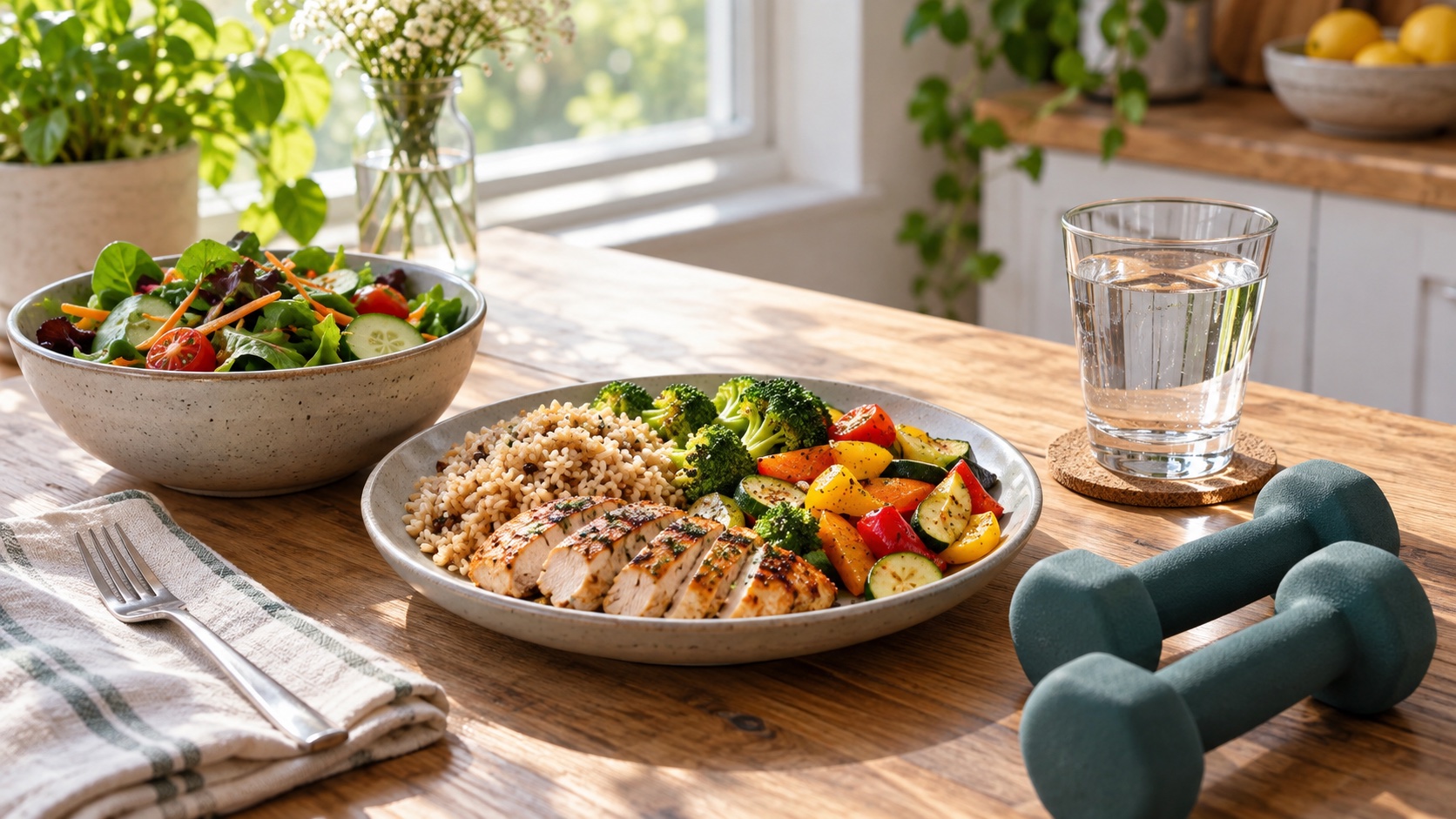
The Muscle-Loss Claim, Disassembled
The fear that fasting eats muscle has a plausible mechanism behind it: a calorie deficit pulls protein from everywhere, and a long empty stretch between meals means long hours without the amino acid signal that tells muscle to hold. That mechanism is real. What the fasting studies show is that it does not dominate — at least not in the short trials that trained people and fed them adequately. The lean-mass question turns out to be a question about the deficit, the protein, and the training, with the schedule itself playing a supporting role.
The series lead The Fasting & TRE Protocol and the matching Body Composition topic own the general picture; this page focuses on how body-composition methods, duration, and training status change what the fasting studies can claim about muscle.
Product picks are generic categories, not brands. We may earn a commission on Amazon or iHerb purchases at no cost to you — this never changes our evidence conclusions. Full disclosure
Smart scale with body-composition estimates
Can make body-weight trends easier to observe; body-composition estimates may be used as a rough personal trend only.
⚠️ Bioimpedance estimates vary with hydration and device assumptions; frequent weighing can be unhelpful for people with eating-disorder risk or body-image distress.
Check price on Amazon →The Measurement Problem
Before any lean-mass number means anything, the machine has to be trustworthy — and fasting is exactly the condition that makes some machines lie. Bioimpedance devices estimate lean mass from electrical resistance, which depends on water; a fasting participant is often dehydrated and glycogen-depleted, so the same body can read as "less lean" after a fast than after a meal, even with zero actual muscle change. Dual-energy X-ray absorptiometry (DXA) is the reference method for research use, but it is still model-based and still sensitive to hydration, and most trials standardize the measurement conditions rather than eliminate the problem.
- 💧 Hydration shifts: water and glycogen leave early in any deficit; a scale can call that "muscle loss" on a bad day, or "fat loss" on a good one.
- 🦴 Method drift: switching between devices mid-study — or measuring at different times of day — creates differences that have nothing to do with the schedule.
- 📐 Model assumptions: every consumer device converts raw signals through population equations that fit some bodies better than others.
- 🧪 The ketosis confound: fasting depletes glycogen, and glycogen carries water; a fasted measurement can understate lean mass that a fed measurement would restore.
The practical rule: only compare measurements taken under the same conditions — same device, same time, same hydration state — and treat any single reading as noise. The measurement method determines how much of the fasting lean-mass story is real and how much is an artifact of the bathroom scale.
What the Training Trials Show
The small set of trials that combined time-restricted eating with resistance training is remarkably consistent. Eight weeks of 16:8 in resistance-trained men reduced fat mass while lean mass and maximal strength were maintained (Moro, Journal of Translational Medicine, 2016). The same pattern appeared in active women doing eight weeks of time-restricted feeding with lifting, where lean mass was preserved and no group differences emerged (Tinsley, American Journal of Clinical Nutrition, 2019). A four-week study that deliberately trained one group fasted and the other fed found no differences in lean mass, muscle performance, or resting energy expenditure (Stratton, Journal of Translational Medicine, 2020).
None of these trials are large, and none ran long enough to settle the decade-scale question. What they do settle is the acute worry: a sixteen-hour window does not automatically cost muscle when the daily protein target is met and the training is there. The resistance-training evidence that makes this work is owned by the Resistance Training protocol and the Protein topic, and the session-level version of the question lives on the 16/8 training page.
Protein powder
A convenient way to add dietary protein when food intake is insufficient or impractical.
⚠️ May cause digestive symptoms; formulation matters for allergies and intolerances. It does not replace a varied diet.
Check price on Amazon →Duration, Training Status, and the Protein Floor
Three features separate the reassuring trials from the scary anecdotes. First, duration: four to eight weeks is a sprint, and the trials never tested a year of 16:8 in a hard deficit. Second, training status: the participants were already lifting, which is the strongest known lean-mass defense in any deficit — meta-analyses of weight-loss trials without training put the lean share of weight lost at roughly a quarter, and that number is where the "fasting eats muscle" stories quietly come from. Third, the protein floor: every preservation trial kept daily protein adequate, and the 1.6–2.2 g/kg target from the Protein topic is the muscle-protection number, not the window.
Read the studies with those three filters and the picture holds together: fasting plus training plus protein preserves lean mass in the short term; fasting without training plus a big deficit costs lean mass the same way any diet without training does. The schedule is not the muscle-eating variable; the deficit and the training are, and they are the variables you actually control.
| Method | What it measures | Fasting caveat | Verdict |
|---|---|---|---|
| 🦴 DXA scan | Bone, fat, and lean mass | Least hydration-sensitive; still model-based | Reference method |
| ⚡ Bioimpedance (BIA) | Electrical impedance converted to lean estimates | Fasting and hydration shifts can move readings | Fasted readings shift |
| 📏 Skinfold calipers | Subcutaneous fat at set sites | Misses visceral fat; operator-dependent | Coarse |
| ⚖️ Scale and waist tape | Total weight and circumference | No lean-fat split at all | Blind to composition |
📉 Why modest is the honest word
The preservation trials are small, short, and built on trained people eating enough protein — copy their conditions and you can reasonably expect the same outcome, but the evidence does not extend to untrained people, long deficits, or extreme windows. Changes in body composition from fasting studies are often modest and confounded, and a lean-mass reading is a measurement, not a verdict. Anyone with a medical condition, an eating-disorder history, or medications should clear a fasting schedule with a clinician before using it as a body-composition tool.
The Reading Rules
- 🥩 Hold the protein floor: the daily 1.6–2.2 g/kg target protects muscle on any schedule; a window that makes it harder to hit is a window to widen.
- 🏋️ Keep the training stimulus: the preservation trials all included resistance training — the schedule never replaces it.
- 💧 Measure like a researcher: same device, same time, same hydration state; never trust a single reading, and never compare a fasted reading to a fed one.
- 📉 Watch the deficit size: aggressive deficits cost more lean mass on any schedule; modest deficits plus training plus protein is the pattern the trials reward.
Questions, Answered Briefly
- ❓ Does 16:8 eat muscle? — In the trials that combined it with resistance training, no: lean mass and strength were maintained over four to eight weeks. The schedule was not the muscle-eating variable; the deficit, the protein, and the training were.
- ❓ Why did my scale show muscle loss on fasting? — Most likely hydration and glycogen: a fasted, depleted reading understates lean mass on impedance devices. Re-measure fed, at the same time, on the same device, and the number usually comes back.
- ❓ Can I build muscle on a fasting schedule? — Nothing in the trials prevents it; muscle growth needs a surplus or a recomp, adequate daily protein, and training — the window is secondary. Growing muscle and losing fat in the same window is the harder math, whichever schedule you choose.
- ❓ Is DXA worth paying for? — If you want a baseline and a follow-up, DXA is the most reliable consumer-accessible option — but only useful if the two scans are done under the same conditions, and only useful if you ignore the single-reading noise in between.
- ❓ Should I weigh myself fasted or fed? — Pick one condition and never switch: a fasted morning weigh-in is the standard, but the condition matters less than the consistency. Weigh weekly, same day, same state, and read the trend over a month rather than any single number.
The Bottom Line
- Lean mass held in the TRE-plus-training trials — four to eight weeks of 16:8 with lifting preserved muscle and strength while fat dropped.
- Measurement is half the story — hydration and glycogen shifts can make fasting look like muscle loss on devices that never saw a gram of it.
- Duration, training, and protein decide — the trials were short, trained, and protein-adequate; those are the conditions the reassuring results came from.
- Modest and confounded is the honest frame — small trials, no long-term data, and a lean-mass reading is a measurement, not an outcome.
Related Topics
- Moro et al., "Effects of Eight Weeks of Time-Restricted Feeding (16/8) on Basal Metabolism, Maximal Strength, Body Composition, Inflammation, and Cardiovascular Risk Factors in Resistance-Trained Males," Journal of Translational Medicine (2016)
- Tinsley et al., "Time-Restricted Feeding Plus Resistance Training in Active Females: A Randomized Trial," American Journal of Clinical Nutrition (2019)
- Stratton et al., "Four Weeks of Time-Restricted Feeding Combined with Resistance Training Does Not Differentially Influence Measures of Lean Mass, Muscle Performance and Resting Energy Expenditure in Resistance-Trained Males," Journal of Translational Medicine (2020)
- Schoenfeld et al., "Body Composition Changes Associated with Fasted Versus Non-Fasted Aerobic Exercise," Journal of the International Society of Sports Nutrition (2014)