The First-Month Cold Plan
Cold water is the one voluntary stressor that can kill you in the first ten seconds — not through hypothermia, but through the gasp. That single fact shapes this entire page. The plan below climbs from a 30-second cold shower ending to (optionally) a supervised plunge, one rung at a time, because the safest ladder is the one you can step off at any moment. The full evidence for cold sits on the cold exposure topic; this page is the on-ramp.
What the evidence supports
- The cold-shock response — gasp, hyperventilation, heart-rate spike — is thoroughly characterized and peaks in the first 30–60 seconds (Tipton et al., Experimental Physiology, 2017).
- Gradual, repeated exposure blunts the cold-shock response; this is the documented rationale for a ladder rather than a leap.
- A randomized trial of routine cold showers found roughly 29% fewer self-reported sick-leave days over the follow-up, with effects similar across 30-, 60-, and 90-second doses (Buijze et al., PLOS ONE, 2016).
What remains uncertain
- Long-term health outcomes of routine cold exposure are unstudied at the level the sauna data reach; the mortality-grade findings in this pillar live on the heat side.
- Whether plunges beat showers, and whether any specific duration or temperature is meaningfully better, is unknown.
- Much of the reported benefit — alertness, mood, the post-shock glow — could be expectation and enjoyment, which is fine, but it is not outcome evidence.
Evidence last reviewed: August 15, 2026. Conclusions may change as new research is published.
The Cold-Shock Response, in Plain Terms
The moment cold water hits your skin, a reflex older than mammals takes over: an involuntary gasp, then fast, shallow breathing you cannot fully stop, while heart rate and blood pressure spike within seconds. This is the cold-shock response, and it is strongest in water between roughly 10 and 15°C — the temperature of most cold plunges (Tipton et al., 2017). People drown in this window not because the water is cold enough to impair them, but because they inhale water during the gasp, or hyperventilate, faint, and slip under. The response peaks in the first 30–60 seconds and settles as the skin cools. Two practical consequences follow. First, entry is the dangerous part, not duration. Second, adaptation is real: repeated exposure measurably reduces the gasp and the heart-rate spike — the physiological case for starting small and climbing (Datta & Tipton, Journal of Applied Physiology, 2006). A shower is the only cold setting where you can exit in one second, which is why it is rung one.
Why the Curve Dictates the Ladder
The Ladder, Rung by Rung
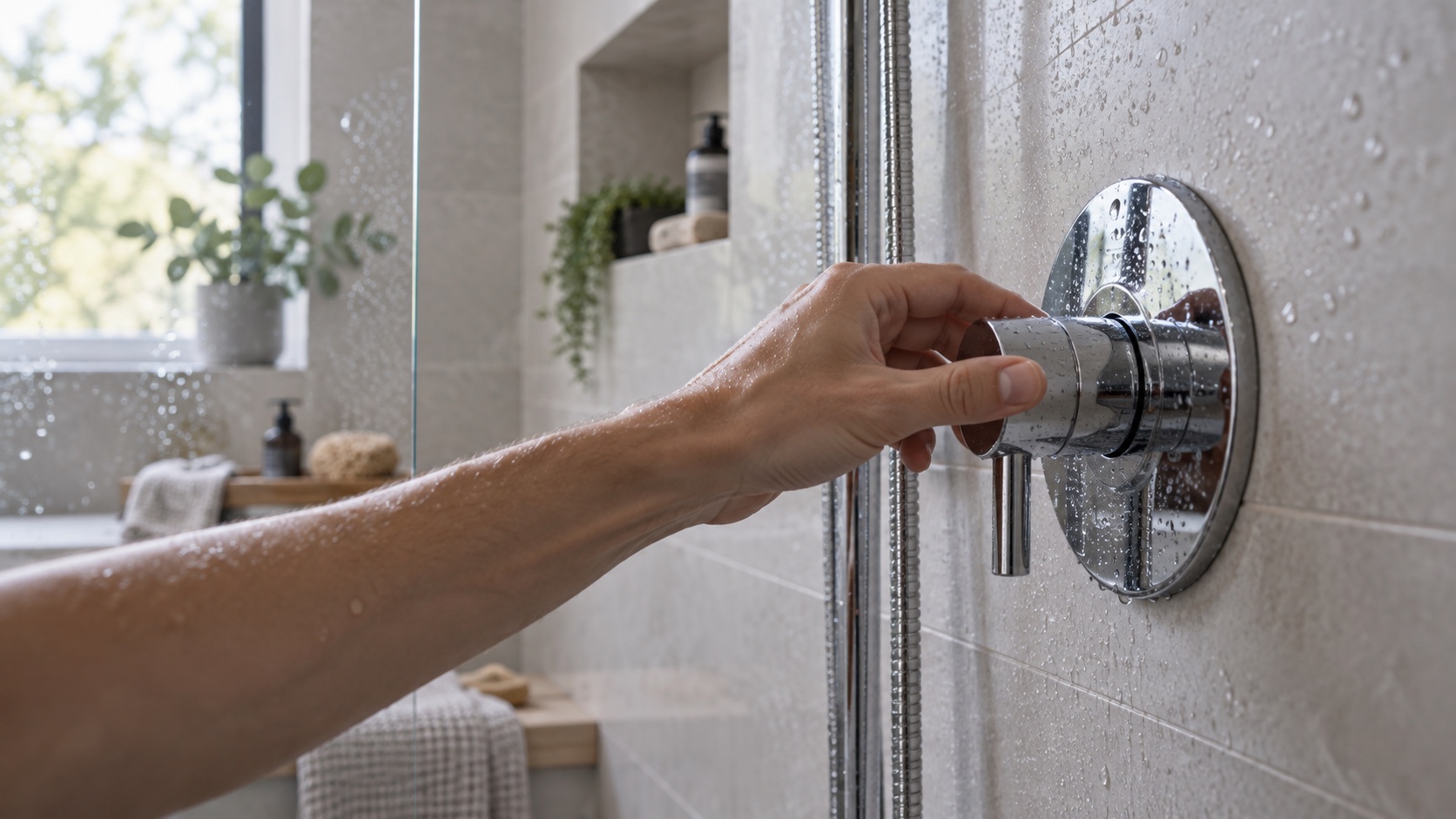
The ladder is stage-based rather than calendar-based: you advance when a rung feels boring, not when a week has passed. Stages one and two are cold endings on a normal warm shower — the warm shower does the cleaning, and the cold tail does the adaptation. The plunge is optional and the last rung for a reason.
| Stage | Dose | How it feels | Advance when |
|---|---|---|---|
| 🚿 Stage 1 | 30 sec cold at the end of a normal shower | Sharp but survivable; breathing fast for a few breaths | 30 seconds is no longer a fight |
| 🛁 Stage 2 | 30–60 sec cold tail, slow exhales on entry | Controlled; you can talk through it | Breathing settles within a few breaths |
| 🌊 Stage 3 | 1–2 min full cold shower | Unpleasant then neutral; warm afterglow | Full cold shower no longer feels like an event |
| 🧊 Stage 4 (optional) | 1–2 min supervised plunge | Intense entry, then quiet | Stages 1–3 hold for weeks, and a buddy is present |
A note on water temperature: your shower's cold setting is whatever it is, and that is fine — the dose is the discomfort plus the seconds, not a thermometer reading. If you run both protocols, the natural pairing order is heat first, cold second, rest last: the sauna plan's session followed by your current cold rung is the beginner version of the cycle the contrast page builds on later.
⚠️ The gasp is a drowning mechanism
Every cold-water safety rule traces back to the first-ten-seconds physiology above. Never plunge alone, never jump or dive into cold water, never enter after alcohol, and if you ever feel faint or your breathing will not settle, get out immediately — those are the rules, full stop. The cold exposure topic covers the immersion dangers in depth, and the medical screen page lists the conditions — cold urticaria, Raynaud's, uncontrolled cardiovascular disease — that make cold water a no at any rung.
The Breathing Rule
- 😮💨 Slow exhale on entry. A long, slow out-breath as the cold hits is the cheap, evidence-flavored countermeasure — it occupies the breathing system the gasp tries to hijack. Fight the urge to inhale sharply and fast.
- 🧘 Do not hyperventilate before water. Rapid-breathing routines can suppress the drive to breathe and produce fainting in the water — a genuine drowning mechanism. Breathing exercises and water entry are separate activities. The Wim Hof topic separates the claims from the water-safety facts.
- 🪑 Let the seconds pass. The first 30 seconds are the physiological event; after that, the body settles. You are not failing by counting to thirty — you are following the curve above.
- 🚪 The exit rule is the same as the sauna plan's. Feeling faint, numb in a wrong way, or unable to settle breathing means out — warm up slowly, and repeat the previous rung next time.
What Cold Might Actually Buy You
An honest ledger, because the cold aisle sells itself hard. The mood page documents the post-immersion catecholamine surge — immersion studies show norepinephrine and dopamine rising sharply, several-fold over baseline — which matches the subjective glow people chase. The brown fat page covers the metabolic story, which is real in imaging studies and modest in its energy math. And the Dutch trial's 29% sick-leave reduction is exactly what it sounds like: a real signal from a single randomized trial, self-reported, in people who chose to cold-shower. None of this is mortality-grade evidence, and the parent topic asks the right question about it: if cold makes you miserable, the evidence does not require it. The people who sustain cold exposure are overwhelmingly the people who like the feeling. That is allowed — liking a stressor is a legitimate reason to do it. One consistency note the heat side shares: the evidence associates benefit with frequency over years, not with any single cold event — a short cold tail most days beats a heroic plunge on Saturday.
Plunge Safety, If You Get There
- 👥 Never alone, ever. The rule is not a suggestion for beginners; it is the rule for everyone. A second person present changes the outcome of a faint or a gasp-gone-wrong from tragedy to towel moment.
- 🏋️ Keep cold away from lifting. Cold immersion within a few hours of resistance training may blunt the muscle-building signal — the cold-after-training page owns the evidence. Cold on rest days, or before cardio, is the safer placement.
- 🍺 No alcohol, no exceptions. Alcohol blunts the cold-shock response and the judgment that manages it — the same rule as the heat side, for different physiology.
- 📉 Expect the pressure spike. Cold water raises blood pressure sharply on entry — the reason the medical screen page routes anyone with blood-pressure issues or cardiac disease through a clinician first.
- 🩺 Watch the skin. Hives, itching, or swelling in the cold (cold urticaria) means stop and see a clinician — it is a genuine contraindication, not an adaptation hurdle.
Questions, Answered Briefly
- 🌡️ How cold is cold enough? Tap water, typically 10–20°C depending on the season, is plenty for the shower rungs. The dose is the discomfort plus the seconds, not a specific thermometer reading — if it feels cold, it is a cold exposure.
- 🚿 Showers or plunges? Showers are safer, cheaper, and cover most of the adaptation; plunges add immersion-specific intensity. The comparison page weighs the trade-offs honestly, and nothing requires the plunge.
- 📅 How often? The Dutch trial's benefit appeared with daily short doses; 3–7 short cold tails per week is a sensible default, and a day skipped costs nothing.
- 👶 What about kids? Children thermoregulate differently and the whole question is clinician territory — a pediatrician, not a protocol page, is the right conversation.
- 💪 Does it build immunity? The honest answer: one randomized trial found fewer sick days, and the mechanism is not established. Treat cold as a mood-and-resilience practice with a side of early evidence, not as an immune shield.
The Bottom Line
- Start at 30 seconds of cold at the end of a warm shower — the rung you can exit from in one second, which is why it comes first.
- Respect the first-ten-seconds physiology — the gasp, not hypothermia, is the danger, and the breathing rule is a slow exhale, never pre-water hyperventilation.
- Advance on boredom, not on a calendar — each rung is earned when the current one stops being a fight, and the plunge is optional at every point.
- Keep the ledger honest — the evidence is mood, resilience, and one modest trial; the people who stick with cold are the ones who enjoy it, and that is enough reason to continue or to stop.
Related Topics
- Tipton MJ, Collier N, Massey H, Corbett J, Harper M, "Cold water immersion: kill or cure?" Experimental Physiology (2017)
- Buijze GA, Sierevelt IN, van der Heijden BC, Dijkgraaf MG, Frings-Dresen MH, "The effect of cold showering on health and work: a randomized controlled trial," PLOS ONE (2016)
- Datta A, Tipton MJ, "Respiratory responses to cold water immersion: neural pathways, interactions, and clinical consequences awake and asleep," Journal of Applied Physiology (2006)
- Šrámek P, Šimečková M, Janský L, Šavlíková J, Vybíral S, "Human physiological responses to immersion into water of different temperatures," European Journal of Applied Physiology (2000)
- Kox M, van Eijk LT, Zwaag J, et al., "Voluntary activation of the sympathetic nervous system and attenuation of the innate immune response in humans," PNAS (2014)