The 30-Plant-Points Challenge
Thirty is the most famous number in gut-health advice, and it is not a dose — it is a count. Volunteers in the American Gut Project who ate more than thirty different plant foods a week had measurably more diverse gut microbiomes than those eating ten or fewer. This page turns that finding into a playable weekly game — and is honest about what the number can and cannot buy.
What the evidence supports
- The American Gut Project: more than 30 unique plant types per week associated with higher microbiome diversity and fewer antibiotic-resistance genes than 10 or fewer (McDonald et al., 2018).
- The plant-variety association held after accounting for overall diet labels — variety itself tracked diversity.
- Plant diversity is mechanistically plausible: different fibers feed different microbes.
What remains uncertain
- Cross-sectional data — plant-eaters differ in dozens of other ways, and the direction of cause is not settled.
- No trial has shown 30 is the right threshold; the number is a rounded boundary, not a discovered dose.
- Whether diversity gains from variety translate into health outcomes is the open question of the whole field.
Evidence last reviewed: August 15, 2026. Conclusions may change as new research is published.
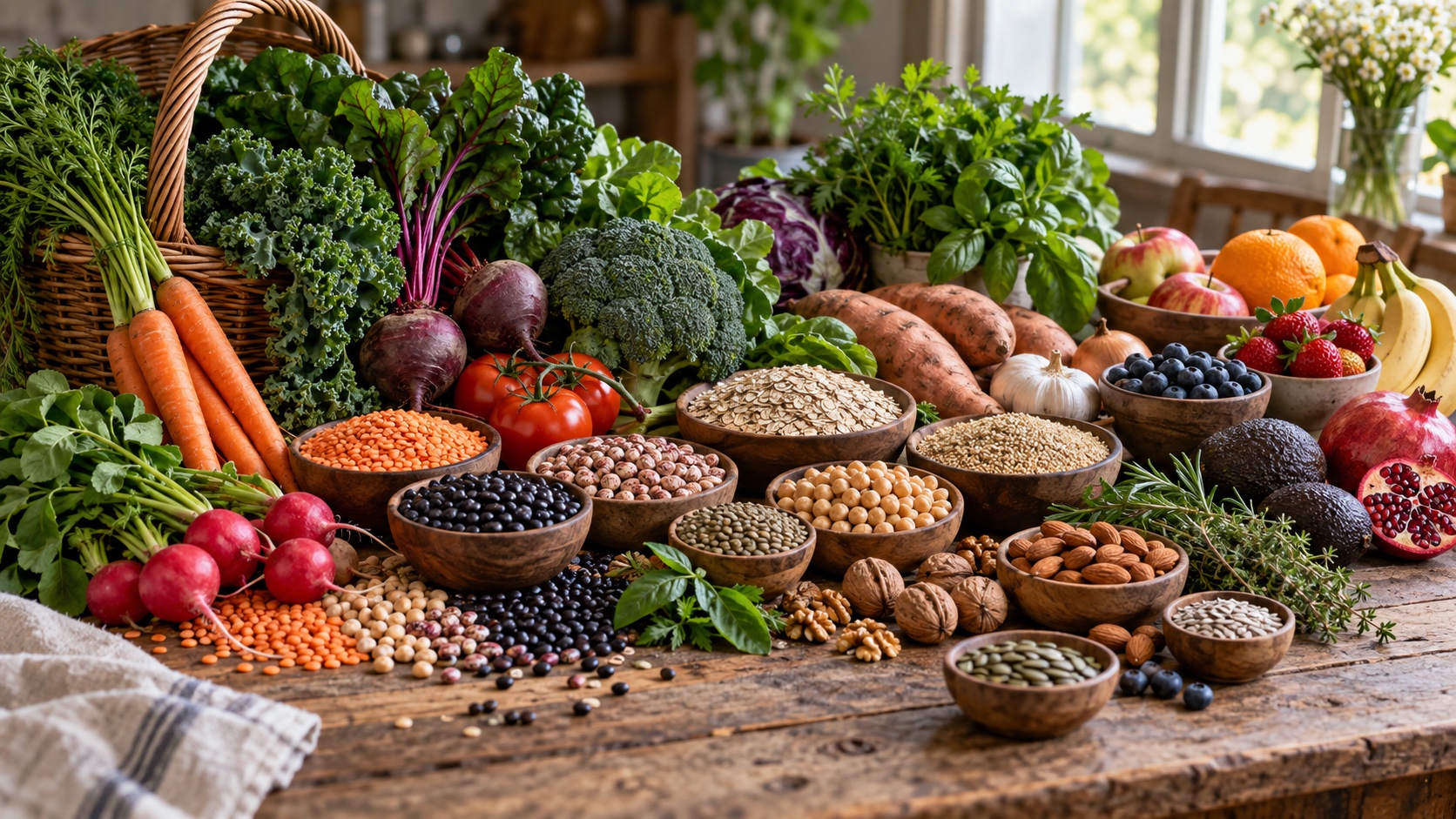
Where the Number Comes From
The American Gut Project is a citizen-science cohort: thousands of volunteers mailed in stool samples and answered detailed food questionnaires (McDonald et al., mSystems, 2018). Among the dietary analyses, one comparison stuck. Participants who reported more than thirty unique plant foods in a week had more diverse gut microbiomes — and fewer antibiotic-resistance genes — than those who reported ten or fewer. Two details made the finding durable in the field's mind: the association held even when compared against broader diet labels, and it was about the count of distinct plants, not portions. The thirty itself is a convenient round boundary, not a precision estimate — the paper's analyses used bands, and "thirty plants a week" is the field's packaging of a real gradient.
Product picks are generic categories, not brands. We may earn a commission on Amazon or iHerb purchases at no cost to you — this never changes our evidence conclusions. Full disclosure
Guided journal or notebook
Can support reflection, planning, or brief stress-management practices.
⚠️ Journaling may be distressing for some people; it is not a substitute for mental-health treatment or crisis support.
Check price on Amazon →What Counts as a Plant Point
The scoring is deliberately simple: one point per unique plant type per week, regardless of portion. A plant "type" is a distinct food — a vegetable, fruit, grain, legume, nut, seed, herb, or spice. Herbs and spices count because they carry polyphenols that feed microbes even in gram quantities; coffee and tea count as plants too. What does not count: refined products — flour, sugar, oil — because the fiber and polyphenol payload is gone.
| Category | Examples | Point rule | Verdict |
|---|---|---|---|
| 🥦 Vegetables | broccoli, spinach, carrots, peppers | 1 point per distinct vegetable | Counts |
| 🍓 Fruits | berries, apples, bananas, citrus | 1 point per distinct fruit | Counts |
| 🌾 Whole grains | oats, barley, quinoa, brown rice, buckwheat | 1 point each; refined grain products do not count | Counts |
| 🫘 Legumes | lentils, chickpeas, black beans, peas | 1 point each; canned varieties count | Counts |
| 🌰 Nuts and seeds | almonds, walnuts, chia, flax, sunflower | 1 point each; mixed packs are multiple points | Counts |
| 🌿 Herbs and spices | parsley, basil, cumin, cinnamon, ginger | 1 point each; dried versions count | Counts (small doses) |
| ☕ Coffee and tea | coffee, green tea, herbal teas | 1 point each — plant infusions; added sugar and milk do not add points | Counts (arguably) |
A Realistic Thirty-Point Week
Thirty sounds like a lot until you tally an ordinary week. A worked example, counted as it goes:
- 🍳 Breakfast staples: oats, banana, blueberries, chia seeds, coffee — 5 points.
- 🥗 Lunch salad rotation: spinach, tomato, cucumber, carrot, chickpeas, pumpkin seeds — 11 points.
- 🍎 Snacks: apple, almonds, walnuts — 14 points.
- 🍛 Dinner sides and sauces: broccoli, sweet potato, brown rice, lentils, onion, garlic, ginger, cumin, turmeric — 23 points.
- 🌮 Weekend batch: quinoa, kale, beetroot, avocado, black beans, corn, cilantro, lime — 31 points.
- 🍵 Extras: green tea, peppermint tea, peanut butter, whole rye bread — comfortably past 30, with room to spare.
The engine of the game is repetition: the same five plants eaten daily score once, which is why variety — not volume — is the whole point. Notice also that nothing on that list is exotic; the challenge is mostly a rotation problem, not a shopping problem.
Cheap Ways to Stretch the Count
- 🧊 Frozen mixed vegetables — five points in one bag, no chopping, no spoilage.
- 🫙 Canned mixed beans — a four-bean mix counts four times.
- 🥜 Mixed nuts and seed blends — each nut and seed is its own point.
- 🌶️ The spice rack — cumin, turmeric, cinnamon, ginger, oregano, thyme: six points that cost pennies per week.
- 🥣 The soup strategy — one pot with onion, garlic, celery, carrot, lentils, barley, and herbs scores seven-plus.
- 🔁 Grain rotation — oats, barley, quinoa, brown rice, buckwheat across the week instead of one grain all week.
Canned beans and lentils
A lower-friction way to use legumes where an article gives a concrete food-first practice.
⚠️ Increase gradually if gas is troublesome; people with IBS or a prescribed diet may need individualized guidance.
Check price on Amazon →Why Variety, Not Just Grams
The challenge's logic runs through the SCFA pipeline: different fibers feed different fermenters, and a diet that rotates plants rotates the substrates. The concept predates the thirty. Sonnenburg and Sonnenburg argued in 2014 that modern diets starve the microbiome of "microbiota-accessible carbohydrates" — the fibers microbes can actually use — and Heiman and Greenway's 2016 review made dietary diversity itself the headline recommendation. Variety and dose are complements, not rivals: the fiber floor in grams carries the hard outcome evidence (the fiber topic owns the numbers), while variety shapes which microbes get fed. You need both.
What Thirty Cannot Prove
The honest ledger. The finding is cross-sectional: people who eat thirty plants differ from people who eat ten in income, cooking time, exercise, and a dozen other ways, and no statistical adjustment removes all of it. The volunteers were also self-selected and health-interested — a group that differs from the general population before the first questionnaire is filled in. No randomized trial has tested "thirty plants a week" against any other number — the threshold is motivational packaging, not dose-response science. And diversity itself is a marker, not an outcome: the step from "more diverse microbiome" to "lives longer" is a corridor of associations the field is still walking, which the microbiome topic covers honestly. None of this means the challenge is useless — a marker with a mechanism beats a fad without one. It means the game is the point, not the exact score.
🌱 A game, not a diagnosis
Missing thirty changes nothing about fiber's core evidence, and hitting thirty changes nothing about the need for the rest of the plate. The challenge is a lens for noticing variety — the same lens the Stanford trial turned on fermented foods. Score it lightly.
Unsweetened coffee
A beverage option only where an article specifically presents coffee as a food or substitution practice.
⚠️ Caffeine can worsen sleep, anxiety, palpitations, reflux, or medication-related concerns; pregnancy and individual tolerance matter.
Check price on Amazon →Running the Challenge
- 📋 Week one: baseline — tally what you already eat with zero changes; most people find they are closer to twenty than they assumed.
- ➕ Week two and beyond — add about five points a week until you clear thirty; frozen mixes and spice rotation make this cheap.
- 📈 Expect noise — rising fiber means rising gas for a week or two while the ecosystem adapts; the pipeline page explains the ramp.
- 🔁 Keep it simple — a note on the fridge or a notes-app list; no app, no journaling, no perfection. A missed week resets the tally, not the habit.
- 🧩 Attach it to what exists — if you already shop and cook on Sundays, the tally rides along; the habit-formation protocol owns the attachment logic.
Questions, Answered Briefly
- 🌶️ Do herbs and spices really count? Yes, and not just as score-padding: polyphenols in herbs and spices feed distinct microbes even in gram doses. But points are not interchangeable — thirty points of mostly spices would miss the fiber volume the gram-based evidence describes.
- 🍚 Does white rice count? As a refined grain, no — the fiber payload is largely gone. Brown rice, quinoa, oats, and barley count.
- 🥔 Does a potato count? Yes, it is a distinct plant; cooked-then-cooled potatoes add resistant starch, which the pipeline page covers.
- ☕ Does coffee count? Yes — one point, and the caffeine does not cancel it. The drink evidence lives on the super-drinks topic.
- 📅 What if I can't hit 30? The American Gut data show a gradient, not a cliff: every band above ten tracked higher diversity. Twenty is better than fifteen; the challenge is a direction, not a pass mark.
The Bottom Line
- Thirty plants a week is the field's best-known variety target — born from one large cross-sectional study, and best read as a gradient, not a cliff.
- Scoring is simple — one point per unique plant, any portion; herbs, spices, coffee, and tea all count.
- Variety complements the fiber floor — grams carry the outcome evidence, variety decides which microbes get fed.
- Run it as a game — baseline first, add five points a week, and let the tally do the motivating.
Related Topics
- McDonald et al., "American Gut: an open platform for citizen science microbiome research," mSystems (2018)
- Sonnenburg & Sonnenburg, "Starving our microbial self: the deleterious consequences of a diet deficient in microbiota-accessible carbohydrates," Cell Metabolism (2014)
- Heiman & Greenway, "A healthy gastrointestinal microbiome is dependent on dietary diversity," Molecular Metabolism (2016)
- David et al., "Diet rapidly and reproducibly alters the human gut microbiome," Nature (2014)
- Wastyk et al., "Gut-microbiota-targeted diets modulate human immune status," Cell (2021)
- Smits et al., "Seasonal cycling in the gut microbiome of the Hadza hunter-gatherers of Tanzania," Science (2017)