The Ohsaki Study & Purpose
The strongest single dataset connecting ikigai to survival comes from one question — "Do you have ikigai in your life?" — put to 43,391 adults in Miyagi Prefecture, Japan, in 1994. Seven years later, the pattern in the deaths was clear enough to publish: people who could not name a reason to get up were dying at meaningfully higher rates. This page walks the Ohsaki Study's numbers, the replication that followed, and — just as carefully — what the 7-year figure can and cannot prove.
What the evidence supports
- Respondents reporting no ikigai had roughly 1.5× the all-cause mortality of ikigai-reporters over 7 years (hazard ratio 1.5; 95% CI 1.3–1.7).
- Cardiovascular deaths carried much of the gap (HR 1.6), and external-cause deaths were nearly doubled (HR 1.9).
- The Japan Collaborative Cohort, with more than 50,000 adults, replicated the finding independently.
What remains uncertain
- Observational design: people with ikigai differ in income, health, and social connection, and adjustment narrows but cannot close that gap.
- Reverse causation is plausible — serious illness can extinguish a sense of ikigai before death follows.
- A single yes/no item cannot separate ikigai from optimism, connection, or general mental health.
Evidence last reviewed: August 15, 2026. Conclusions may change as new research is published.
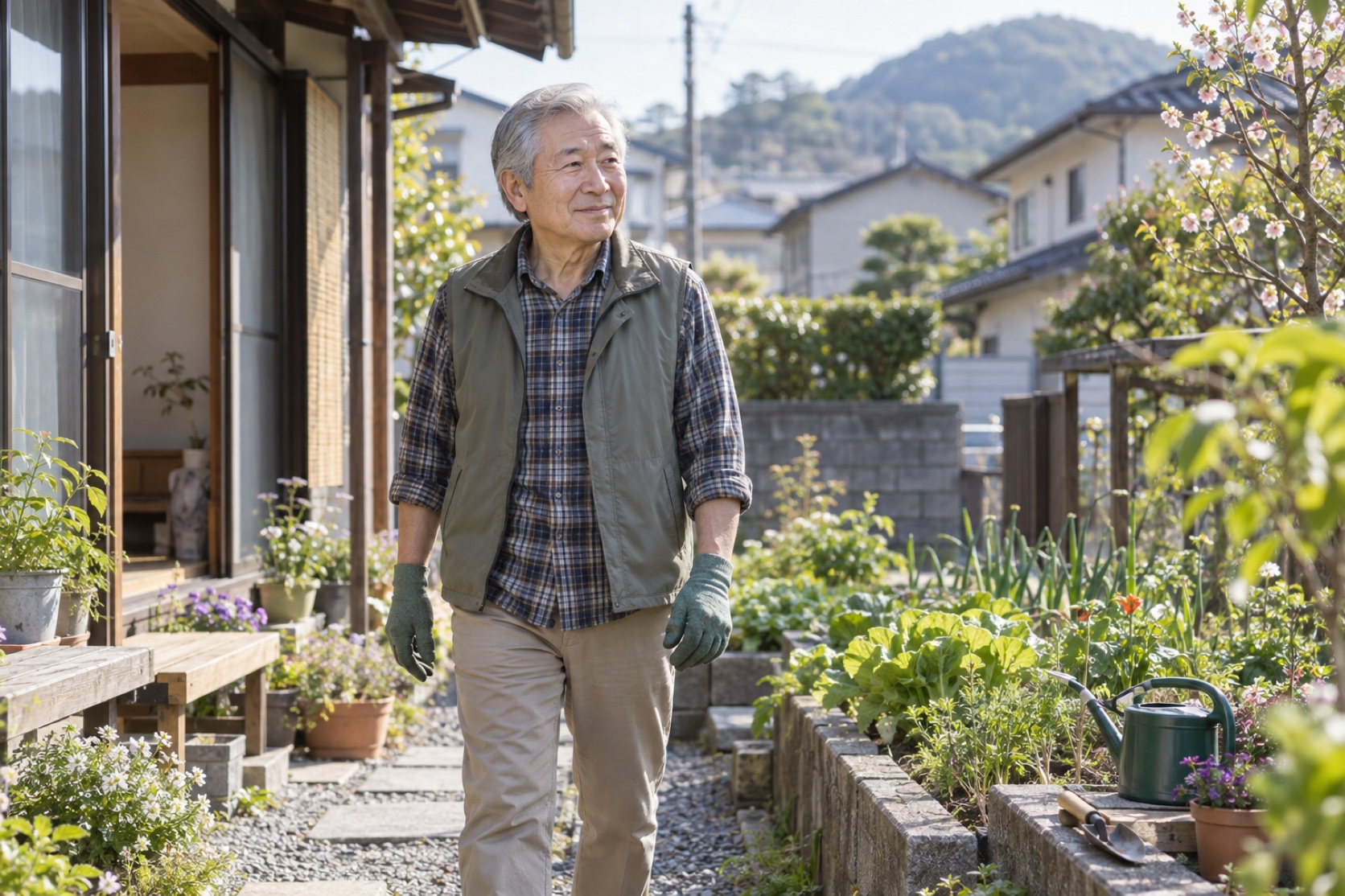
One Question, Asked of an Entire Region
In 1994, epidemiologists at Tohoku University began following every adult aged 40 to 79 in the catchment of the Ohsaki Public Health Center, in the northeast of Japan's main island. Into a long baseline questionnaire they dropped a single item: "Do you have ikigai in your life?" A yes or a no — nothing more. The word needed no definition for the respondents, and that is the quiet genius of the design. Ikigai in Japanese is everyday equipment, a word people use the way English speakers use "worthwhile." Asking for a yes/no answer measured something real, in the local grammar, with a minimum of translation error (Sone et al., Psychosomatic Medicine, 2008).
- 🗾 43,391 people answered — nearly everyone eligible in the region's National Health Insurance rolls, not a self-selected sample of the wellness-minded.
- ❓ One item, zero scale — a deliberate trade: less nuance, more cultural validity, and no room for people to "perform" purpose.
- 🔎 The comparison that mattered — those who said yes against those who said no, everything else measured and adjusted as best a questionnaire allows.
Product picks are generic categories, not brands. We may earn a commission on Amazon or iHerb purchases at no cost to you — this never changes our evidence conclusions. Full disclosure
Guided journal or notebook
Can support reflection, planning, or brief stress-management practices.
⚠️ Journaling may be distressing for some people; it is not a substitute for mental-health treatment or crisis support.
Check price on Amazon →Seven Years and 3,048 Deaths
Follow-up ran through 2001 — a median of 7.0 years — during which 3,048 participants died. The headline result, adjusted for age, sex, and other covariates, is the number this entire topic series orbits: people who reported no ikigai had a 1.5-fold hazard of dying from any cause compared with those who reported ikigai (95% confidence interval 1.3–1.7). Cause by cause, the pattern sharpened. Cardiovascular mortality carried a hazard ratio of 1.6 (1.3–2.0). Deaths from external causes — accidents, falls, suicide — carried 1.9 (1.1–3.3). Cancer mortality, the one place intuition might have predicted a signal, showed little difference and did not reach statistical significance.
Two glosses before the chart. First, these are group averages: a 1.5-fold hazard describes the no-ikigai group as a whole and says nothing about any single person's fate. Second, "adjusted" means the analysis tried to account for the obvious confounders it could measure — smoking, drinking, blood pressure, body weight, illness history. It could not account for everything, and no observational study can.
Reading the Hazard Ratios
The shape to notice is not the tallest bar — it is that the biggest differences live in cardiovascular and external causes, the same places where loneliness, inactivity, and loss of daily structure do their damage elsewhere in the cohort literature. That overlap is a hint about mechanism, and the parent topic walks the behavioral chain: people with a reason to get up move more, smoke less, and stay connected, and those behaviors carry part of the mortality gap.
The Japanese Replication: JACC
One cohort, however large, is one cohort. The question was whether the Ohsaki finding would hold when a different team, a different region, and a different questionnaire asked it again. It did.
- 🗾 The Japan Collaborative Cohort (JACC) followed more than 50,000 middle-aged and elderly adults across Japan and found that reporting ikigai was associated with lower all-cause and cause-specific mortality over follow-up (Tanno et al., Journal of Epidemiology, 2009).
- 🫀 The cardiovascular finding repeated — a companion JACC analysis linked a sense of purpose to reduced risk of death from cardiovascular diseases specifically (Koizumi et al., Journal of Epidemiology, 2008).
- 🌎 And the West converges — US purpose-in-life cohorts show the same direction, pooled at roughly 15–20% lower all-cause mortality in meta-analyses, which the parent topic documents in full.
Convergence across instruments matters, because the Japanese item and the Western scales measure somewhat different things. When both point the same way, the signal is less likely to be an artifact of one questionnaire.
What the 1.5 Does Not Mean
| Claim | What the data show | Verdict |
|---|---|---|
| Ikigai tracks lower all-cause mortality | HR 1.5 (1.3–1.7) for the no-ikigai group over 7 years, covariate-adjusted | Supported |
| Cardiovascular deaths drive much of the gap | Cardiovascular HR 1.6 (1.3–2.0) | Supported |
| The pattern replicates beyond one region | JACC (50,000+ adults) finds the same direction | Supported |
| Cancer mortality follows the same pattern | Association was small and not statistically significant | Not shown |
| Absence of ikigai causes earlier death | Design is observational; causation is untested | Not shown |
| Installing ikigai later moves the curve | No trial has tested whether purpose can be prescribed | Not shown |
The table is the honest center of this page. The Ohsaki Study is strong epidemiology — large, prospective, adjusted, replicated. It is not an experiment, and nobody has run the experiment. Sickness can drain a sense of ikigai (making the arrow run partly backward), and the yes/no item cannot say whether a gentle hobby counts the same as a demanding calling. The data license a claim about association, full stop.
Why External Causes Moved
The external-cause finding deserves its own honest paragraph, because it is easy to misread. The hazard ratio of 1.9 sits on a wide confidence interval (1.1–3.3), meaning the true value may be a modest 10% or a dramatic tripling. The category mixes accidents, falls, and suicide — events with very different stories. One plausible reading: people with a reason to get up are more engaged with daily life, more careful in it, and less likely to stop caring for themselves. Another, darker reading runs specifically through suicide, where a sense that life is worth living is not a confounder but part of the mechanism itself. Both readings remain speculative; the data say only that the signal was there and statistically significant.
⚠️ Association is not instruction
Nothing in the Ohsaki data says you can prescribe ikigai, dose it, or fake it — and a sustained absence of interest, meaning, or pleasure can be a symptom of depression, which deserves professional care on its own. The finding's honest use is permission: building a reason to get up is not a luxury. If that pursuit starts to feel like another obligation, the purpose-and-the-brain topic covers the line between meaning-seeking and mental-health care.
How to Use This Finding
- 📋 The word is not the medicine. Ikigai matters through the behaviors it anchors — the daily movement, connection, and care that people with a reason to get up simply do more of. The parent topic maps that chain.
- ⭕ Start with four lists, not one epiphany. The four-circle worksheet turns "find a reason" into fifteen answerable minutes.
- 🎙️ Ask yourself like a researcher would. The interview method is the structured self-inquiry that beats journaling alone.
- 🧓 The post-work years are where this gets tested. Ikigai is most fragile exactly when paid work stops providing one by default — the retirement topic owns that transition.
The Bottom Line
- One question, 43,391 answers, seven years: people reporting no ikigai had 1.5× the all-cause mortality of those with ikigai.
- The signal concentrates where you'd expect: cardiovascular deaths (1.6×) and external causes (1.9×) — cancer showed little difference.
- It replicated: the JACC cohort of 50,000+ adults and Western purpose meta-analyses point the same way.
- Read it as association, not instruction: the study licenses building a reason to get up — not treating the word as a treatment.
Related Topics
- Sone et al., "Sense of life worth living (ikigai) and mortality in Japan: Ohsaki Study," Psychosomatic Medicine (2008)
- Tanno et al., "Associations of ikigai as a positive psychological factor with all-cause mortality and cause-specific mortality among middle-aged and elderly Japanese people: findings from the Japan Collaborative Cohort Study," Journal of Epidemiology (2009)
- Koizumi et al., "Effect of having a sense of purpose in life on the risk of death from cardiovascular diseases," Journal of Epidemiology (2008)
- Cohen, Bavishi & Rozanski, "Purpose in life and its relationship to all-cause mortality and cardiovascular events: a meta-analysis," Psychosomatic Medicine (2016)
- Alimujiang et al., "Association between life purpose and mortality among US adults," JAMA Network Open (2019)