Folate and Other Micronutrients in Heavy Alcohol Use
Thiamine has its own emergency page because its failure mode is dramatic. The rest of the micronutrient story is quieter but broader: folate, vitamin B12, magnesium, and zinc are the nutrients most consistently reported as low in heavy alcohol use and alcohol use disorder (AUD), through the same stacked mechanisms — poor intake, damaged absorption, shrinking liver stores, and increased urinary loss. This page reviews what the clinical evidence does and does not support, lists the foods that carry each nutrient, and resists the leap from "deficiency is common in AUD" to "everyone who drinks should supplement."
What the evidence supports
- Folate, magnesium, and zinc deficiencies are repeatedly documented in heavy-use and AUD populations; B12 status is more variable.
- The mechanisms are established: displacement of food, gut and pancreatic injury, lost hepatic storage, and increased urinary excretion.
- Folate stores can fall within weeks of poor intake, and refeeding a deficient person without proper clinical support carries its own risks.
What remains uncertain
- Prevalence estimates vary widely across cohorts, eras, and assays; no single number holds across populations.
- Whether correcting these deficiencies improves long-term recovery outcomes has thin trial support.
- Optimal repletion regimens vary by guideline and setting; this page quotes none.
Evidence last reviewed: October 6, 2026. Conclusions may change as new research is published.
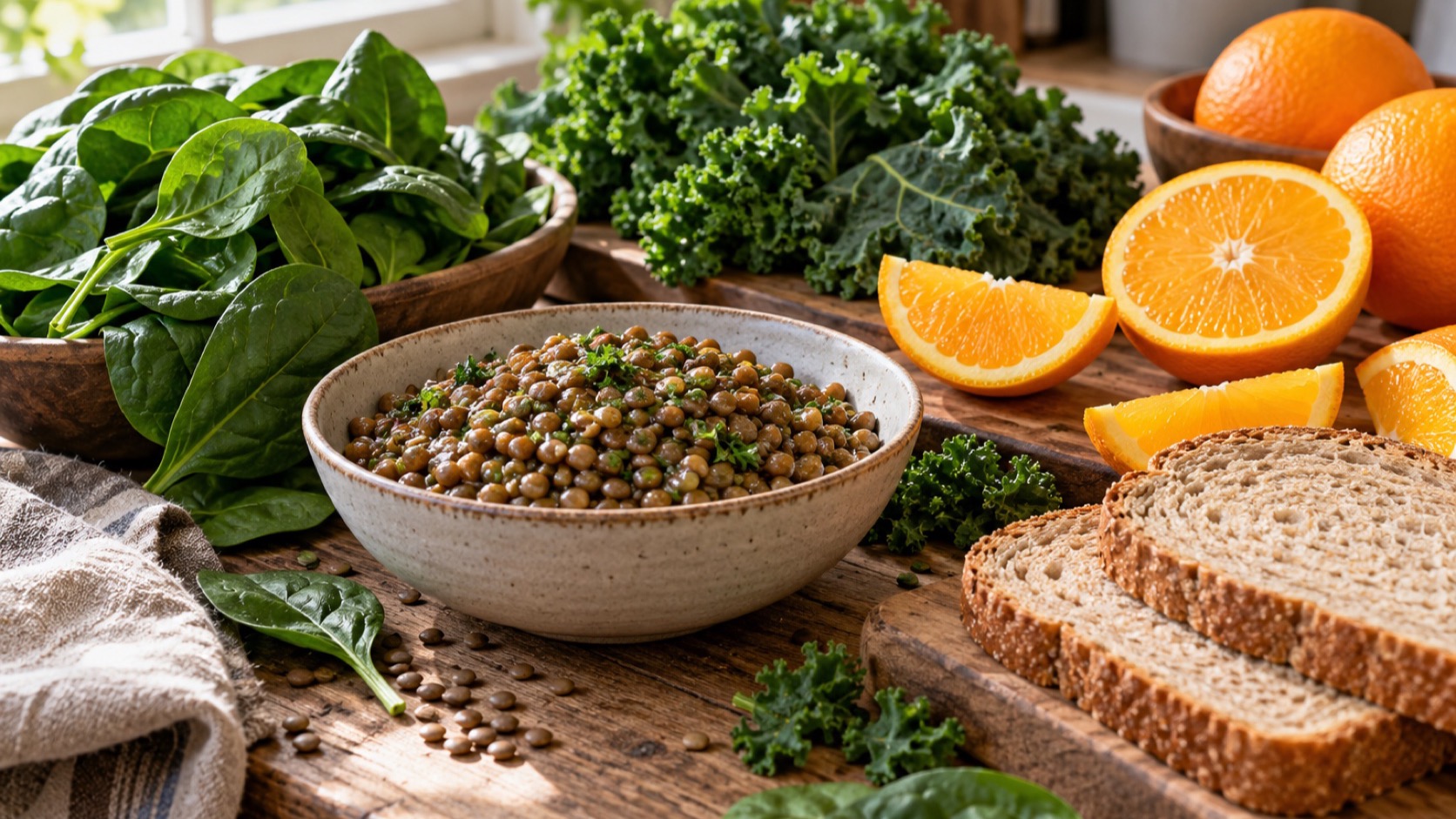
Four nutrients, one mechanism stack
Each nutrient below fails for slightly different reasons, but the background machinery is the same, and it is documented in detail on the nutrient-adequacy page: alcohol displaces nutrient-dense food (significantly once it exceeds roughly 30% of total calories), injures the gut lining and pancreas so absorption suffers, damages the liver where several vitamins are stored, and raises urinary losses of magnesium and zinc (Lieber, Alcohol Research & Health, 2003). The result is a population in which multiple deficiencies travel together rather than appearing one at a time — a pattern reviewers of substance-use-disorder nutrition describe as typical but not universal.
| Nutrient | Why it falls | Food sources | Evidence read |
|---|---|---|---|
| 🥬 Folate | Poor intake plus malabsorption plus lost liver storage; status can drop within weeks. | Leafy greens, legumes, asparagus, fortified grains | Common |
| 🧲 Magnesium | Reduced intake and absorption, increased urinary excretion. | Nuts, seeds, whole grains, legumes, greens | Common (~30%) |
| 🦪 Zinc | Low intake, malabsorption, urinary loss; status often parallels protein status. | Oysters, meat, pumpkin seeds, legumes | Frequent |
| 🧪 Vitamin B12 | Absorption depends on stomach and pancreatic function alcohol degrades; stores are large, so deficiency appears later. | Meat, fish, eggs, dairy, fortified foods | Variable |
Two cautions on reading that table. First, "common" describes AUD and heavy-use cohorts — hospitalized patients, treatment programs, autopsy series — not the general drinking public. Second, a low-serum value is not self-explanatory: interpreting it, and deciding whether and how to correct it, is clinical work.
Folate: the fastest domino
Folate is the B vitamin most vulnerable to alcohol. Body stores are measured in weeks rather than months, the intestine absorbs it through exactly the cells alcohol injures, and the liver — where folate is stored and recycled — is the organ alcohol damages first. Clinical reviews describe folate deficiency as frequent in heavy-use populations, and experimental work summarized by Lieber showed folate status falling within weeks when intake fell while drinking continued.
The stakes are system-wide. Folate is required for DNA synthesis and repair and for the metabolism of homocysteine, and deficiency expresses itself in blood cells (macrocytic anemia) long before anything dramatic appears neurologically. It also interacts with thiamine-independent pathways of brain injury: the megaloblastic changes of folate deficiency can coexist with, and mask, the thiamine emergency described on its own page. One more reason assessment belongs to clinicians: in a folate-deficient person, correction strategy and pacing affect more than folate.
B12, magnesium, zinc: three different stories
- 🧪 B12 — the slow one: Because liver stores of B12 last years, deficiency appears late and less consistently than folate deficiency in heavy-use cohorts. But alcohol degrades the stomach and pancreatic functions B12 absorption depends on, so status becomes unreliable exactly when nutrition is already poor. Low B12 adds its own neuropathy risk on top of alcohol's direct nerve toxicity.
- 🧲 Magnesium — the cofactor drain: Magnesium deficiency affects roughly 30% of chronic heavy users (Praharaj et al., 2021) through a double mechanism: poor intake plus alcohol-driven urinary loss. It matters twice over because magnesium is the cofactor for thiamine-dependent enzymes — a magnesium-deficient body uses its remaining thiamine poorly, and correction of one can unmask deficiency of the other.
- 🦪 Zinc — the quiet one: Zinc falls through the same intake-absorption-excretion stack and is frequently low in heavy-use and liver-disease populations. Zinc-dependent functions include immunity, taste (whose blunting worsens intake further — a small vicious cycle), wound healing, and appetite regulation.
What supplementation evidence does not say
Here is where honesty has to slow the story down. The claim "alcohol causes vitamin deficiency, so drinkers should take vitamins" contains two errors. The first is scope: these findings are from heavy-use and AUD populations and do not describe lighter drinkers. The second is the conclusion: correcting a deficiency and neutralizing alcohol's harms are different acts, and only the first is even possible.
- 🧪 Lab correction ≠ outcome evidence: Few trials test whether fixing folate, magnesium, or zinc status changes long-term recovery or survival — a 2025 review calls research on specific nutrients in substance-use disorders limited (García-Estrada et al., Healthcare, 2025).
- 🛡️ No vitamin blocks alcohol toxicity: A balanced diet does not prevent alcohol's direct organ damage (Lieber, 2003); acetaldehyde and oxidative stress are indifferent to the supplement schedule.
- 🕳️ No blanket protocol: Reviews of nutrition in addiction treatment note there are no established nutrition standards across SUD care — regimens that exist are setting-specific clinician decisions.
- ⚠️ Correction can be risky: Refeeding and repletion in severely depleted people can shift electrolytes dangerously; this is monitored care, not a self-serve project.
⚠️ Deficiency symptoms are clinician territory
Numbness, tingling, persistent fatigue, a sore tongue, increasing unsteadiness, or confusion in a person who drinks heavily can indicate deficiency, worsening liver disease, withdrawal, or several of these at once — and telling them apart requires examination and bloodwork. The same caution as the thiamine page applies with full force: neurologic symptoms in a heavy drinker are evaluated urgently, in person, by clinicians. If someone in this situation stops eating or stops drinking abruptly, both changes need medical supervision; the recovery nutrition page covers how nutrition fits into that care.
Food sources, for the population this page is not about
Listing food sources on a clinical page needs a guard rail: no dietary pattern makes heavy drinking safe, and once deficiency exists in a heavy-use context, food alone is not the correction. But for readers who drink at most lightly and are simply rebuilding a nutrient-dense pattern, the foods above — leafy greens and legumes for folate; nuts, seeds, and whole grains for magnesium; oysters, meat, and pumpkin seeds for zinc; meat, fish, eggs, and dairy for B12 — are the standard answers, and the general diet-quality framework lives on the parent alcohol-and-health topic. What a salad cannot do is subtract the ethanol from anything.
Questions, answered briefly
- 🍷 Does light drinking cause these deficiencies? The documented deficiencies are in heavy-use and AUD populations; well-nourished light drinkers are a different population, and importing clinical numbers would be misleading.
- 💊 Should I take a B-complex if I drink? This page makes no blanket recommendation. Supplementation decisions in heavy-use contexts belong to clinicians after assessment; prophylaxis for lower-risk drinkers has little supporting evidence either way.
- 🩸 Can I test for all of these? Tests exist for each, but selecting, timing, and interpreting them — especially alongside liver disease — is clinical work; standard panels do not automatically include them.
- 🔗 How does this relate to thiamine? Thiamine is the emergency-tier member of the same family — it fails fastest and injures the brain most visibly, so it has its own page.
- 🍽️ Will eating better fix my labs? If intake is the sole problem, improved eating improves status over time. In heavy use, absorption, storage, and losses are usually impaired too — which is why the clinical page resists the food-only answer.
The Bottom Line
- Folate, magnesium, and zinc are the consistent findings. Deficiencies of these nutrients are repeatedly documented in heavy-use and AUD populations; B12 is slower and more variable.
- One stack, many casualties. Displacement, malabsorption, lost liver storage, and urinary loss — the same mechanisms drain different nutrients at different speeds.
- No supplement neutralizes alcohol. Repletion can correct deficiency; it does not block alcohol's direct organ toxicity, and blanket supplementation claims lack trial support.
- Assessment and correction are clinical tasks. Diagnosis, testing, and repletion — especially in severe depletion — belong to a medical team, not a self-assembled regimen.
Related Topics
- Lieber CS, “Relationships Between Nutrition, Alcohol Use, and Liver Disease,” Alcohol Research & Health (2003).
- Praharaj SK, et al., “High-dose thiamine strategy in Wernicke–Korsakoff syndrome and related thiamine deficiency conditions associated with alcohol use disorder,” Indian Journal of Psychiatry (2021).
- García-Estrada J, Luquin S, Pesqueda-Cendejas K, Ruiz-Ballesteros AI, “Malnutrition in Substance Use Disorders: A Critical Issue in Their Treatment and Recovery,” Healthcare (2025).
- Mahboub N, Rizk R, Karavetian M, de Vries N, “Nutritional status and eating habits of people who use drugs and/or are undergoing treatment for recovery,” Nutrition Reviews (2021).
- NIAAA, “The Core Resource on Alcohol,” medical complications section.