Rucking: walking with weight
Rucking is walking with a loaded backpack — the oldest progression lever in the book, borrowed from armies that have marched with packs for centuries. A modest load raises the heart-rate and strength demands of a walk at the same speed, turning a neighborhood loop into genuine training without ever breaking into a run. This page covers form, a load progression that starts around 10% of bodyweight, and who should leave the pack at home.
What the evidence supports
- Carried load raises the metabolic and heart-rate cost of walking in rough proportion to the added mass (Knapik et al., Applied Ergonomics, 1996).
- Load carriage is well-tolerated by healthy adults at modest loads — military research has documented the dose-response for decades (Knapik et al., Military Medicine, 2004).
- Weighted walking adds a muscular and skeletal loading stimulus that unweighted walking largely lacks.
What remains uncertain
- Almost no research links recreational rucking to longevity outcomes directly — the case rests on its effects on heart rate, muscle, and bone, not on mortality cohorts.
- Optimal load for fitness walking is not established; the 10–20% bodyweight convention is a practical heuristic drawn from military and coaching practice.
- Injury thresholds vary widely by individual history — backs and shoulders respond differently person to person.
Evidence last reviewed: August 15, 2026. Conclusions may change as new research is published.
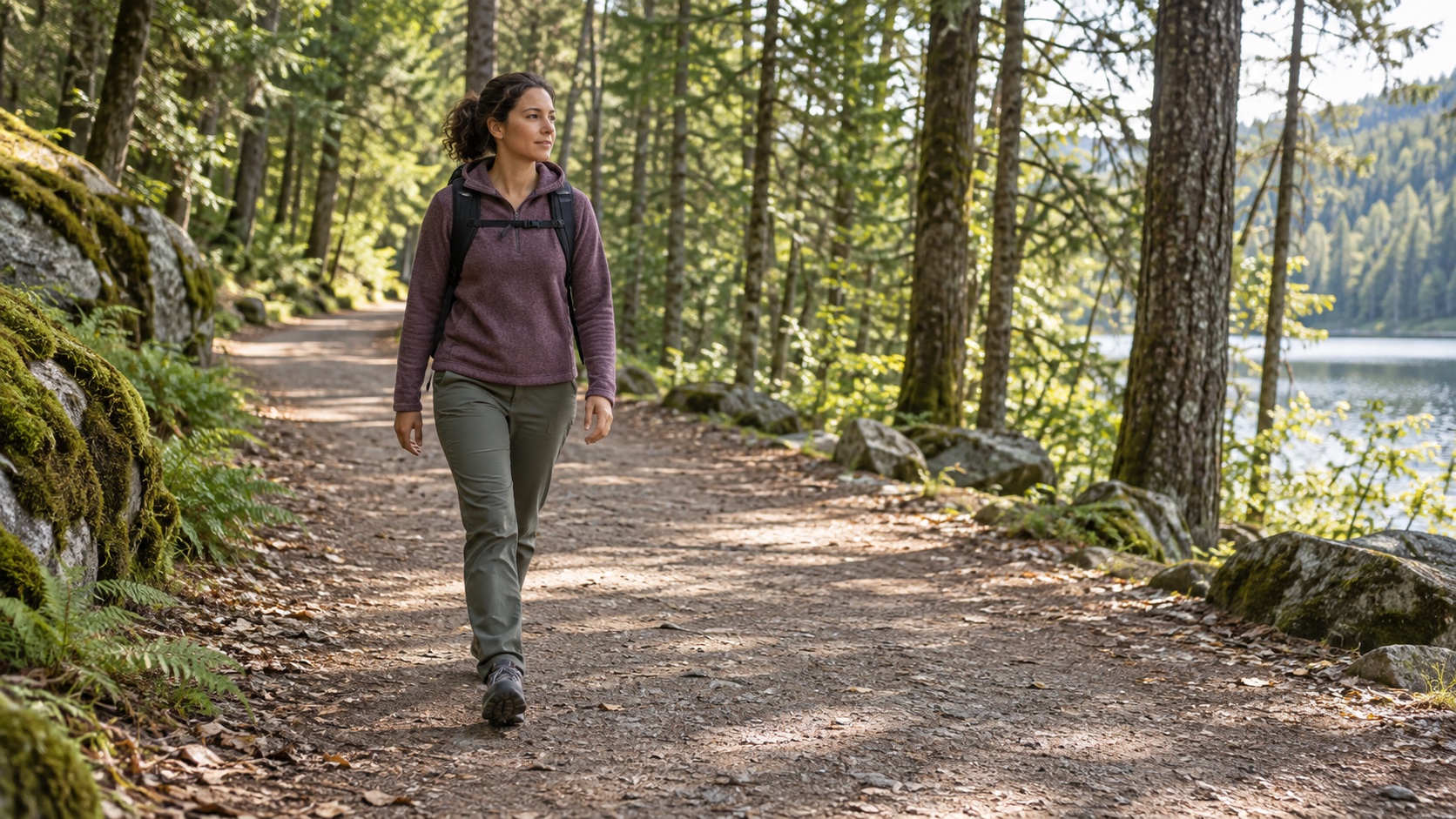
What Rucking Is
Rucking comes from military load-carriage: soldiers have always marched under pack weights far heavier than anything a fitness plan would prescribe, and the physiology of that tradition has been studied for decades (Knapik et al., Military Medicine, 2004). The recreational version is deliberately lighter — typically 10–20% of bodyweight in a snug backpack — and the goal is not hardship but leverage: the same neighborhood walk, at the same speed, with a bigger training effect. A 160-pound adult carrying 16–32 pounds has added roughly the metabolic equivalent of walking uphill on flat ground, without finding a hill.
That framing matters because it's honest about what rucking is: a progression lever for walking, not a distinct sport with its own evidence base. The walking topic lists three levers — pace, terrain, and load — and this page covers the third in depth. The dedicated rucking protocol turns the same material into a session plan.
Product picks are generic categories, not brands. We may earn a commission on Amazon or iHerb purchases at no cost to you — this never changes our evidence conclusions. Full disclosure
Smart band or smartwatch
Can make activity, exercise, and routine patterns easier to notice over time.
⚠️ Step, heart-rate, and sleep estimates can be inaccurate and may encourage unhelpful over-monitoring; consumer readings are not medical diagnoses.
Check price on Amazon →Why Weight Upgrades a Walk
The core effect is metabolic: carried mass increases the oxygen and energy cost of walking roughly in proportion to the load added (Knapik et al., Applied Ergonomics, 1996). Translated to everyday terms, that means:
- 🫀 A higher heart rate at the same speed. A stroll that sat at recovery effort becomes moderate — often genuinely zone 2 — once 10–15% bodyweight is on your back.
- 🦵 A strength stimulus walking lacks. The legs, hips, and every muscle that keeps your spine upright work harder each step — a light, daily strength-training nudge disguised as a walk.
- 🦴 A bone-loading signal. Skeletal tissue adapts to load; carried weight multiplies the ground-reaction and spine forces of every step, which is why loaded walking is a recurring theme in bone-health programming.
- 🎯 More training per minute. When time is the constraint, rucking raises the stimulus without raising the duration — useful for exactly the people this site's weekly formula is built for.
Comfortable walking shoes
May improve comfort and consistency for walking-based activity.
⚠️ Footwear cannot correct every pain problem; persistent foot, knee, or hip pain warrants appropriate evaluation.
Check price on Amazon →Form First
Rucking injuries are almost always form or load errors, not bad luck. The checklist that matters:
- 🎒 Pack high and tight. The load rides against your upper back, not bouncing off your hips; cinch the straps so nothing sways. A swaying pack torques the spine with every step.
- 🧍 Stay tall. The classic error is leaning forward under the weight. Keep your head over your hips and let the legs do the carrying — if you need to hunch, the pack is too heavy.
- 🚶 Shorten the stride. Long strides under load hammer the knees and lower back. Quicker, shorter steps keep you balanced and upright.
- 👟 Supportive shoes, flat ground first. A loaded walk multiplies foot forces; leave the minimalist shoes and steep descents for unweighted days.
- 📦 Pack the weight close to your back. Dense items against the spine, soft items around them — the farther the mass sits from your body, the more leverage it gains on your spine.
The Loading Ladder
| Stage | Load | Duration | Focus |
|---|---|---|---|
| 1. Bare walk, brisk | None | 20–30 min | Own a brisk pace first — rucking builds on it |
| 2. First pack | ~10% bodyweight | 20–30 min | Form and posture with a light load |
| 3. Working ruck | 15–20% bodyweight | 30–45 min | Conversational pace, flat or gently rolling terrain |
| 4. Optional spice | 15–20%, plus hills or pace pickups | 30–60 min | Terrain and pace levers — only after stage 3 feels routine |
Two rules govern the ladder. First, earn the weight with volume: add load only after two weeks of the current stage feels easy at a conversational pace. Second, most of your walking stays unweighted — rucking is seasoning, not the whole diet. Two or three rucks a week among seven days of regular walking is plenty for nearly everyone.
Progression, Boring and Safe
- ➕ Add ~2.5–5% of bodyweight at a time. From 10% to 12.5%, hold for two weeks, reassess. Small jumps keep the spine and feet ahead of the load.
- 🗣️ Keep every ruck conversational. If the talk test fails, the load (or pace) is too high for an easy session. Rucking at threshold effort is a fast track to the opposite of a sustainable habit.
- 🛡️ Anchor to feel. Sore lower back or knees the day after means too much, too soon — regardless of what the percentage table says.
- 🌊 Take unloaded weeks. Every fourth week or so, drop the pack entirely. The deload rule that protects runners protects ruckers too.
⚠️ Not everyone should ruck — and that's fine
Loaded walking multiplies the forces through the spine, hips, knees, and feet. If you have a history of back pain or disc problems, osteoporosis or low bone density, knee or hip arthritis, shoulder trouble, or you're pregnant, talk to a clinician before loading a pack — this is clinician territory, not a self-help rule. The same fitness goals are reachable with brisk pace or incline walking, which load the body far more gently. A vest that distributes weight front and back is another gentler middle ground.
Rucking vs the Alternatives
Three honest comparisons keep rucking in perspective. Incline walking raises effort without loading the spine — the better choice for anyone with back history, and it costs nothing. Weight vests spread the load across the torso, sparing the shoulders, but they can't be ditched mid-walk and are less adjustable than a pack. Walking poles do the opposite: they shift some load to the arms and measurably reduce knee stress on hills, making them a good complement on rucking rest days, not a rival. The pattern is consistent with the rest of this site: choose the lever your body tolerates, and let time do the work. If you can't decide between them, run the simplest experiment available — two weeks of incline walking versus two weeks of light rucking — and keep whichever your back, knees, and schedule prefer.
Questions, Answered Briefly
- ❓ Do I need a special rucksack? No. Any pack that sits high, cinches snug, and holds weight close to your back works. A dedicated ruck plate or bags of rice are equally fine as load.
- ❓ Is rucking cardio or strength? Both, lightly — that's the point. It's primarily aerobic work with a muscular and bone-loading rider, which is why it sits in the cardio rather than the strength column.
- ❓ How heavy is too heavy? For fitness walking, past 25–30% bodyweight the risk-reward turns poor for most people, and form deteriorates fast. Military loads (40%+) are a job requirement, not a fitness goal.
- ❓ Can I ruck between strength sessions? Light rucking at a conversational pace is generally compatible with a strength program — but pay attention to your lower back. It is the first tissue to complain when training load and pack load stack.
- ❓ Does rucking count toward my step goal? Yes — steps are steps. A ruck day is a high-value step day, since some of those steps carry a strength and cardiovascular bonus.
The Bottom Line
- Rucking is a progression lever, not a new sport — a 10–20% bodyweight pack turns a stroll into moderate work and a light strength stimulus.
- Start around 10% of bodyweight for 20–30 minutes, and keep every ruck conversational while form settles in.
- Form before load: pack high and tight, torso tall, short strides — and add weight only after the current load feels easy for two weeks.
- Back, joint, bone, or shoulder issues put rucking in clinician territory — brisk pace and incline walking reach the same goals more gently.
Related Topics
- Knapik, Harman & Reynolds, "Load carriage using packs: a review of physiological, biomechanical and medical aspects," Applied Ergonomics (1996)
- Knapik, Reynolds & Harman, "Soldier load carriage: historical, physiological, biomechanical, and medical aspects," Military Medicine (2004)
- Quesada et al., "Biomechanical and metabolic effects of varying backpack loading on simulated marching," Ergonomics (2000)
- Birrell & Haslam, "The effect of military load carriage on ground reaction forces," Gait & Posture (2009)