Individual Variation
The hormesis curve is drawn from populations, but you live on a personal one. Age, sex, fitness, and genetics shift the curve's position and width so much that copying someone's protocol numbers is a different experiment than the one they ran. This page maps the known modifiers — how big each shift is, and what it means in practice — and ends with a method for finding your own curve instead of borrowing someone else's.
What the evidence supports
- Heat tolerance declines with age: older adults sweat less, shunt less blood to the skin, and feel thirst less reliably.
- The menstrual cycle shifts core temperature and thermoregulation, with the luteal phase measurably warmer — which changes heat and cold tolerance week to week.
- Caffeine half-life varies roughly from 1.5 to 9.5 hours across people, driven largely by liver enzyme genetics.
- Fitness and acclimatization widen the adaptive band substantially — trained bodies absorb stress doses that would overreach untrained ones.
What remains uncertain
- Exactly how much to adjust a dose for age, sex, or fitness is not quantified — the directions here are established; the magnitudes are not.
- Most hormetic research has been conducted in men, so women-specific dose curves are genuinely under-studied.
- Menopause-specific hormesis data are thin; the thermoregulation shifts are real but the dose implications are extrapolated, not measured.
Evidence last reviewed: August 15, 2026. Conclusions may change as new research is published.
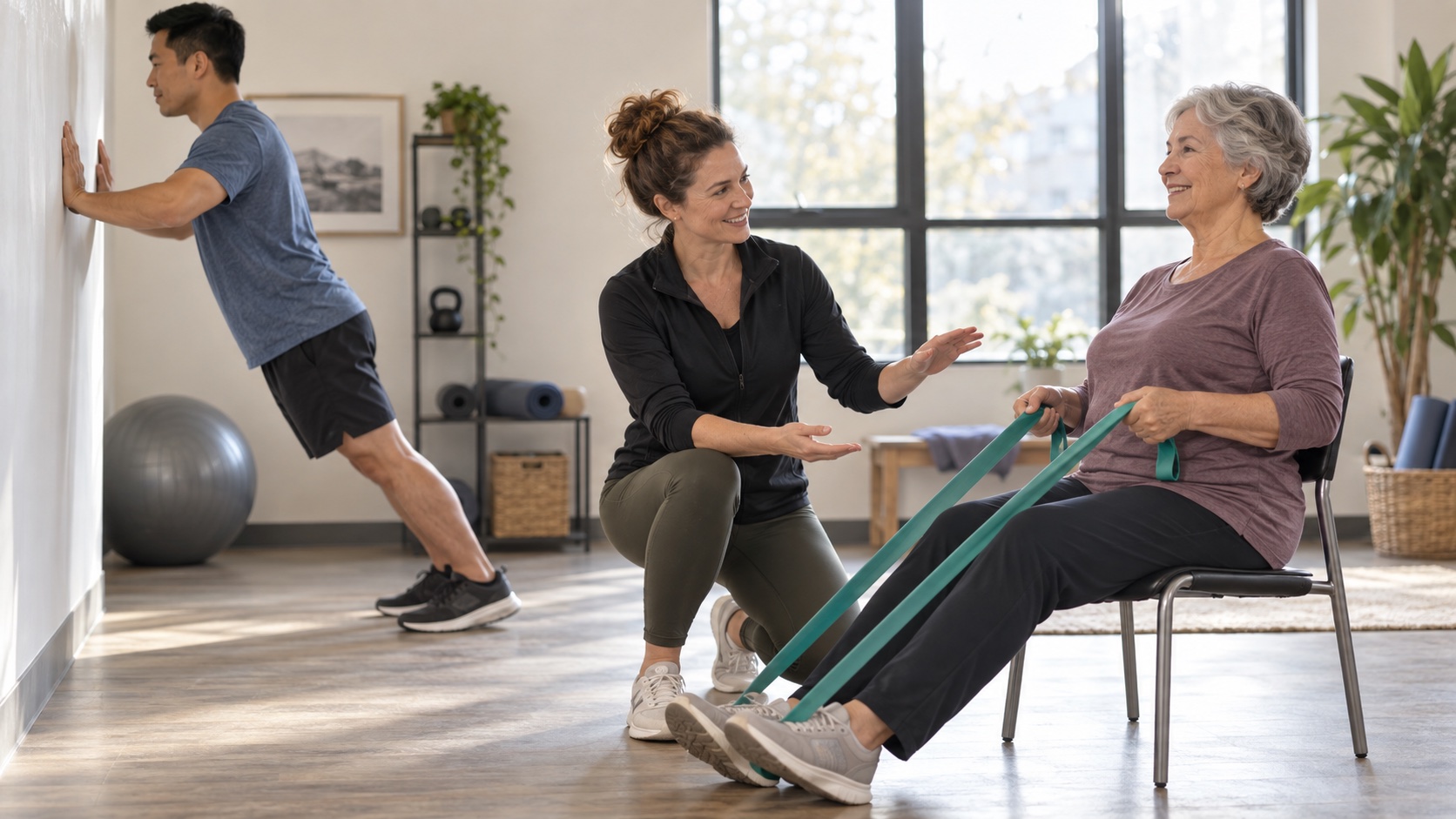
The Curve Is Personal
Every dose table and cohort finding on this site describes a group average — a curve drawn through thousands of individual curves, each positioned differently. The parent topic's dose tables are starting points, not prescriptions, and this page explains why the spread matters more than the average. Two honest consequences follow:
- 📐 A population band is a distribution, not a shelf. The Finnish sauna findings describe what happened to thousands of Finns; your curve may sit comfortably left or right of the group's sweet spot.
- 🧭 The method transfers; the numbers do not. Start low, step slowly, and read the signals — the calibration method from the curve page works for everyone precisely because it does not assume anyone's numbers.
Age: The Curve Tightens
Aging moves the hormetic band in two directions at once: tolerance to acute stress narrows, while the value of the adaptation that remains is undiminished. The physiology, practice by practice:
- 🥵 Heat tolerance declines. Older adults sweat less, send less blood to the skin, and feel thirst later — a well-documented thermoregulation shift. The same sauna session is a larger relative dose at 70 than at 40, which argues for shorter sessions and longer acclimatization, not for skipping sauna.
- 🥶 Cold tolerance narrows. Skin blood flow and shivering capacity decline with age, and less muscle means less metabolic heat. Cold's benefit evidence was already thin; for older adults the risk side of the ledger grows, so gentler and shorter is the honest default.
- ⏳ Fasting costs more. Muscle maintenance gets harder with age, and protein needs per meal rise — a long fast spends more of a shrinking account. The fasting topic's caution about stacking applies with interest past 60.
- 🏋️ Training remains the widest band at any age. The exercise dose-response literature holds into old age, and strength work stays the reference hormetic practice — the Exercise pillar owns those numbers.
Sex: The Curve Wobbles Weekly
The most under-discussed modifier on this site, and one with a concrete mechanism: core body temperature tracks the menstrual cycle, rising in the luteal phase. The practical reads:
- 🌡️ Heat tolerance dips in the luteal phase. Starting from a warmer baseline, a hot sauna or a hard heat session is a bigger relative dose — the week to shorten sessions or lower the temperature, not the week to set records.
- 🧊 Cold tolerance tends to run the other way. The same warmer baseline can make brief cold exposure feel more tolerable — though the plunge safety rules do not change, and the cold-shock response does not read the calendar.
- ⏳ Fasting interacts with the cycle. Cycle disruption is a known red flag for fasting and low energy availability — a medical signal, not a dose-finding data point, per the too-much page.
- 🌋 Menopause rewrites thermoregulation. Hot flushes and changing temperature regulation are the signature — the Menopause 101 topic owns that physiology; for dosing purposes, expect heat tolerance to shift and re-titrate from below.
- 📉 The evidence gap is real. Most hormetic studies enrolled mostly men. Cycle-aware dosing is honest physiology, but the dose curves it implies have not been measured to the same standard — adjust by feel, with the feel toolkit, not by a table that does not exist.
Fitness: The Curve Widens
The single largest modifier of hormetic tolerance is conditioning. A trained body absorbs stress doses that would overreach an untrained one — and the mechanism is partly transferable, which is why fitness is the foundation this pillar keeps deferring to:
- 🏋️ Training status sets the baseline. The same workout that is a hard stimulus for a beginner is maintenance for a trained person. The band's width grows with conditioning — the exercise dose-response literature owns the curve.
- 🌡️ Heat acclimatization is real and fast. Repeated heat exposure measurably improves sweating and cardiovascular tolerance within one to two weeks — the reason the Heat & Cold Protocols topic ramps beginners slowly: tolerance is built, not assumed.
- 🧊 Cold acclimatization is more modest. Habituation to the cold-shock response happens with repetition, but the physiological adaptations are less dramatic than heat's — another reason cold dosing stays conservative.
- 📉 Detraining reverses it. Tolerance fades when practice stops. After illness or a long break, re-enter below your old dose — the curve has moved left while you were away.
Genetics: The Curve's Lottery
Some variation is not trainable. The cleanest measured example is caffeine: the liver enzyme CYP1A2 determines how fast caffeine clears, and its activity varies roughly tenfold across people:
The practical consequence is not "get genotyped" — it is that a shared afternoon coffee rule produces very different evenings in different people, and the hormetic drinks topic uses exactly this spread to explain why caffeine ceilings are personal. The same lottery logic applies, less measured, to heat tolerance, cold response, and fasting tolerance: same dose, different drug.
How the Curve Shifts, Group by Group
| Group | Direction the band shifts | Practical read | Read |
|---|---|---|---|
| 👴 Older adults | Heat and cold tolerance narrow; fasting costs more; training stays wide | Shorter sessions, longer acclimatization, gentle re-entry | Reduced |
| 👩 Women, luteal phase | Heat tolerance dips week to week; cold can feel easier | Cycle-aware scheduling: shorten heat sessions in the warm phase | Variable |
| 🏃 Trained, acclimatized | Band widens across practices | Larger doses are safer here — and still deserve the same signal checks | Wider |
| 🛋️ Untrained beginners | Band sits narrow and unknown | Start at half the typical dose; let tolerance build before ambition | Start low |
| 🧬 Slow caffeine metabolizers | Stimulant effects last roughly twice as long | Earlier caffeine curfew, lower daily ceiling — sleep is the arbiter | Variable |
Finding Your Curve
- 1️⃣ Start at half. Whatever dose the group tables suggest, begin at roughly half — especially for heat, cold, and fasting. Below the band is safe; above it is not, and your band's edge is unknown until you approach it.
- 2️⃣ Step slowly, one variable at a time. The calibration method from the curve page — hold each level for weeks, confirm with signals.
- 3️⃣ Let the signals arbitrate. Your curve's true position is revealed by the feel proxies and the objective signals the parent topic lists — not by anyone's published numbers.
- 4️⃣ Re-titrate after life changes. Age, illness, pregnancy, menopause, detraining, new medication — all move the curve. After any of them, re-enter from below, as if new.
- 5️⃣ Borrow the principle, not the protocol. What transfers between people is the method: start low, step slow, watch signals, respect exits. The numbers are the part that does not travel.
👥 Borrow the principle, not the numbers
Someone's 20-minute sauna protocol is a point on their curve — positioned by their age, sex, fitness, genetics, and recovery. Copied wholesale, it lands somewhere else on yours, and there is no way to know where without running the titration. The method travels: start low, step slowly, and let your signals — not their results — set the dose. Anyone with cardiovascular or metabolic conditions should also get clinician clearance before heat or cold stress, because individual variation includes individual risk.
The Bottom Line
- The curve is personal — age, sex, fitness, and genetics position it; population tables are starting points, not prescriptions.
- Age tightens the band — heat and cold tolerance narrow, fasting costs more, and training remains the widest, most dependable practice.
- Sex moves the curve weekly — core temperature tracks the menstrual cycle, so heat doses especially deserve cycle-aware scheduling, and the women-specific data gap argues for feel-based adjustment.
- Fitness widens it, genetics reshuffle it — and since no one can know their curve in advance, everyone runs the same method: start at half, step slowly, and let your own signals set the dose.
Related Topics
- Kenney & Munce, "Invited review: aging and human temperature regulation," Journal of Applied Physiology (2003)
- Kaciuba-Uscilko & Grucza, "Gender differences in thermoregulation," Current Opinion in Clinical Nutrition and Metabolic Care (2001)
- Nehlig et al., "Caffeine and the central nervous system: mechanisms of action, biochemical, metabolic and psychostimulant effects," Brain Research Reviews (1992)
- Cornelis et al., "Coffee, CYP1A2 genotype, and risk of myocardial infarction," JAMA (2006)
- Castellani & Young, "Human physiological responses to cold exposure: acute responses and acclimatization to prolonged exposure," Autonomic Neuroscience (2016)
- Meeusen et al., "Prevention, diagnosis, and treatment of the overtraining syndrome: joint consensus statement of the ECSS and ACSM," Medicine & Science in Sports & Exercise (2013)