The Nootropic Market, Audited
The nootropic aisle sells a promise — sharper, faster, younger brains from a capsule — and the trials, audited honestly, support a short list and a long shrug. This page applies the standard the market avoids: randomized trials, replicated, in healthy humans, at the doses actually sold. The result: caffeine, creatine, and one tea pairing earn their place; everything else mostly earns its marketing budget.
What the evidence supports
- Caffeine reliably improves alertness, attention, and reaction time — the best-replicated acute enhancer that exists.
- Creatine supplementation produces small but consistent memory improvements, especially in older adults and vegetarians.
- The L-theanine plus caffeine combination shows modest, replicated benefits for calm focus.
What remains uncertain
- Most of the market — racetams, noopept, bacopa, branded "stacks" — lacks replicated human trials at meaningful quality.
- Caffeine's apparent boost partly reflects withdrawal reversal: regular users may simply be restoring their baseline.
- Whether any supplement changes long-term cognitive aging, rather than same-day performance, is unproven.
Evidence last reviewed: August 15, 2026. Conclusions may change as new research is published.
The Market vs the Trials
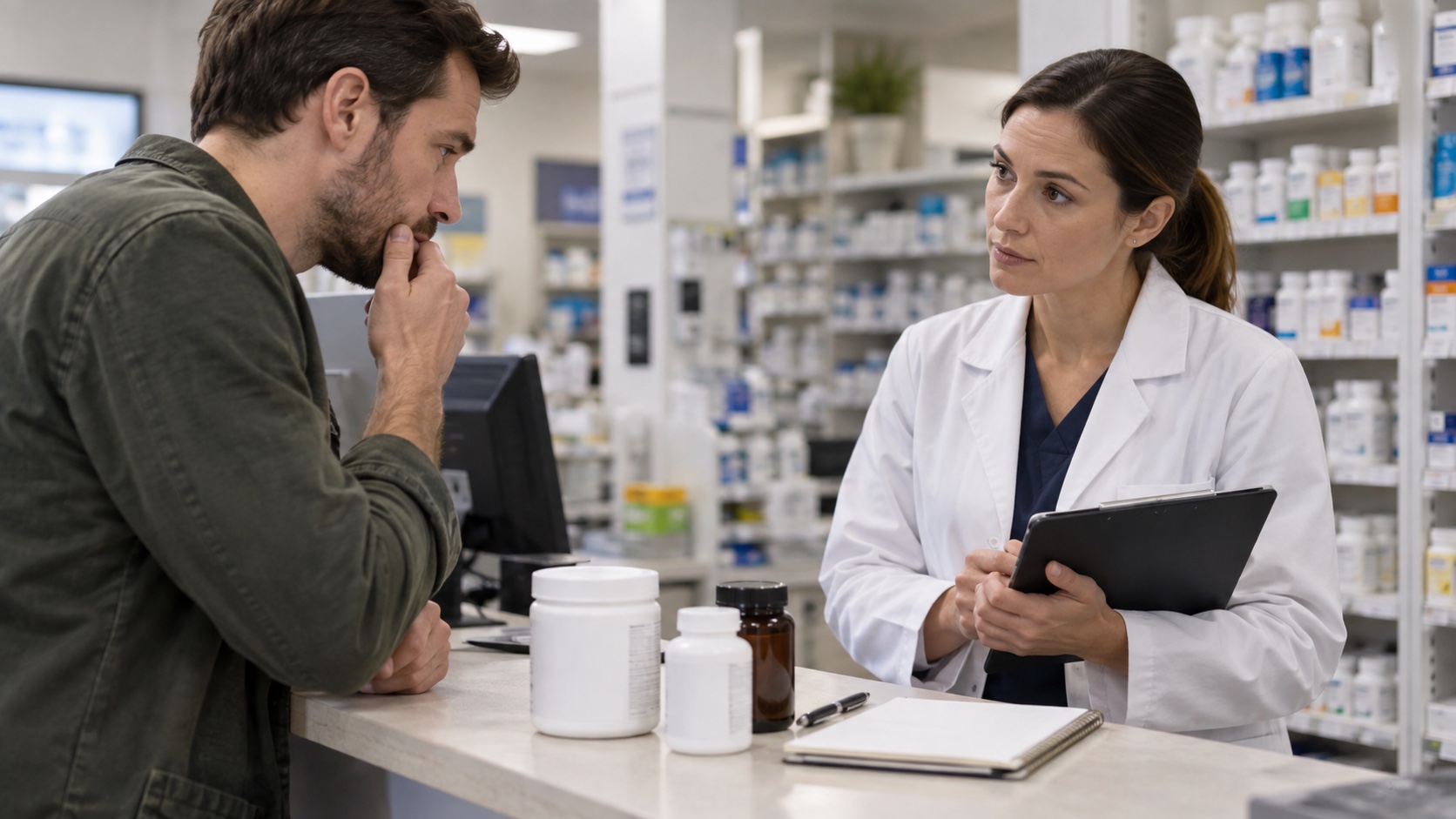
Nootropics are sold as supplements, and supplements are regulated as food — which means no efficacy testing before sale, and a long leash for claims as long as they stay one sentence away from treating disease. The result is an industry built on animal studies, cell cultures, and extrapolation: a compound that helps a sleep-deprived rat navigate a maze becomes, three marketing steps later, "clinically shown to support cognitive function" in humans. The audit standard here is deliberately boring: randomized, placebo-controlled, replicated, in healthy humans, at the dose on the label.
Caffeine: The One That Earns Its Reputation
Caffeine is the unglamorous winner of this page — not because it is exotic but because it is real. Randomized trials consistently show improved alertness, vigilance, attention, and reaction time, with the largest effects in people who are sleep-deprived or low-arousal (Nehlig, Journal of Alzheimer's Disease, 2010). Two honest glosses keep it in perspective:
- ↩️ Withdrawal reversal. Part of caffeine's "boost" in habitual users is just restoring the baseline that withdrawal took away — regular users may perform no better than they would have if they had never been dependent (James & Rogers, Psychopharmacology, 2005).
- ⏰ The half-life debt. Caffeine taken late in the day borrows alertness from the night — the sleep-saboteurs topic and its half-life page own that arithmetic.
- 📏 Effect size. Caffeine moves attention and alertness, not raw intelligence — it is a wakefulness enhancer wearing a smart-drug costume.
Creatine: Real, Modest, Overlooked
Creatine is the one "brain supplement" the trials keep quietly confirming. A systematic review of randomized trials found small but consistent benefits for memory and reasoning, concentrated in older adults and vegetarians — the groups with the lowest baseline stores (Avgerinos et al., Experimental Gerontology, 2018). A more recent meta-analysis confirmed a modest memory effect in healthy people (Prokopidis et al., Nutrition Reviews, 2023). The mechanism is unglamorous: creatine is the brain's short-term energy buffer, and topping it up helps when demand spikes. Dose is typically 3–5 grams a day — a cheap, boring powder, not a nootropic narrative.
The Tea Pairing
The one combination that survives repeated testing is L-theanine — the amino acid in green tea — taken with caffeine. Small trials consistently report improved attention and a subjective calm-focus quality, with the pairing outperforming caffeine alone on some self-report measures. The effect sizes are modest, the mechanism is plausible (L-theanine blunts caffeine's jittery edge), and the standard dose in studies is roughly 100–200 mg of L-theanine alongside a normal caffeine dose. It is the honest "stack" of the whole market — two ingredients, both food-derived, both tested together rather than assembled by marketing.
The Prescription Temptations
The strongest "cognitive enhancers" in the literature are prescription drugs, which is exactly why they deserve the clearest framing:
- 💊 Modafinil. Reliably helps people who are sleep-deprived. In well-rested healthy adults, a systematic review found small, inconsistent effects and some side effects (Battleday & Brem, European Neuropsychopharmacology, 2015). It is not "coffee plus."
- ⚡ Prescription stimulants. In healthy adults, meta-analyses find no consistent objective benefit on working memory or inhibition — but users report feeling enhanced (Ilieva et al., Journal of Cognitive Neuroscience, 2015). The confidence is real; much of the competence is placebo.
- ⚠️ Off-label use is clinician territory. These are medications with cardiac, psychiatric, and dependence risks. Healthy-person use is a decision for a prescribing clinician, not an online store.
The Long Null List
The rest of the shelf is a museum of null results and thin trials. The two landmark nulls: the Ginkgo Evaluation of Memory trial randomized over 3,000 older adults and found no effect of ginkgo on dementia incidence after six years (DeKosky et al., JAMA, 2008), and vitamin E failed its prevention trials the same way. The prevention-supplements page documents the fuller graveyard. Bacopa, the racetams, and noopept have small or absent human trial bases; branded "stacks" typically combine under-dosed ingredients that were never tested in combination. The deeper lesson is structural: in a well-nourished, well-slept brain, most interventions are pushing against a ceiling. Deficiency correction works; enhancement mostly does not.
The Real Stack
- 😴 Sleep is the strongest cognitive enhancer in every comparison that exists — the repair science is the long version.
- 🏃 Exercise has acute and chronic cognitive benefits with trial support — the walking topic is the cheapest on-ramp.
- 🥩 Protein supplies the raw material for the brain's chemistry — the protein topic owns the dosing.
- 🎓 Learning is the stimulus the whole system exists to serve — the skill-acquisition topic explains why novelty beats any pill.
The Safety Asterisk
🧪 The unregulated part nobody advertises
Supplement quality control varies wildly between brands and countries, and "nootropic" blends have repeatedly been found spiked with undisclosed stimulants and prescription drugs. A product that "works" dramatically is sometimes just a stimulant you did not consent to. Third-party testing helps but does not eliminate the problem, and supplements can interact with prescribed medications — which is why anything you take belongs on the list at your annual medication review.
| Substance | What the trials show | Verdict |
|---|---|---|
| ☕ Caffeine | Alertness, attention, reaction time — replicated; partly withdrawal reversal | Works |
| 🥩 Creatine | Small memory gains, strongest in older adults and vegetarians | Modest |
| 🍵 L-theanine + caffeine | Calm-focus combination, small replicated effects | Modest |
| 🌿 Ginkgo biloba | Null in the large prevention trials | No support |
| 💊 Modafinil (Rx) | Helps the sleep-deprived; equivocal when rested | Conditional |
| ❓ Most "stacks" | Under-tested blends, marketing-led dosing | No support |
How to Read a Nootropic Label
- 📝 "Clinically shown" is not a clinical trial. It usually means a supplier-funded study, an animal study, or an ingredient-level claim — check whether the study tested humans, the actual product, at the actual dose.
- 🎁 "Proprietary blend" means hidden doses. A blend label can hide an under-dosed active ingredient behind a cheap filler — the opposite of dosing transparency.
- 🔢 Match the trial dose. Creatine works at 3–5 grams; a "stack" with 250 mg of creatine is decoration, not supplementation.
- 🥇 Single ingredients beat stacks. The compounds with evidence have it as single ingredients; combinations are where the undisclosed extras hide.
- 🧭 Expect boring. Real cognitive enhancement is a small percentage point, not a before-and-after montage. Any product promising dramatic transformation is describing itself, not its evidence.
Questions, Answered Briefly
- 🧠 What should I take for brain fog? Start with the unglamorous triage: sleep debt, exercise, and medication side effects — the medication review catches the last one. Supplements come fourth.
- 🥩 Is creatine safe to take long-term? At 3–5 grams daily, creatine has one of the cleanest long-term safety records in the supplement world — but it still belongs on your review list.
- ☕ Is coffee enough caffeine? Yes — caffeine is caffeine; the delivery system is preference, not pharmacology. What matters is the half-life, which the sleep pillar's page explains.
- 💊 Should I try modafinil or stimulants? Off-label use of prescription drugs for cognitive enhancement is a clinician conversation with real cardiac and psychiatric stakes — this page is the research, not the prescription.
- 🌿 What about lion's mane, noopept, or the new thing? The honest pattern is consistent: early hype, small supplier-linked studies, no replication. Wait for independent trials before opening the wallet.
The Bottom Line
- The honest list is short — caffeine for alertness, creatine for a small memory edge, L-theanine pairing for calm focus.
- Two landmark nulls frame the market — ginkgo and vitamin E failed the big prevention trials, and most of the shelf is thinner than that.
- Prescription stimulants are confidence, mostly — users feel enhanced while objective measures barely move.
- The real stack is free — sleep, exercise, protein, and learning outperform the supplement aisle on every measure that matters.
Related Topics
- Nehlig, "Is caffeine a cognitive enhancer?" Journal of Alzheimer's Disease (2010)
- James & Rogers, "Effects of caffeine on performance and mood: withdrawal reversal is the most plausible explanation," Psychopharmacology (2005)
- Avgerinos et al., "Effects of creatine supplementation on cognitive function of healthy individuals: a systematic review of randomized controlled trials," Experimental Gerontology (2018)
- Prokopidis et al., "Effects of creatine supplementation on memory in healthy individuals: a systematic review and meta-analysis of randomized controlled trials," Nutrition Reviews (2023)
- DeKosky et al., "Ginkgo biloba for prevention of dementia: a randomized controlled trial," JAMA (2008)
- Battleday & Brem, "Modafinil for cognitive neuroenhancement in healthy non-sleep-deprived subjects: a systematic review," European Neuropsychopharmacology (2015)
- Ilieva, Hook & Farah, "Prescription stimulants' effects on healthy inhibitory control, working memory, and episodic memory: a meta-analysis," Journal of Cognitive Neuroscience (2015)